Improving the provision for gynaecological health care in Bangladesh using Essential Gynaecological Skills implementation package: a stakeholder-driven approach in public health facilities
Sabrina Jabeen, Mehedi Hasan, Santanu Acharya, Md Mahiur Rahman, Elizabeth Rafii-Tabar, Sarah Hall, Farhana Dewan, Azizul Alim, Sayeba Akhter, Shahin Rahman Chowdhury, Mustufa Mahmud, Md Jahangir Alam Prodhan, Salma Rouf, Sameena Chowdhury, SK Zinnat Ara Nasreen, Fawzia Hossain

TL;DR
This paper describes how a new training and data system for gynaecological care in Bangladesh was developed with stakeholder input to improve women's health services.
Contribution
The paper introduces a stakeholder-driven implementation package for gynaecological health care in Bangladesh with a structured training and data system.
Findings
The Essential Gynaecological Skills (EGS) package was developed with stakeholder engagement and implemented in public health facilities.
The ISIE framework showed potential for scalability and sustainability of gynaecological health initiatives in Bangladesh.
Government ownership and leadership were critical for successful implementation and potential nationwide expansion.
Abstract
Gynaecological health and its related service delivery have long been neglected in Bangladesh. In response to the high burden and improvements in the provision of gynaecological health care, the Essential Gynaecological Skills (EGS) implementation package was developed. It includes comprehensive in-service training for upskilling the non-specialised health care providers and introduces the first structured data recording system for gynaecology in the outdoor of public health facilities in Bangladesh. We outline how the stakeholder engagement process was integrated into the implementation research related to this pioneering initiative. Based on literature review, expert consultation and prior experience, we adopted the identification, sensitisation, involvement, and engagement (ISIE) framework of stakeholder engagement and process documentation. After identifying national and local…
Genes, proteins, chemicals, diseases, species, mutations and cell lines named across the full text — each resolved to its canonical identifier and authoritative record.
Click any figure to enlarge with its caption.
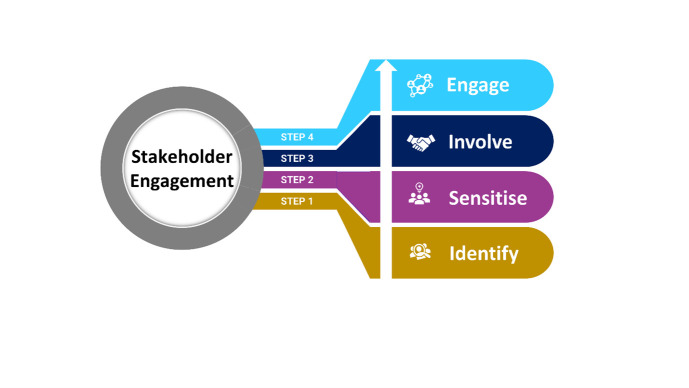 Figure 1
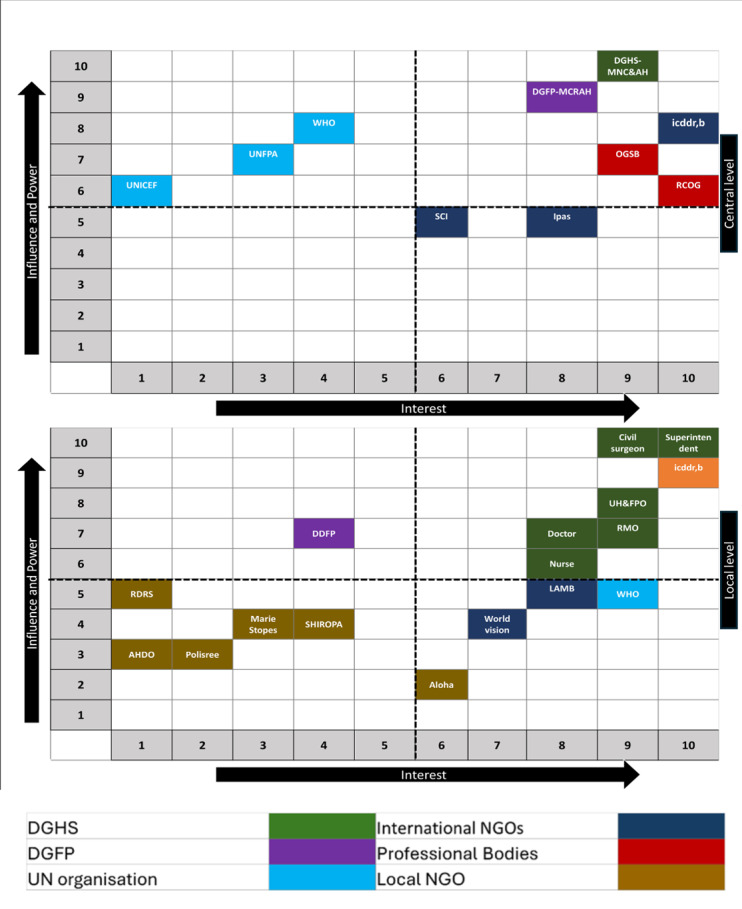 Figure 2
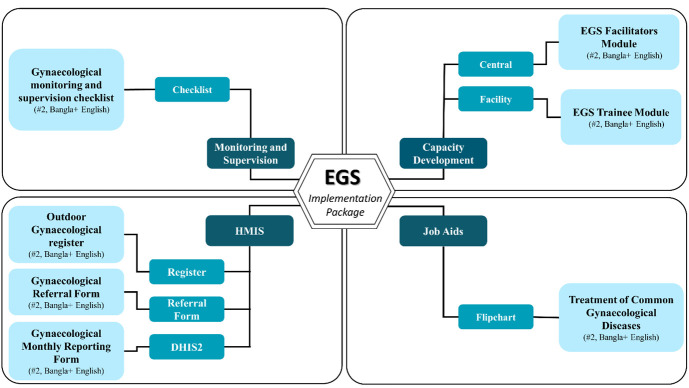 Figure 3
Peer Reviews
No public reviews on file for this paper yet. If you reviewed it on a platform where reviews are public (OpenReview, ICLR, NeurIPS, ICML), you can paste yours below so the community can read it here.
Videos
No videos yet. Explain this paper in a talk, walkthrough, or lecture? Add one.
Taxonomy
TopicsGlobal Maternal and Child Health · Global Health Workforce Issues · Healthcare Systems and Reforms