Diagnosis of Autosomal Dominant Polycystic Kidney Disease in a 66-Year-Old Patient With a Genotype-Phenotype Mismatch
Gautam Agrawal, Bhawna Agarwal, Pallavi Shirsat, Kunal Sonavane

TL;DR
A 66-year-old man with a rare gene mutation for a kidney disease was diagnosed despite having a typically milder form of the condition.
Contribution
Highlights a genotype-phenotype mismatch in ADPKD and the challenges of managing older patients.
Findings
The patient had an IFT140 gene mutation, usually linked to a milder ADPKD phenotype.
Despite this, the patient was classified as high risk for disease progression using the MIC tool.
Tolvaptan is not studied in patients over 65, complicating treatment decisions.
Abstract
Autosomal dominant polycystic kidney disease (ADPKD) is a common genetic disorder characterized by the progressive development of renal cysts, ultimately leading to chronic kidney disease (CKD) and end-stage renal disease (ESRD). Patients are typically diagnosed in their 20s or 30s, and the majority have a parent with a known history of the condition. The most common gene mutations associated with ADPKD are PKD1 and PKD2, although other mutations have also been identified. Kidney enlargement rates can vary and serve as a marker for ADPKD progression and the eventual decline in kidney function. The Mayo Imaging Classification (MIC) tool assesses the risk of progression by incorporating height-adjusted total kidney volume (htTKV) and the patient's age. Tolvaptan is recommended for patients at high risk of progression, although it has not been studied in individuals over the age of 65.…
Genes, proteins, chemicals, diseases, species, mutations and cell lines named across the full text — each resolved to its canonical identifier and authoritative record.
Click any figure to enlarge with its caption.
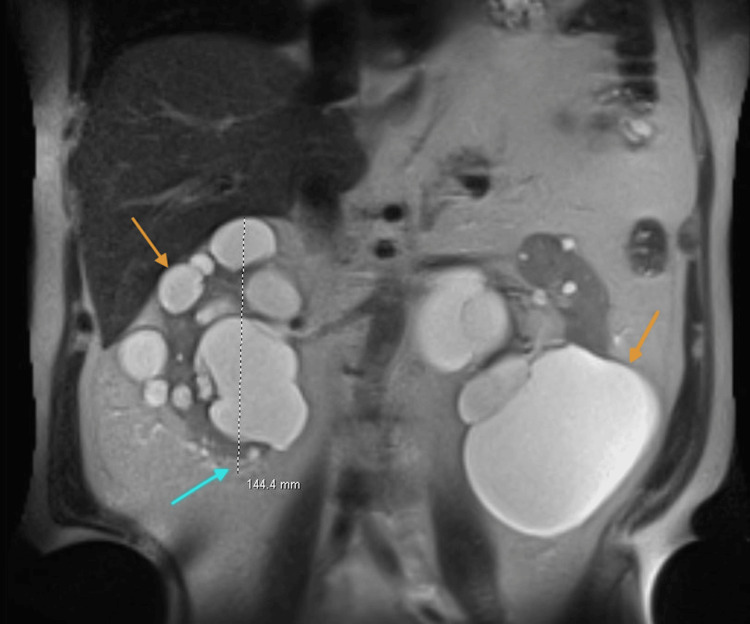 Figure 1
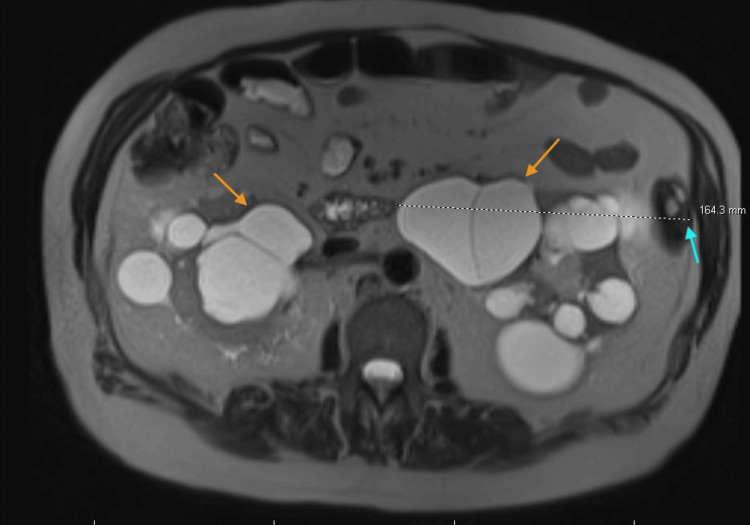 Figure 2
Peer Reviews
No public reviews on file for this paper yet. If you reviewed it on a platform where reviews are public (OpenReview, ICLR, NeurIPS, ICML), you can paste yours below so the community can read it here.
Videos
No videos yet. Explain this paper in a talk, walkthrough, or lecture? Add one.
Taxonomy
TopicsGenetic and Kidney Cyst Diseases · Renal and related cancers · Genetic Syndromes and Imprinting