Myocardial Infarction Induced by Refrigerant (Hydrofluorocarbon (HFC)-134a) Exposure: A Case Report
Christian Roberti, Margaret Mueller

TL;DR
A 75-year-old man with heart disease had a heart attack after being exposed to a refrigerant chemical, suggesting a possible new link between refrigerant exposure and heart attacks.
Contribution
This is the first reported case linking acute refrigerant exposure to myocardial infarction.
Findings
A patient with coronary artery disease experienced a myocardial infarction after exposure to HFC-134a.
Electrocardiogram changes and elevated troponin levels confirmed acute MI following refrigerant exposure.
Possible mechanisms include cardiac sensitization or hypoxia-induced ischemia.
Abstract
Refrigerants such as hydrofluorocarbon (HFC)-134a (1,1,1,2-tetrafluoroethane) are widely used in refrigeration and air-conditioning systems. While their toxic effects are generally considered low, cardiotoxicity associated with arrhythmias has been reported. However, to the best of our knowledge, myocardial infarction (MI) immediately following refrigerant exposure has not been documented in the literature until now. We report the case of a 75-year-old man with coronary artery disease, an assistant professor at a community college specializing in refrigeration technology and heating, ventilation, and air conditioning (HVAC) standards. He was exposed to HFC-134a while repairing a leak in an antique refrigeration unit when he experienced a sudden onset of dyspnea and mild chest pain. He presented to the emergency department, where workup revealed worsening T-wave abnormalities compared…
Genes, proteins, chemicals, diseases, species, mutations and cell lines named across the full text — each resolved to its canonical identifier and authoritative record.
Click any figure to enlarge with its caption.
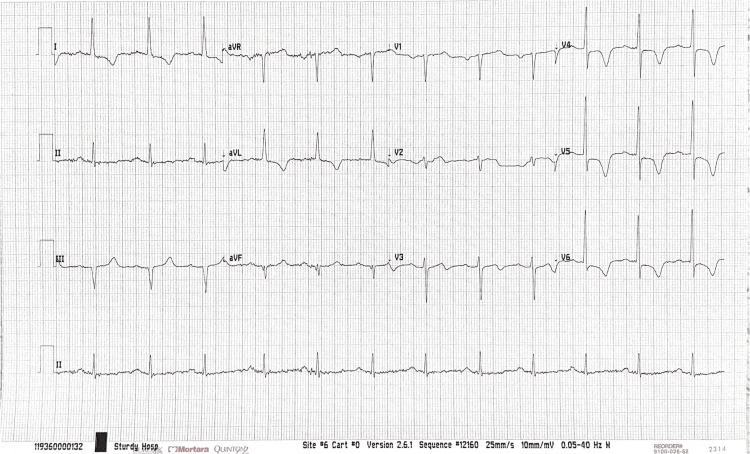 Figure 1
Peer Reviews
No public reviews on file for this paper yet. If you reviewed it on a platform where reviews are public (OpenReview, ICLR, NeurIPS, ICML), you can paste yours below so the community can read it here.
Videos
No videos yet. Explain this paper in a talk, walkthrough, or lecture? Add one.
Taxonomy
TopicsCardiac pacing and defibrillation studies