Incident HFpEF and time-dependent changes in markers of LVDD severity in women and men with preclinical LVDD
Anne Margje Lisa Naomi van Ommen, Elisa Dal Canto, Ernest Diez Benavente, Maarten Jan Cramer, Arco J Teske, Roxana Menken, Karim Taha, M Louis Handoko, Dirk J Duncker, Marianne C Verhaar, Frans H Rutten, N Charlotte Onland-Moret, Hester M den Ruijter

TL;DR
This study examines how preclinical left ventricular diastolic dysfunction progresses to heart failure with preserved ejection fraction in men and women over five years.
Contribution
The study provides sex-specific insights into the progression of LVDD to HFpEF and identifies blood pressure and kidney function as key factors.
Findings
Only 10% of participants with preclinical LVDD developed heart failure, with most cases being HFpEF.
Higher blood pressure and reduced kidney function were linked to increased NT-proBNP levels over time.
Sex differences were observed in how blood pressure affected NT-proBNP levels.
Abstract
The progression of left ventricular diastolic dysfunction (LVDD) over time may lead to the development of heart failure with preserved ejection fraction (HFpEF). HFpEF is twice as common in women compared with men; however, the sex-specific progression from LVDD towards HFpEF is poorly described. Therefore, we aim to evaluate changes over time in markers of LVDD severity and HFpEF in women and men with preclinical LVDD. We reassessed 146 participants from the HELPFul study (58% women and 42% men) with preclinical LVDD after a median follow-up of 4.3 (IQR: 3.9–4.7) years. The follow-up measurements mirrored baseline measurements, encompassing clinical examination, blood draw for biomarkers and echocardiography. We determined HFpEF incidence and report changes over time in echocardiography. Additionally, we studied how blood pressure and kidney function affected LVDD progression,…
Genes, proteins, chemicals, diseases, species, mutations and cell lines named across the full text — each resolved to its canonical identifier and authoritative record.
Click any figure to enlarge with its caption.
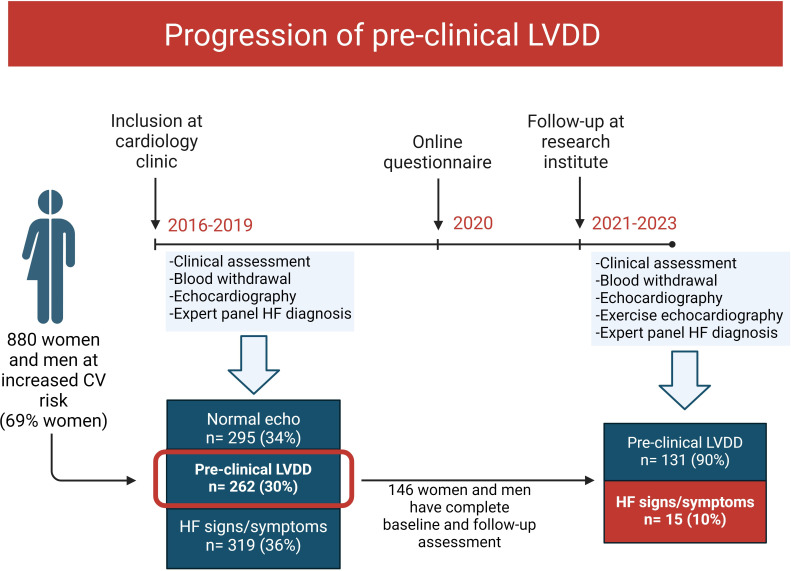 Figure 1
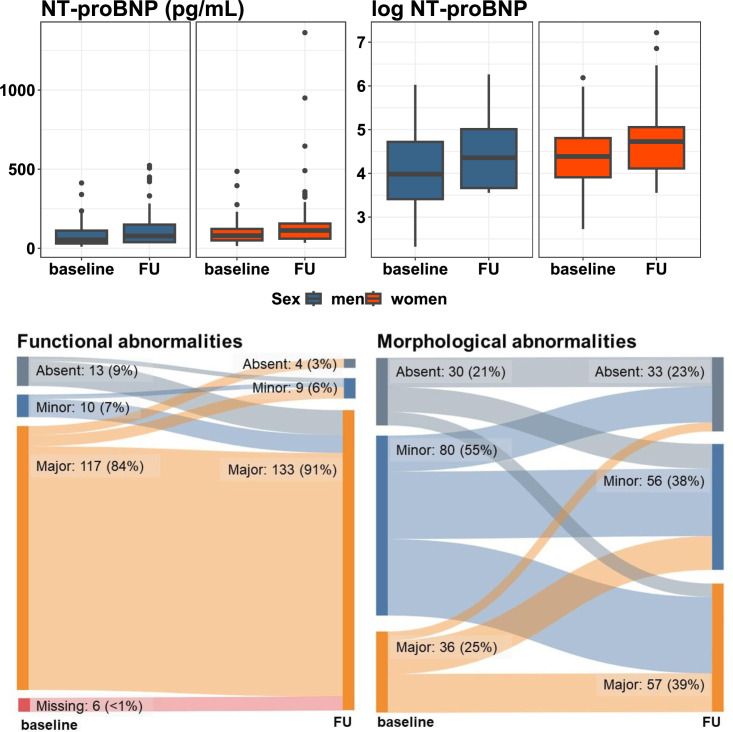 Figure 2
Peer Reviews
No public reviews on file for this paper yet. If you reviewed it on a platform where reviews are public (OpenReview, ICLR, NeurIPS, ICML), you can paste yours below so the community can read it here.
Videos
No videos yet. Explain this paper in a talk, walkthrough, or lecture? Add one.
Taxonomy
TopicsCardiovascular Function and Risk Factors · Heart Failure Treatment and Management · Congenital Heart Disease Studies