Prospective study of continuous rhythm monitoring in patients with early post-infarction systolic dysfunction: clinical impact of arrhythmias detected by an implantable cardiac monitoring device with real-time transmission—the TeVeO study protocol
Jesus Hernandez-Hernandez, Alba Cruz-Galban, Olga Duran-Bobin, Javier Garcia-Seara, Teba Gonzalez-Ferrero, Jose Morinigo, Carlos González-Juanatey, Manuel Sanchez-Garcia, Gonzalo Fernandez-Palacios, Jose Seijas-Amigo, Juliana Elices, Javier Portales-Fernandez

TL;DR
This study explores how real-time monitoring of heart rhythms in patients after a heart attack can improve the prediction of future arrhythmic events and guide treatment decisions.
Contribution
The study introduces real-time monitoring of non-sustained ventricular tachycardias using an implantable device to assess their prognostic value in post-infarction patients.
Findings
Real-time monitoring will provide insights into the arrhythmic burden in post-infarction patients.
Machine learning techniques will analyze clinical and monitoring data to predict mid-term prognosis.
The study will evaluate the effectiveness of current ICD guidelines in the context of modern treatment and monitoring.
Abstract
Updated primary prevention strategies are needed for post-infarction sudden cardiac death (SCD) based on implantable cardioverter-defibrillator (ICD). Current recommendations, based on left ventricular systolic function and functional class, may be obsolete because they are derived from ancient studies that do not incorporate the potential benefit of either current comprehensive treatment of ischaemic heart disease or modern device programming. Among patients with post-infarction left ventricular dysfunction, modern implantable cardiac monitoring devices (ICM) allow a unique opportunity to determine in real-time the burden of non-sustained ventricular tachycardias and their relationship to the subsequent occurrence of sustained or symptomatic events. Approximately 200 patients with left ventricular ejection fraction (LVEF) equal to or less than 40% after acute myocardial infarction…
Genes, proteins, chemicals, diseases, species, mutations and cell lines named across the full text — each resolved to its canonical identifier and authoritative record.
Click any figure to enlarge with its caption.
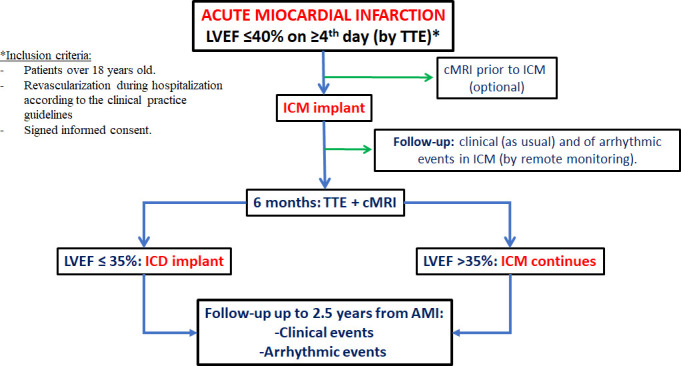 Figure 1
 Figure 2
Peer Reviews
No public reviews on file for this paper yet. If you reviewed it on a platform where reviews are public (OpenReview, ICLR, NeurIPS, ICML), you can paste yours below so the community can read it here.
Videos
No videos yet. Explain this paper in a talk, walkthrough, or lecture? Add one.
Taxonomy
TopicsCardiac pacing and defibrillation studies · Cardiac Imaging and Diagnostics · Cardiac electrophysiology and arrhythmias