A Rare Atypical Presentation of Bruns-Garland Syndrome: A Case Report and Review of Pathophysiology and Management
Marco A Orsini, Marcos R de Freitas, Marco A Araujo Leite, Wilhelmina N Hauwanga, Aung Ko Oo, Uzma Nezam, Thiago De Mello Tavares, Muskan Garg, Billy McBenedict, Bruno Lima Pessôa

TL;DR
This paper presents a rare case of Bruns-Garland Syndrome with unusual bilateral and chronic progression, emphasizing the importance of early diagnosis and management.
Contribution
The novelty lies in highlighting an atypical presentation of Bruns-Garland Syndrome with chronic bilateral progression, expanding diagnostic awareness.
Findings
The patient exhibited a chronic, bilaterally progressive form of Bruns-Garland Syndrome, differing from typical acute unilateral presentations.
Diagnostic challenges were noted, requiring electrodiagnostic and imaging studies to distinguish from other neuropathies.
Management included glycemic control, physical therapy, and neuropathic pain management, with potential use of immunomodulatory therapy.
Abstract
Bruns-Garland Syndrome (BGS), also known as diabetic lumbosacral radiculoplexus neuropathy (DLRPN) or diabetic amyotrophy, is a rare diabetic complication causing progressive muscle weakness, neuropathic pain, and functional impairment. It primarily affects individuals with long-standing type II diabetes, with an underlying mechanism of microvasculitis-induced ischemic injury to the lumbosacral plexus, leading to axonal loss and neurogenic atrophy. We present the case of a 73-year-old physician with type II diabetes who developed progressive thigh weakness and sensory deficits over seven years. Neurological examination revealed amyotrophy, paresis in the pelvic girdle muscles, and absent deep tendon reflexes. Electroneuromyography (ENMG) demonstrated chronic neuro-radiculopathy with significant axonal loss, and MRI showed bilateral muscle atrophy, edema, and fatty replacement. Unlike…
Genes, proteins, chemicals, diseases, species, mutations and cell lines named across the full text — each resolved to its canonical identifier and authoritative record.
Click any figure to enlarge with its caption.
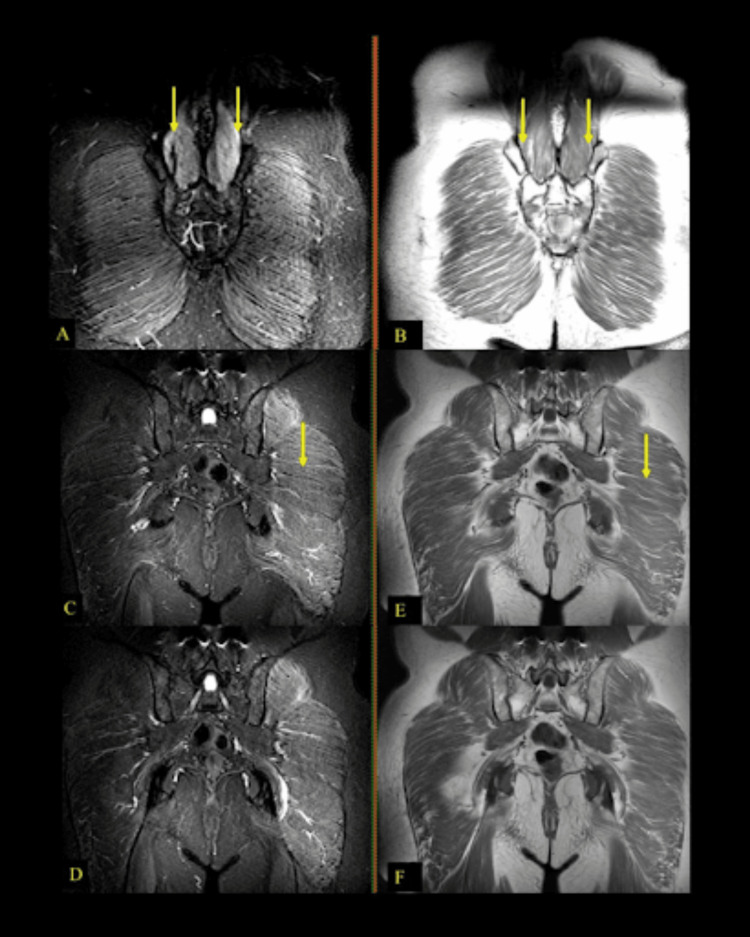 Figure 1
Peer Reviews
No public reviews on file for this paper yet. If you reviewed it on a platform where reviews are public (OpenReview, ICLR, NeurIPS, ICML), you can paste yours below so the community can read it here.
Videos
No videos yet. Explain this paper in a talk, walkthrough, or lecture? Add one.
Taxonomy
TopicsCongenital limb and hand anomalies · Genetic and rare skin diseases. · Parvovirus B19 Infection Studies