Unexpected Cardiac Arrest During MRI in a Patient With Acute Brainstem Infarction: A Case Report and Imaging Insights
Hiroyuki Tokue, Azusa Tokue, Masashi Ebara, Yoshito Tsushima

TL;DR
A patient with a brainstem stroke suffered cardiac arrest during an MRI, highlighting the need for close monitoring during such procedures.
Contribution
This case report provides imaging insights into early signs of cardiac arrest during MRI in stroke patients.
Findings
MRI revealed early signs of cardiac arrest through arterial and venous engorgement.
Continuous monitoring is crucial during MRI for high-risk stroke patients.
Hypoxic encephalopathy occurred despite resuscitation efforts.
Abstract
We report the case of a 65-year-old man with a history of hypertension and diabetes who experienced cardiac arrest during MRI for acute brainstem infarction. Initial imaging revealed right vertebral artery occlusion and brainstem infarction. During follow-up MRI because of worsening symptoms, magnetic resonance angiography revealed an absence of cerebral arterial flow, and T2*-weighted imaging revealed arterial and venous engorgement, which were later recognized as early signs of cardiac arrest. Cardiopulmonary resuscitation was initiated, but hypoxic encephalopathy persisted. This case highlights the importance of continuous vital sign monitoring and real-time image evaluation during MRI, particularly in high-risk patients with stroke.
Genes, proteins, chemicals, diseases, species, mutations and cell lines named across the full text — each resolved to its canonical identifier and authoritative record.
Click any figure to enlarge with its caption.
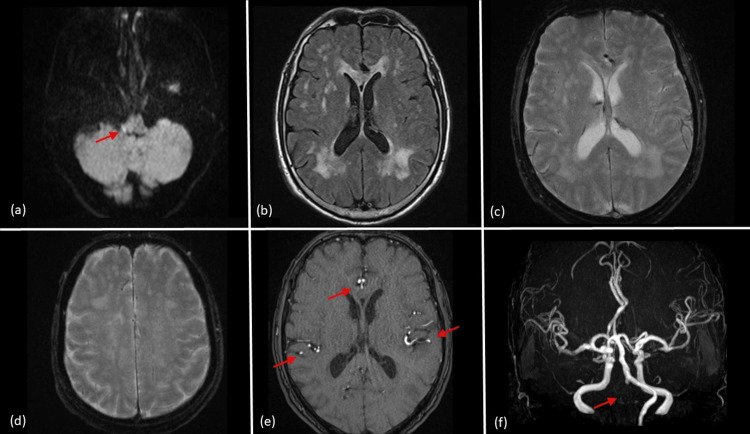 Figure 1
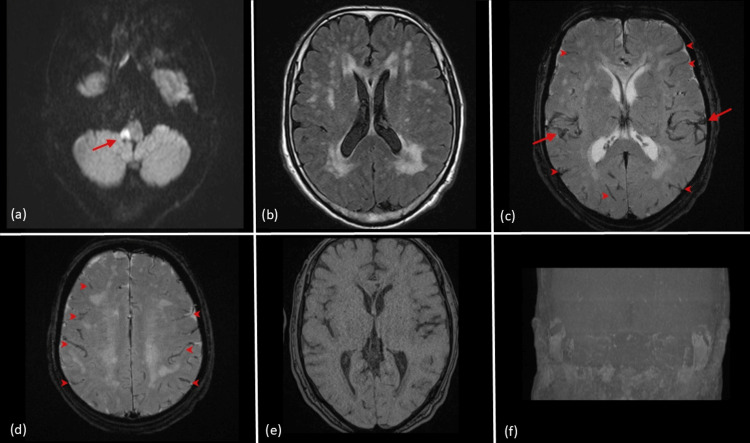 Figure 2
Peer Reviews
No public reviews on file for this paper yet. If you reviewed it on a platform where reviews are public (OpenReview, ICLR, NeurIPS, ICML), you can paste yours below so the community can read it here.
Videos
No videos yet. Explain this paper in a talk, walkthrough, or lecture? Add one.
Taxonomy
TopicsTraumatic Brain Injury and Neurovascular Disturbances · Neurosurgical Procedures and Complications · Takotsubo Cardiomyopathy and Associated Phenomena