Capnodynamic determination of end-expiratory lung volume in a porcine model of hypoxic pulmonary vasoconstriction
Aron Törnwall, Mats Wallin, Magnus Hallbäck, Per-Arne Lönnqvist, Jacob Karlsson

TL;DR
This study tests a CO2-based method for measuring lung volume in pigs under hypoxia and finds it generally reliable, though hypoxia and nitric oxide temporarily affect accuracy.
Contribution
The study evaluates the capnodynamic method under hypoxia and nitric oxide, conditions not previously examined.
Findings
EELV-CO2 showed a small bias and consistent agreement with EELV-SF6 under normal and hypoxic conditions.
Agreement was temporarily impaired during nitric oxide exposure but stabilized with normoxemia.
The capnodynamic method remains viable for EELV estimation despite hypoxia and vasoconstriction.
Abstract
The capnodynamic method, End Expiratory Lung Volume CO2 (EELV-CO2), utilizes exhaled carbon dioxide analysis to estimate End-Expiratory Lung Volume (EELV) and has been validated in both normal lungs and lung injury models. Its performance under systemic hypoxia and variations in CO2 elimination is not examined. This study aims to validate EELV-CO2 against inert gas wash in/wash out (EELV- SF6, sulfur hexafluoride) in a porcine model of stable hemodynamic conditions followed by hypoxic pulmonary vasoconstriction and inhaled nitric oxide (iNO). Ten mechanically ventilated piglets were exposed to a hypoxic gas mixture and selective pulmonary vasoconstriction. Inhalation of nitric oxide was used to reverse the pulmonary vasoconstriction. Paired recordings of EELV-CO2 and EELV-SF6, were conducted to assess their agreement of absolute values. EELV-CO2 showed a bias of + 5 ml kg− 1 compared…
Genes, proteins, chemicals, diseases, species, mutations and cell lines named across the full text — each resolved to its canonical identifier and authoritative record.
Click any figure to enlarge with its caption.
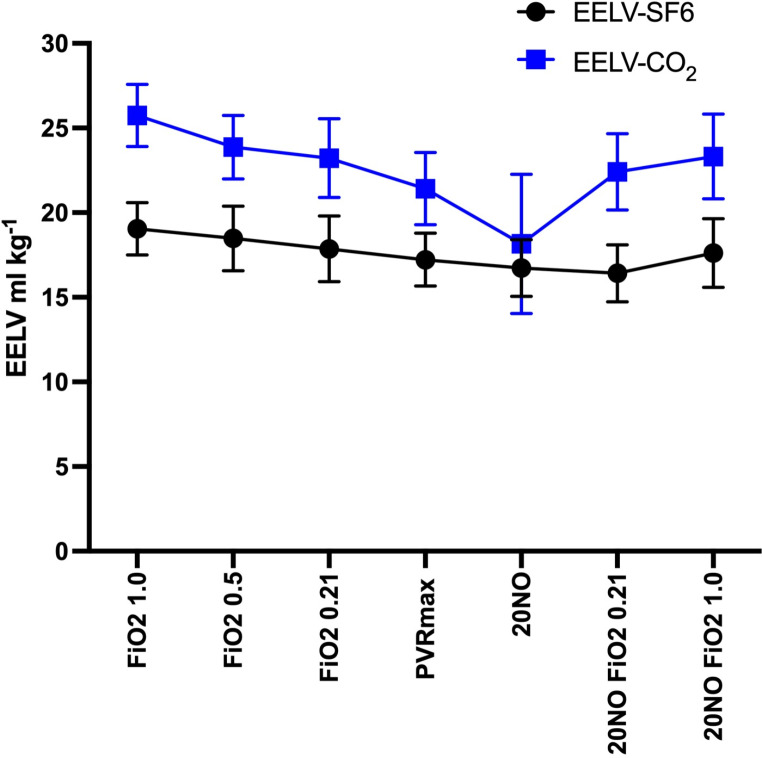 Figure 1
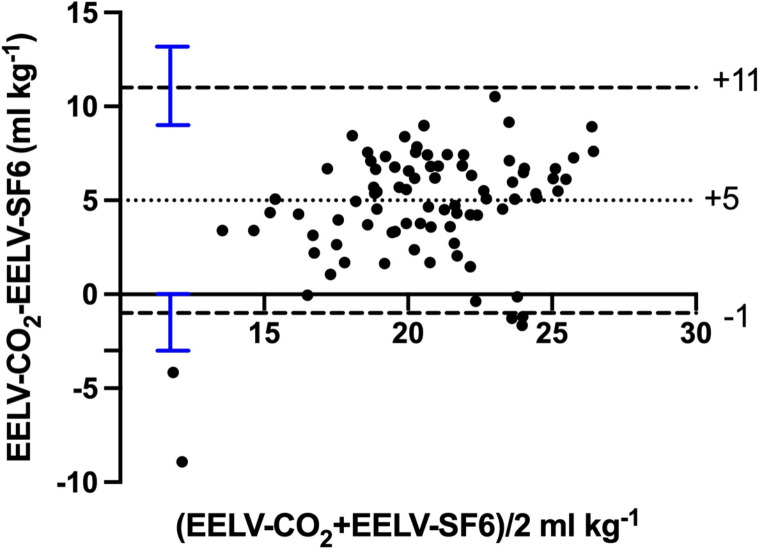 Figure 2
Peer Reviews
No public reviews on file for this paper yet. If you reviewed it on a platform where reviews are public (OpenReview, ICLR, NeurIPS, ICML), you can paste yours below so the community can read it here.
Videos
No videos yet. Explain this paper in a talk, walkthrough, or lecture? Add one.
Taxonomy
TopicsRespiratory Support and Mechanisms · Cardiac Arrest and Resuscitation · Chronic Obstructive Pulmonary Disease (COPD) Research