Relationship between the amplitudes of cerebral blood flow velocity and intracranial pressure using linear and non-linear approach
Adam I. Pelah, Monika Najdek, Marek Czosnyka, Agnieszka Uryga

TL;DR
This study explores how brain blood flow and pressure interact in traumatic brain injury patients using linear and nonlinear methods during a breathing test.
Contribution
The study introduces RAMP and JSA indices to better understand vascular-parenchymal interactions in TBI.
Findings
RAMP index was significantly higher at baseline compared to during hypocapnia.
JSAsym frequency decreased during hypocapnia compared to baseline.
Grouped-averaged AmpCBFV and AMP showed no significant correlation at baseline or during hypocapnia.
Abstract
Intracranial pressure (ICP), cerebral blood flow and volume are affected by craniospinal elasticity and cerebrospinal fluid dynamics, interacting in complex, nonlinear ways. Traumatic brain injury (TBI) may significantly alter this relationship. This retrospective study investigated the relationship between the vascular and parenchymal intracranial compartments by analysing two amplitudes: cerebral blood flow velocity (AmpCBFV) and ICP (AMP) during hypocapnia manoeuvre in TBI patients. Twenty-nine TBI patients hospitalised at Addenbrooke’s Hospital, whose ICP and CBFV were monitored during mild hypocapnia, were included. A linear metric of the relationship was defined as a moving-window correlation (R) between AmpCBFV and AMP, named RAMP. Nonlinear metrics were based on the Joint Symbolical Analysis (JSA) algorithm, which transforms AmpCBFV and AMP into sequences of symbols (‘words’)…
Genes, proteins, chemicals, diseases, species, mutations and cell lines named across the full text — each resolved to its canonical identifier and authoritative record.
Click any figure to enlarge with its caption.
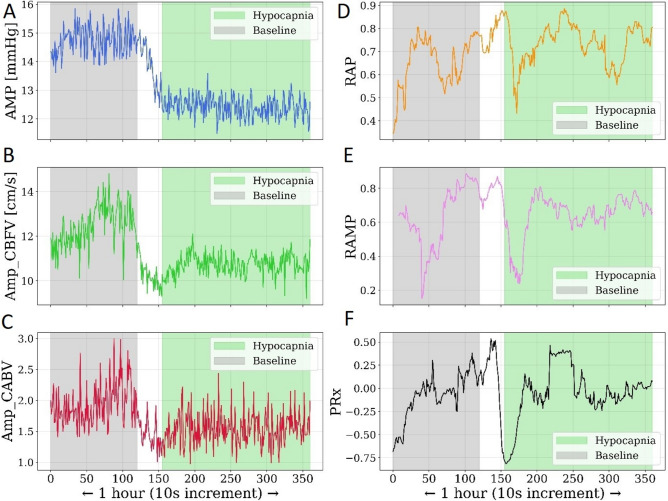 Figure 1
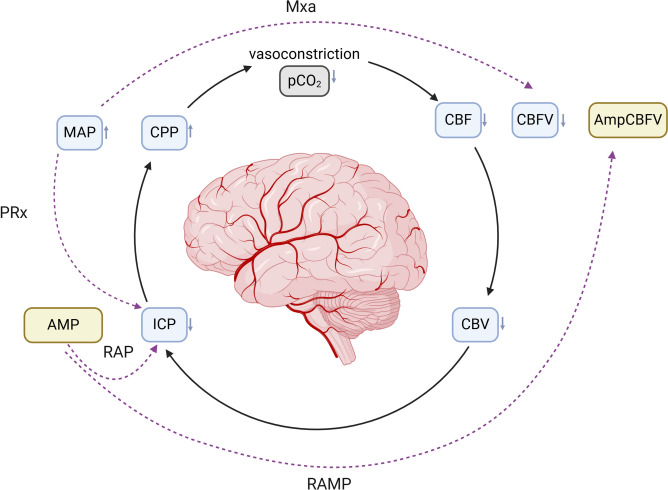 Figure 2
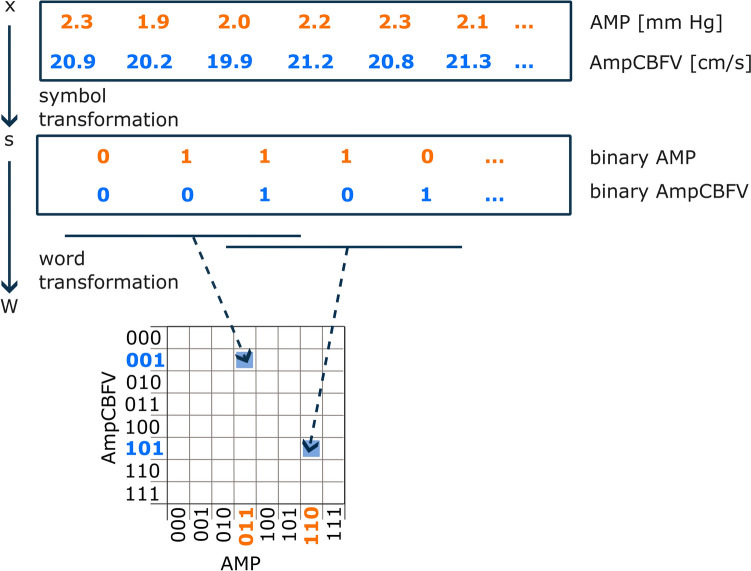 Figure 3
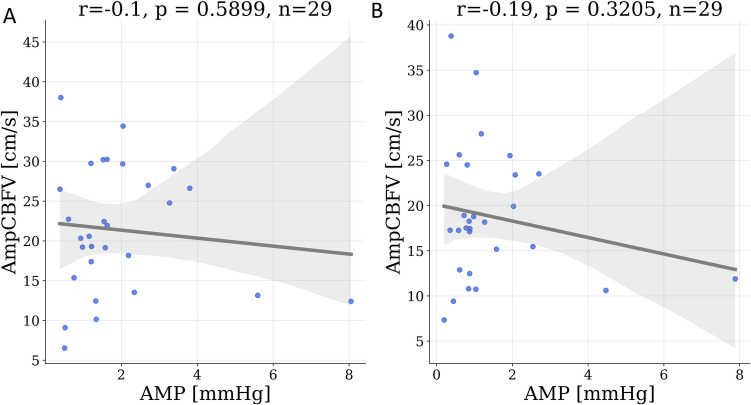 Figure 4
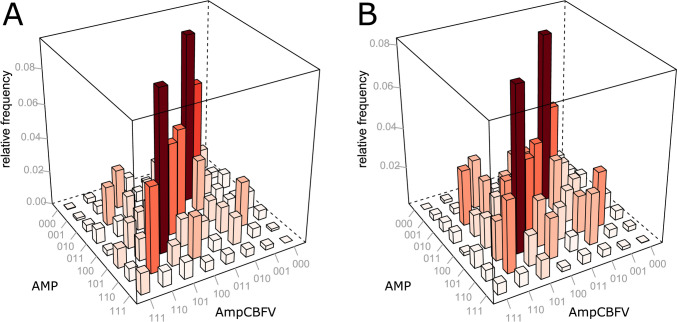 Figure 5
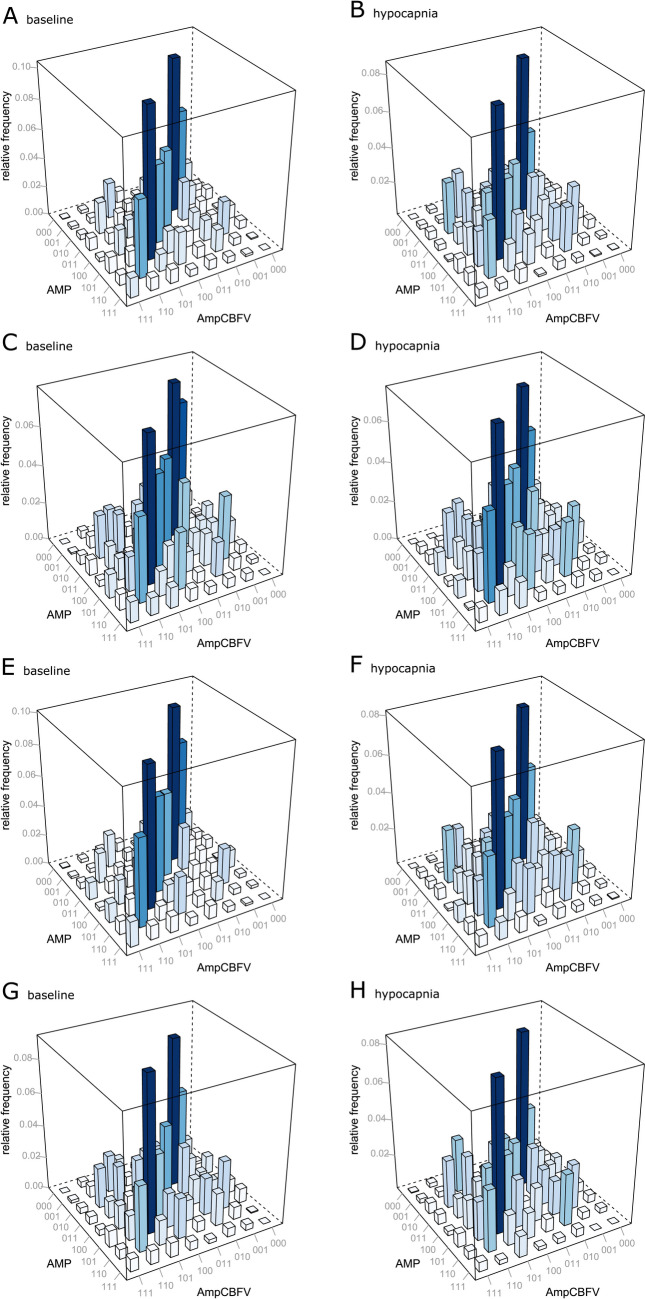 Figure 6
Peer Reviews
No public reviews on file for this paper yet. If you reviewed it on a platform where reviews are public (OpenReview, ICLR, NeurIPS, ICML), you can paste yours below so the community can read it here.
Videos
No videos yet. Explain this paper in a talk, walkthrough, or lecture? Add one.
Taxonomy
TopicsTraumatic Brain Injury and Neurovascular Disturbances · Cerebrospinal fluid and hydrocephalus · Traumatic Brain Injury Research