Change in kidney volume growth rate and renal outcomes of tolvaptan treatment in autosomal dominant polycystic kidney disease: post-hoc analysis of TEMPO 3:4 trial
Eiji Higashihara, Miyuki Matsukawa, Huan Jiang

TL;DR
This study shows that the change in kidney volume growth rate after one year of tolvaptan treatment can predict long-term kidney outcomes in patients with a genetic kidney disease.
Contribution
The study identifies the 1-year change in eHTKV-α as a novel early biomarker for predicting long-term renal outcomes in ADPKD patients on tolvaptan.
Findings
1-year percent change in eHTKV-α significantly predicts annual changes in kidney volume and eGFR over 3 years.
Baseline factors like age, sex, and BMI also influence long-term kidney outcomes.
Urine osmolality and plasma copeptin levels were not significant predictors of treatment response.
Abstract
Despite of long-lasting tolvaptan treatment, individual renal outcomes are unclear in autosomal dominant polycystic kidney disease (ADPKD). This post-hoc analysis of the TEMPO 3:4 trial aimed to evaluate the predictability of estimated height-adjusted total kidney volume growth rate (eHTKV-α) on renal outcomes. In TEMPO 3:4, 1445 patients with ADPKD were randomised to tolvaptan or placebo for 3 years. The present analysis included patients with total kidney volume (TKV) data available at baseline and month 12 (tolvaptan, n = 812; placebo, n = 453); tolvaptan-assigned patients were grouped into quartiles based on percent change in eHTKV-α from baseline at 1 year. Clinical parameters were compared between quartiles, and regression analyses evaluated the predictive value of 1-year percent change in eHTKV-α and other factors on annual changes in TKV and estimated GFR (eGFR) over 3 years.…
Genes, proteins, chemicals, diseases, species, mutations and cell lines named across the full text — each resolved to its canonical identifier and authoritative record.
Click any figure to enlarge with its caption.
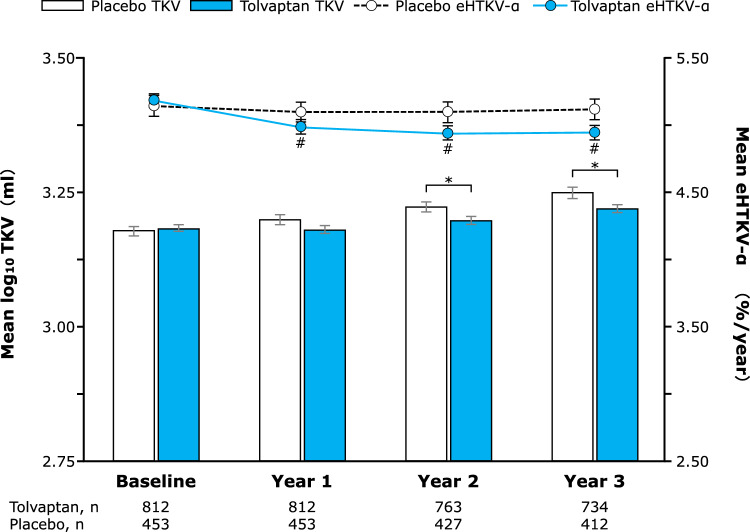 Figure 1
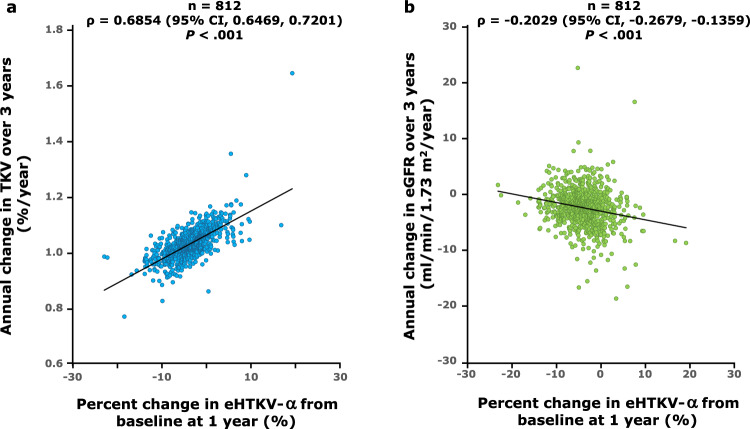 Figure 2
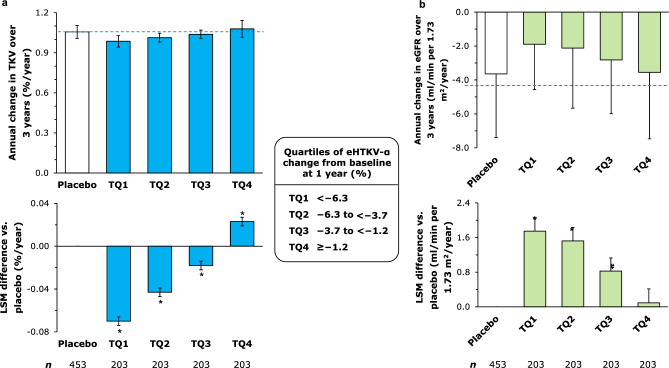 Figure 3
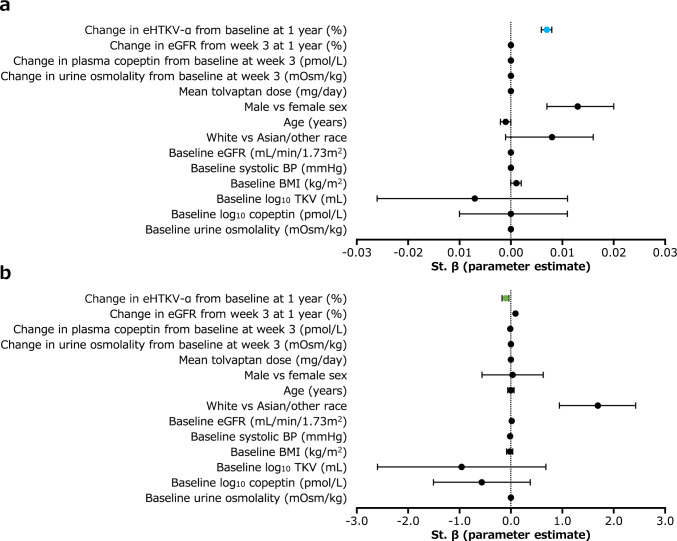 Figure 4
Peer Reviews
No public reviews on file for this paper yet. If you reviewed it on a platform where reviews are public (OpenReview, ICLR, NeurIPS, ICML), you can paste yours below so the community can read it here.
Videos
No videos yet. Explain this paper in a talk, walkthrough, or lecture? Add one.
Taxonomy
TopicsGenetic and Kidney Cyst Diseases · Renal and related cancers · Pediatric Urology and Nephrology Studies