Intracardiac thrombus discovered incidentally during respiratory distress in an 18-month-old infant: case report
Youssef Aarjouni, Youssef Absa, Charaf Sayouti, Larbi Dafali, Aziza Bentalha, Salma Echcherif Kettani

TL;DR
An 18-month-old child with no prior health issues had a large heart clot discovered during a respiratory emergency, which was successfully treated with medication.
Contribution
This case report presents a rare pediatric instance of a giant intracardiac thrombus managed medically without surgery.
Findings
The thrombus was attributed to deficiencies in proteins C and S, indicating a hypercoagulable state.
Medical treatment with dobutamine, furosemide, and heparin led to complete resolution of the thrombus within 15 days.
The case suggests that non-surgical management can be effective for pediatric intracardiac thrombi.
Abstract
Intracardiac thrombi (ICT) are uncommon in the pediatric population and can lead to significant morbidity and mortality. This case highlights a unique instance of a giant ICT in an 18-month-old infant with no notable medical history, contributing to the understanding of hypercoagulable states and their implications in pediatric patients. The patient presented with respiratory distress, characterized by a flu-like syndrome, cyanosis, and hypoxemia. Initial examination revealed lethargy and significant respiratory distress, with imaging showing lobar pneumonia and an echocardiogram revealing a 32 mm x22 mm heterogeneous mass in the left ventricle. Further investigations confirmed the mass was a thrombus, attributed to deficiencies in proteins C and S. The patient was treated with dobutamine to enhance contractility, furosemide for diuresis, and heparin for anticoagulation. There was a…
Genes, proteins, chemicals, diseases, species, mutations and cell lines named across the full text — each resolved to its canonical identifier and authoritative record.
Click any figure to enlarge with its caption.
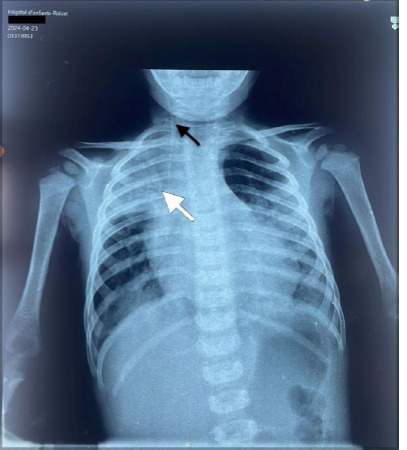 Figure 1
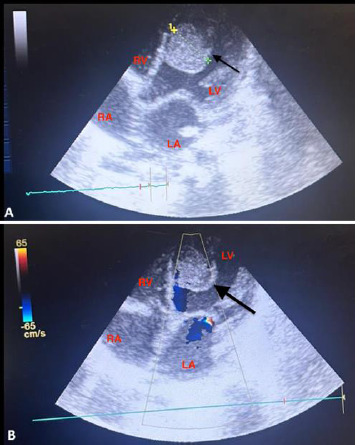 Figure 2
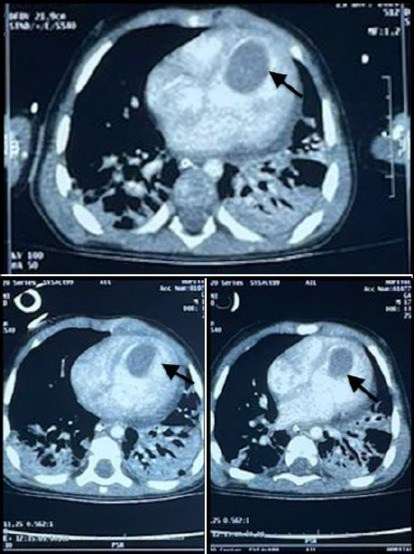 Figure 3
Peer Reviews
No public reviews on file for this paper yet. If you reviewed it on a platform where reviews are public (OpenReview, ICLR, NeurIPS, ICML), you can paste yours below so the community can read it here.
Videos
No videos yet. Explain this paper in a talk, walkthrough, or lecture? Add one.
Taxonomy
TopicsCardiac tumors and thrombi · Cardiovascular and Diving-Related Complications · Cardiovascular Effects of Exercise
Introduction
Intracardiac thrombi (ICT) are rare in children, but when they do occur, they can result in significant morbidity and mortality. Over the past few decades, reports of ICT incidence have increased, particularly in a hypercoagulable state [1]. In the pediatric population, the majority of ICT occurs in the context of a provoking risk factor, such as low cardiac output syndrome, arrhythmias, and/or hypercoagulable states. We report the case of a patient admitted to the intensive care unit for respiratory distress, in whom trans thoracic ultrasound revealed a giant intracardiac thrombus. Through this case study, we delve into the main etiologies of ICT in the pediatric population and the therapeutic options available to optimize patient outcomes.
Patient and observation
Patient information: this is an 18-month-old male infant (GT.) with no significant medical history, who was admitted to the emergency department due to respiratory distress that had been worsening for one week before admission.
Clinical findings: the clinical examination revealed a lethargic and hypotonic infant, exhibiting tachypnea at 60 breaths per minute and an oxygen saturation of 89% on room air. The infant showed signs of marked respiratory distress, characterized by suprasternal and intercostal retractions. Hemodynamically, the infant was tachycardic for their age, with a heart rate of 175 beats per minute, a blood pressure of 105/65 mmHg, and a capillary refill time of less than 3 seconds. Pulmonary auscultation noted a decrease in breath sounds, particularly in the right apical region, along with bilateral crackles in the mid-lung fields. Cardiac auscultation did not reveal any additional heart sounds.
Timeline of current episode: on 23/04/2024: chest X-ray was performed, 24/04/2024: a transthoracic echocardiogram performed on the patient's bed, 25/04/2024: thoracic angioscanner, 26/04/2024: thrombophilia analysis.
Diagnostic and assessment: in light of the acute respiratory distress, an etiological investigation was initiated in the emergency department, where a chest X-ray revealed right lobar pneumonia (Figure 1). After transferring the patient to the pediatric intensive care unit and stabilizing their condition a transthoracic echocardiogram performed at the bedside revealed a heterogeneously echogenic mass measuring 32 mm by 22 mm in the left ventricle, attached to the latero-apical wall, with associated hypokinesis but without ventricular dilatation or congenital heart defects (Figure 2). Faced with this intra-ventricular mass, two possible diagnoses were considered: a tissue mass or a thrombus. Further investigations included a thoracic angioscanner and a thrombophilia analysis. The angioscan confirmed the thrombotic nature of the mass (Figure 3). The thrombophilia panel indicated deficiencies in protein C and protein S, with protein C activity at 20% (normal range: 40-92%) and protein S activity at 40% (normal range: 65-130%). Other coagulation factors were within normal limits.
front chest X-ray showing: lobar pneumonia (black arrow); right internal jugular central line catheter (white arrow)
A, B) apical section of cardiac ultrasound showing a giant mass in the left ventricle
axial section of thoracic angioscan showing a giant thrombus in the left ventricle
Diagnosis: the primary diagnosis was hypercoagulability due to deficiencies in protein C and protein S, leading to a thrombus in the left ventricle.
Therapeutic interventions: initially, the treatment involved preparatory measures, including establishing a 22G peripheral intravenous line, positioning the patient in a semi-upright position, administering high-concentration oxygen therapy via a mask at a flow rate of 15 L/min, and placing a bladder catheter to monitor urine output. Symptomatic treatment for acute heart failure was initiated with dobutamine at a dose of 10 µg/kg/min to enhance contractility, along with furosemide at a dose of 1 to 2 mg/kg/day to reduce congestion. For the etiological treatment, broad-spectrum antibiotics were started upon admission, consisting of ceftriaxone at a dose of 50 mg/kg/day in combination with azithromycin at 10 mg/kg/day for pneumonia. Regarding the thrombus, a medical management approach was chosen, implementing an unfractionated heparin protocol that included a loading dose of 75 units/kg administered intravenously as a bolus, followed by a maintenance dose of 25 units/kg/hour via continuous intravenous infusion. This was adjusted based on coagulation tests, specifically targeting an activated partial thromboplastin time (aPTT) of 1.5 to 2.5 times the normal range, with anticoagulation therapy planned for an initial duration of 10 days.
Follow-up and outcome of interventions: the patient´s condition worsened on day -2 with respiratory distress, necessitating orotracheal intubation and mechanical ventilation. There was a gradual improvement, evidenced by an enhanced PaO_2_/FiO_2_ ratio, reduced oxygen requirements, and decreased basilar crackles, along with effective diuresis of 1-2 cc/kg/h. On day -7, a follow-up echocardiogram revealed a thrombus that was resolving, with a size reduction. After a successful weaning trial, the patient was extubated and placed on low-flow oxygen via nasal cannula. By day -10, the heparin therapy was discontinued, and oral anticoagulation with apixaban 2.5 mg twice daily was initiated for a duration of 3 to 6 months.
Informed consent: the parents gave their approval for the publication.
Discussion
Intracardiac thrombi can lead to significant morbidity and mortality in any patient group. While management strategies are well-established for adults, there is a lack of comprehensive information regarding their management in the pediatric population [1]. In adults, the most common cause of ICT is dilated cardiomyopathy followed by myocardial infarction, with an incidence of 45% and 61.9% respectively [2]. In pediatric patients, the main cause has not yet been clearly identified. Most studies have concentrated on underlying hematologic abnormalities, such as deficiencies in protein C, protein s and/or mutations of Factor V Leiden, which may make children more susceptible to ICT [3]. Furthermore, both pediatric and adult patients who have undergone the Fontan procedure appear to have an elevated risk. The Fontan physiology, along with its detrimental effects on the liver, seems to predispose these patients to a hypercoagulable state, which may include deficiencies in protein C, protein S, and elevated Factor VII [4]. In our case, the etiological investigation was in favor of a coagulation disorder, i.e, a deficiency of proteins C and S, which were below normal values. Decreased concentrations of protein C are associated with an increased risk of venous and, occasionally, arterial thromboembolism [5]. Protein C deficiency can be either congenital or acquired. Temporary acquired protein C deficiency may occur due to conditions such as disseminated intravascular coagulation, liver dysfunction, heart failure, respiratory distress syndrome, sepsis, and malignancy. In the case we presented, we examined the predisposing factors for cardiac thrombus and identified acquired protein C and S deficiency due to sepsis, which was associated with lobar pneumonia. Clinical and laboratory findings supported the diagnosis of sepsis. A meta-analysis involving 119 adults found that treatment with heparin was linked to more favorable survival odds compared to surgical therapy or thrombolysis [6]. The optimal treatment for pediatric patients with ICT remains undefined. Various treatment options have been reported, including observation, systemic anticoagulation, thrombolysis, and thrombectomy. Case reports indicate that some premature infants with ICT have been treated with urokinase [7], tissue plasminogen activator (tPA), recombinant tissue plasminogen activator [8], and thrombectomy [9].
Overall, the management approach is often tailored to the individual patient's condition and circumstances. In our case, our patient received medical therapy by heparin infusion. In a retrospective review conducted in 2007 involving 31 pediatric patients with ICT [1], medical therapy resolved the condition in 19 out of 30 patients (63%). Only one patient had surgery for a thrombectomy. Embolization occurred in 4 patients (13%), with one death due to a cardiac thrombus. Mortality was higher in patients with dilated cardiomyopathy, linked to the underlying condition rather than ICT itself. Smaller ICTs tended to resolve with medical treatment, while larger ones were more likely to cause embolization. Intracardiac thrombi morphology did not affect embolization risk, and having multiple ICTs was not associated with embolization. All patients who experienced embolization had impaired ventricular systolic function, while none with normal function did [1].
Conclusion
Pediatric intracardiac thrombi (ICT) are most commonly diagnosed in patients with hypercoagulable states, dilated cardiomyopathy, and those who have undergone Fontan operations, with a notable male predominance. The optimal treatment for these patients is not yet well-defined; however, medical management is an effective alternative to surgical thrombectomy. Smaller ICTs tend to resolve with medical therapy, while larger thrombi carry a greater risk of embolization. There is a significant mortality rate associated with pediatric ICT, particularly for those with left ventricular thrombi or concurrent ventricular systolic dysfunction. To better understand treatment options, prospective multicenter trials are essential for evaluating the efficacy of specific anticoagulant and thrombolytic agents in this patient population.
The reference list from the paper itself. Each links out to its DOI / PubMed record.
- 1John JB Cron SG Kung GC Mott AR Intracardiac thrombi in pediatric patients: presentation profiles and clinical outcomes Pediatr Cardiol 2007 May-Jun 283213201740468210.1007/s 00246-005-1068-3 · doi ↗ · pubmed ↗
- 2Waller BF Rohr TM Mc Laughlin T Grider L Taliercio CP Fetters J Intracardiac thrombi: frequency, location, etiology, and complications: a morphologic review--Part V Clin Cardiol 1995 Dec 18127314860867410.1002/clc.4960181209 · doi ↗ · pubmed ↗
- 3Gurgey A Ozyurek EGümrük F Celiker A Ozkutlu S Ozer S BilgiçA Thrombosis in children with cardiac pathology: frequency of factor V Leiden and prothrombin G 20210 A mutations Pediatr Cardiol 2003 May-Jun 24324481252265910.1007/s 00246-002-0170-z · doi ↗ · pubmed ↗
- 4Jahangiri M Shore D Kakkar V Lincoln C Shinebourne E Coagulation factor abnormalities after the Fontan procedure and its modifications J Thorac Cardiovasc Surg 1997 Jun 113698992 discussion 992-3920267810.1016/S 0022-5223(97)70283-6 · doi ↗ · pubmed ↗
- 5Marlar RA Montgomery RR Broekmans AW Diagnosis and treatment of homozygous protein C deficiency. Report of the Working Party on Homozygous Protein C Deficiency of the Subcommittee on Protein C and Protein S. International Committee on Thrombosis and Haemostasis J Pediatr 1989 Apr 1144 Pt 152834264794310.1016/s 0022-3476(89)80688-2 · doi ↗ · pubmed ↗
- 6Kinney EL Wright R J Efficacy of treatment of patients with echocardiographically detected right-sided heart thrombi: a meta-analysis Am Heart J 1989 Sep 118356973277377510.1016/0002-8703(89)90274-3 · doi ↗ · pubmed ↗
- 7Aspesberro F Beghetti M Oberhänsli I Ozsahin H Humbert J Rimensberger PC Local low-dose urokinase treatment of acquired intracardiac thrombi in preterm infants Eur J Pediatr 1999 Sep 15896987011048529810.1007/s 004310051182 · doi ↗ · pubmed ↗
- 8Farnoux C Camard O Pinquier Recombinant tissue-type plasminogen activator therapy of thrombosis in 16 neonates J Pediatr 1998 Jul 133113740967252710.1016/s 0022-3476(98)70193-3 · doi ↗ · pubmed ↗