Effects of Visual Display Unit on Ocular Accommodation in Young Adults
Vishal Biswas, Roshni Majumder

TL;DR
This study shows that 30 minutes of gaming on digital devices can reduce eye accommodation, leading to potential eye fatigue and vision issues in young adults.
Contribution
The study experimentally demonstrates the impact of gaming on ocular accommodation parameters in young adults.
Findings
Gaming for 30 minutes decreased near-point of accommodation and accommodative facility.
Accommodative lag increased significantly after gaming.
Positive Relative Accommodation improved while Negative Relative Accommodation worsened.
Abstract
To evaluate the impact of gaming on ocular accommodative parameters. A comparative and experimental study was conducted among non-orthoptic university students for a duration of six months from September 2023 to March 2024. After a half-hour of gaming, the subjects’ accommodative parameters were examined and compared. The accommodative parameters before and after iPad gaming were compared. The study included 80 participants (mean age 22.96 ± 2.23 years; 50 males, 30 females). Post gaming near-point of accommodation decreased (right eye: 10.75D to 7.15D, p < 0.001), Negative Relative Accommodation (NRA) increased from 2.64 ± 0.23 DS to 2.92 ± 0.37 DS, whereas Positive Relative Accommodation (PRA) decreased from –2.46 ± 0.41 DS to –1.78 ± 0.31 DS. The Monocular Estimation Method (MEM) values showed accommodative lag (right eye: +0.46 ± 0.15 DS to +1.24 ± 0.26 DS, p < 0.001). Monocular…
Genes, proteins, chemicals, diseases, species, mutations and cell lines named across the full text — each resolved to its canonical identifier and authoritative record.
Click any figure to enlarge with its caption.
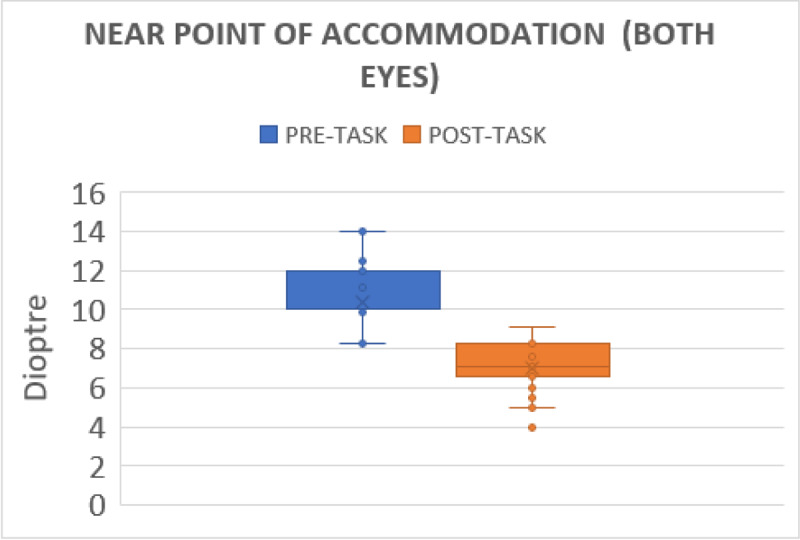 Figure 1
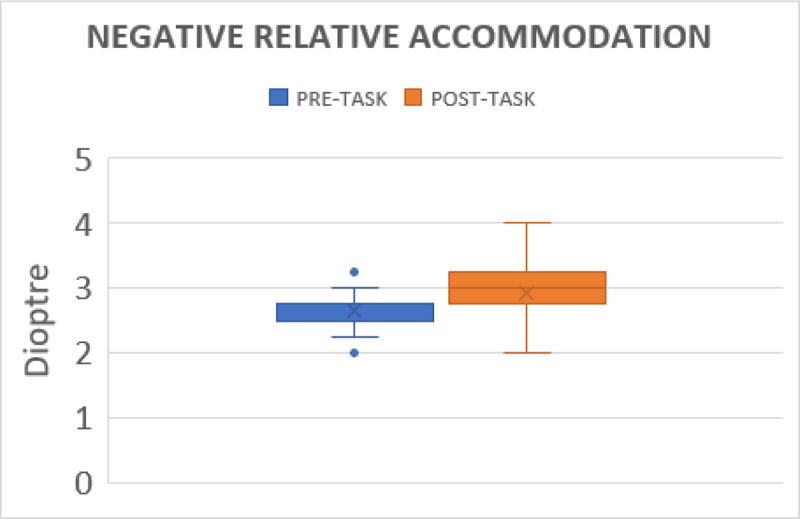 Figure 2
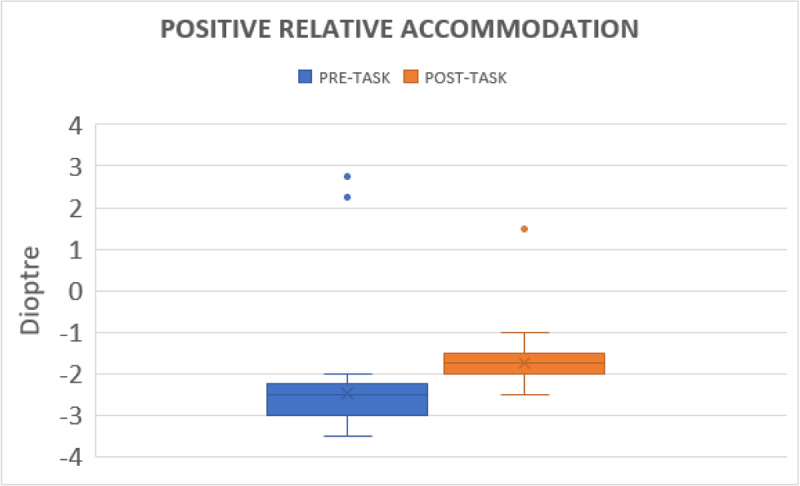 Figure 3
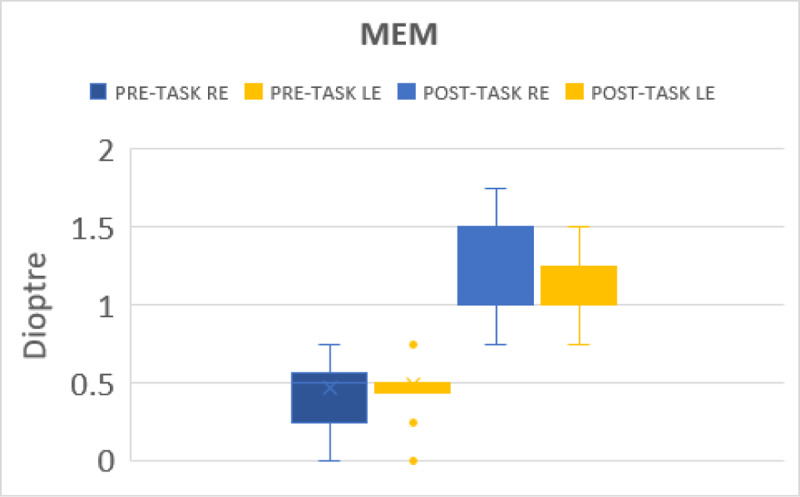 Figure 4
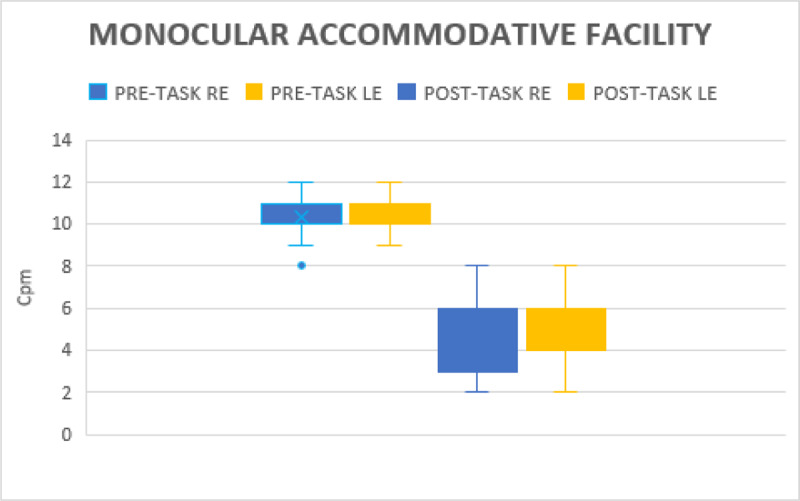 Figure 5
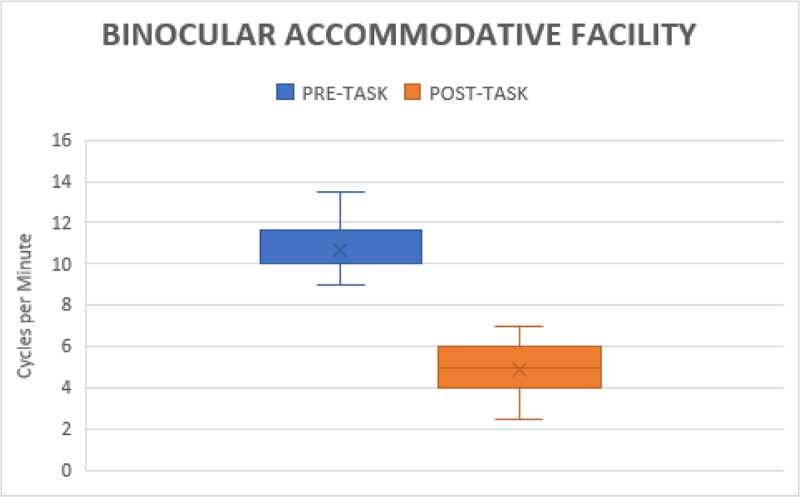 Figure 6
|
| ||||||
|---|---|---|---|---|---|---|
| PARAMETERS | EYE | PRE TASK | POST TASK | P VALUE | ||
|
| ||||||
| MEAN | SD | MEAN | SD | |||
|
| ||||||
| MEM | RE | 0.46 | 0.19 | 1.24 | 0.26 | <0.001 |
|
| ||||||
| LE | 0.48 | 0.16 | 1.19 | 0.24 | <0.001 | |
|
| ||||||
| NPA | RE | 10.75 | 1.83 | 7.15 | 1.25 | <0.001 |
|
| ||||||
| LE | 10.60 | 2.01 | 7.24 | 1.15 | <0.001 | |
|
| ||||||
| BE | 10.35 | 1.52 | 7.06 | 1.11 | <0.001 | |
|
| ||||||
| NRA | 2.64 | 0.23 | 2.92 | 0.37 | <0.001 | |
|
| ||||||
| PRA | 2.46 | 0.41 | 1.78 | 0.31 | <0.001 | |
|
| ||||||
| MF | RE | 10.34 | 0.88 | 4.54 | 1.69 | <0.001 |
|
| ||||||
| LE | 10.36 | 0.82 | 4.97 | 1.37 | <0.001 | |
|
| ||||||
| BAF | 10.65 | 0.98 | 4.90 | 1.06 | <0.001 | |
|
| ||||||
Peer Reviews
No public reviews on file for this paper yet. If you reviewed it on a platform where reviews are public (OpenReview, ICLR, NeurIPS, ICML), you can paste yours below so the community can read it here.
Videos
No videos yet. Explain this paper in a talk, walkthrough, or lecture? Add one.
Taxonomy
TopicsErgonomics and Musculoskeletal Disorders · Virtual Reality Applications and Impacts · Spatial Cognition and Navigation
Introduction
All age groups have seen significant increases in the use of digital devices in recent years, to the point that daily heavy use for social and professional purposes is now considered normal. A variety of ocular and visual symptoms have been referred to as two basic groups, dry eye syndrome and binocular vision anomalies (Sheppard and Wolffsohn, 2018). Small electronic devices such as tablets, iPads, and smartphones have become more popular recently because they make it easier and faster to complete a variety of tasks like information retrieval via the internet and schedule management without being constrained by time or location (van Kraalingen, 2023; Yalçın et al., 2022). As a result, close work with smartphone use, which requires more adaptation than other forms of near work, such as reading books and seeing computer monitors, may cause alterations in visual function. The increasing number of patients who are seeking therapeutic assistance for ocular disorders are related with increased usage of smart gadgets (Kang et al., 2021). The handheld smart devices differ from desktop to laptop in numerous ways, including viewing position and distance, brightness, screen size, and usage habits. In particular, the viewing distance for smart gadgets is quite near to that of computers, which might cause eye strain owing to accommodation and convergence (Tosha et al., 2009). Near-field work may induce iris constriction and accommodative spasms, which can lead to impaired accommodative functioning. This deterioration of accommodative abilities may have a negative impact on ocular tiredness (Siderov et al., 2001).
Previous studies have shown changes to accommodation (lower amplitude and increased latency), blink rate, tear function and dry eye symptoms when assessed before and after smartphone or tablet use (Golebiowski et al., 2020; Nayak et al., 2020; Padavettan et al., 2021). However, smart device activities vary, such as gaming, viewing films, and so on, none of the research examined alterations after gaming using digital devices.
This study investigated changes the effect of gaming using an iPad, on the ocular accommodative parameters.
Subjects and Methods
This experimental study was conducted among the university students for a duration of six months. All participants provided written informed consent following a thorough explanation of the study’s nature and potential risks. This study followed the principles outlined in the World Medical Association Declaration of Helsinki. Approval for the experimental protocol and consent procedures was granted by the Institutional Review Board of Visifert Eye Hospital (VEH/IRB/01/0012). The inclusion criteria were best corrected LogMAR distance visual acuity of at least 0.0, N6 at 40 cm using a near English reading chart, and no history of asthenopia. All those with manifest strabismus, systemic or ocular abnormality, or a history of eye surgery were excluded.
Subjects
A total of 108 individuals received comprehensive eye examinations, of which 80 were chosen as the study’s primary subjects. The remaining 28 were excluded because they did not meet the inclusion criteria. In this study, subjects were chosen using purposive sampling. The subjects in this study were between the ages of 18 and 29. The comprehensive eye evaluation included a visual acuity test for distance using a Log MAR distance visual acuity chart (4 m) and for near an English chart with N notation at 40 cm, along with slit-lamp evaluation.
The subjects underwent a binocular vision evaluation that included the following: Near Point of Accommodation (NPA), Near Point of Convergence (NPC), Negative and Positive Fusional Vergence Amplitudes (NFV, PFV), Accommodative Facility (AF), Vergence Facility (VF), Negative relative accommodation (NRA), Positive relative accommodation (PRA), and Accommodative Response (MEM). The results were compared with age matched normative values (Scheiman and Wick, 2008). All the assessments were conducted with the participant wearing full refractive correction.
Experimental setup
During the experiment, all the subjects were seated comfortably in chairs, and the brightness level of the room was established using data from a study by Padavettan et al. (2021). The intensity of the brightness was 480–500 lux, acquired by LED lights, and no glare from the window was permitted. An iPad mini was used, which has an 8.3-inch Liquid Retina display, 2266 × 1488 resolutions at 326 pixels per inch, wide color display P3, 520 nits (peak) was utilized for the experiment. The display’s illumination was maintained at 460–480 cd/m2. The subjects were assigned to play a ‘Shooting game,’ a sports themed game for 30 minutes. In every five minutes interval the distance was measured by the primary investigator.
Evaluation of accommodative parameters
NearpPoint of accommodation
The NPA is defined as the point nearest to the eye where a target is strongly focused on the retina and is measured using the RAF Rule. Three measurements were obtained in quick succession and average value were noted. The centimeter measurement was converted to diopter to find out the amplitude of accommodation. The average amplitude of each participant was calculated using Hofstetter’s formula (Sterner et al., 2004).
Negative and positive accommodation
The NRA is an assessment of the maximal capacity to relax accommodation while preserving clear, single binocular vision. The PRA is an assessment of the maximal capacity to stimulate accommodation while retaining clear, single binocular vision. The relative accommodation was assessed using minus (negative) and plus (positive) lenses. The results were obtained in Diopter (D) (Abraham, Srinivasan and Thomas, J. 2015; García, Cacho and Lara, 2002).
Accommodative response
The accommodative response was objectively assessed using dynamic retinoscopy by MEM (Monocular Estimation Method). It is an objective means of assessing accommodative response when the patient is actively accommodating. It was carried out with the patient comfortably seated and wearing the necessary refractive correction at usual reading distance and adequate room lighting. The retinoscope head was fitted with a tiny MEM card carrying words or graphics. Participants were instructed to read aloud with both eyes open, and each eye was subjected to dynamic retinoscopy. The quantity of ‘with’ and ‘against’ motion was neutralized using plus lens for ‘with motion,’ while the minus lens was used to for ‘against-the-motion.’ It signifies how much neutralizing lens is used. The lead or lag of accommodation was the difference between the accommodating stimulus and the accommodative response (Leat, 1996; Yekta et al., 2017).
Accommodative facility
The capacity of the eye to concentrate on stimuli at various distances and in varied sequences in a particular duration is tested using flippers of +/–1.50 D (García et al., 2000; Tassinari, 2002).
Statistical Analysis
All the data from the case sheet was entered into the MS Excel sheet (2019). The data set was analyzed using SPSS (IBM Statistical Package for Social Science Version 26.0). Descriptive statistics were used for the overall analysis. Due to sample size of more than 50, the Kolmogorov-Smirnov test was employed to ensure the normality of the data (Mishra et al., 2019). As the data was non-parametric, a non-parametric test was utilized to compare the data, i.e., before vs post activities. The Wilcoxon Signed Rank Test was performed to determine the level of significance of the accommodative parameters. The alpha error was set at 5%.
Results
The mean age of the 80 participants was 22.96 ± 2.23 years (range from 18–29 years), with 50 males and 30 females. The right eye mean spherical equivalent refraction was –0.71 ± 1.73 diopters (range from +1 to –8 DS), whereas the left eye was –0.71 ± 1.75 diopters (range from +1 to –9 DS).
Near point of accommodation
The mean pre-gaming amplitude of accommodation for the right eye, left eye, and both eyes were 10.75D ± 1.83D, 10.60D ± 2.01D, 10.35D ± 1.52D, these values decreased post gaming to 7.15D ± 1.25D for the right eye, 7.24D ± 1.15D for the left eye, and 7.06D ± 1.11D for both eyes (p < 0.001) (Figure 1).
Shows the changes in near point of accommodation for both eyes before and after gaming.
Negative relative accommodation
The NRA before gaming was 2.64 ± 0.23 DS (range from 2.25 to 3.25), but it increased to 2.92 ± 0.37 DS after the task (range from 2.50D to 3.75D) (p < 0.001) (Figure 2).
Illustrates the changes in negative relative accommodative before and after gaming.
Positive relative accommodation
Before gaming, PRA was –2.46 ± 0.41 DS (range from –2.00 DS to –3.50 DS); after the task, it was reduced to –1.78 ± 0.31 DS (range from –1DS to –2DS) (Figure 3).
Shows change in positive relative accommodation before and after gaming.
Accommodative response (MEM)
The MEM value before gaming were 0.46 ± 0.15 DS and 0.48 DS ± 0.16 DS for right and left eye respectively while the mean MEM post-task was 1.24DS ± 0.26 DS and 1.19 ± 0.24 DS for right and left eye respectively. Both values had a significant change (p < 0.001) (Figure 4).
Shows the changes in accommodative response before and after gaming.
Monocular accommodative facility (MAF)
Before gaming the MAF for the right eye was 10.34 ± 0.88 cpm and for the left eye, MAF was 10.36 ± 0.82 cpm. MAF for the right eye decreased to 4.54 ± 1.69 cpm after gaming (p < 0.001) and for the left eye to 4.97 ± 1.37 cpm (p < 0.001). This indicated the decreased ability for monocular stimulation and relaxation of ocular accommodative facility (Figure 5).
Illustrates Monocular Accommodative facility changes before and after gaming.
Binocular accommodative facility (BAF)
After gaming, BAF decreased to 4.90 ± 1.06 cpm from 10.65 ± 0.98 cpm (p < 0.001) (Figure 6).
Shows the changes in binocular accommodative facility before and after gaming.
All results are summarized in Table 1.
Discussion
In this current study we evaluated the accommodative parameters before and after 30 minutes of continuous tablet gaming.
Significant changes were observed for the NPA after the gaming phase among the subjects. This may be the result of the tonic accommodation brought on by long-term close activity. Many studies suggest that 30 minutes of reading, watching movies, and computer gaming causes a decrease in NPA, where in our study shows 30 minutes of gaming also causes lower in NPA in healthy adults (Kang et al., 2021; Nayak et al., 2020; Padavettan et al., 2021).
The NRA and PRA were significantly affected after the activity. To maintain binocularity, NRA and PRA both depend on fusional vergence. The decrease in relative accommodation may be influenced by the reduction in fusional vergence. Padavettan et al. (2021) reported reduced NRA and PRA after 30 minutes of reading activity. Lee et al. (2019) showed a decrease in NRA and PRA after 30 minutes of movie watching on a smart phone. None of the studies addressed the effects of tablet gaming.
Lag of accommodation was noted post-activity, which was similar to the findings of others after near activity (Ha et al., 2014; Kang et al., 2021; Lee et al., 2019; Padavettan et al., 2021). The reason for lag of accommodation in our study is likely to be the task of continuous gaming for 30 minutes.
Both BF and MF were significantly affected post-task. It was consistent with other studies among young people, wherein participants were given tablet-based visual tasks to complete after reading and viewing movies (Padavettan et al., 2021; Park et al., 2014).
Conclusion
Our study found a significant decrease in accommodative parameters after 30 minutes of gaming using an iPad. Ocular fatigue and non-strabismic binocular vision anomalies may develop earlier in prolonged digital device users as compared to individuals with lesser exposure. To lessen the likelihood of binocular vision anomalies (which might result in asthenopia), regular breaks are often suggested when playing games using digital devices. However, the impact of taking breaks on binocular vision parameters has not been studied and this creates scopes for future studies.
Data Accessibility Statement
The datasets generated during and/or analyzed during the current study would be available on request for research purposes.
The reference list from the paper itself. Each links out to its DOI / PubMed record.
- 1Abraham, N., Srinivasan, K. and Thomas, J. (2015) ‘Normative data for near point of convergence, accommodation, and phoria’, Oman Journal of Ophthalmology, 8(1), p. 14. Available at: 10.4103/0974-620X.14985625709268 PMC 4333536 · doi ↗ · pubmed ↗
- 2García, Á., Cacho, P. and Lara, F. (2002) ‘Evaluating Relative Accommodations in General Binocular Dysfunctions’, Optometry and Vision Science, 79(12), pp. 779–787. Available at: 10.1097/00006324-200212000-0001012512686 · doi ↗ · pubmed ↗
- 3García, Á., Cacho, P., Lara, F. and Megías, R. (2000) ‘The relation between accommodative facility and general binocular dysfunction’, Ophthalmic and Physiological Optics, 20(2), pp. 98–104. Available at: 10.1046/j.1475-1313.2000.00478.x 10829131 · doi ↗ · pubmed ↗
- 4Golebiowski, B., Long, J., Harrison, K., Lee, A., Chidi-Egboka, N. and Asper, L. (2020) ‘Smartphone use and effects on tear film, blinking and binocular vision’, Current Eye Research, 45(4), pp. 428–434. Available at: 10.1080/02713683.2019.166354231573824 · doi ↗ · pubmed ↗
- 5Ha, N.R., Kim, C.J., Jung, S.A., Choi, E.J. and Kim, H.J. (2014) ‘Comparison of accommodative system according to the material and font size of near visual media’, Journal of Korean Ophthalmic Optics Society, 19(2), pp. 217–224. Available at: 10.14479/jkoos.2014.19.2.217 · doi ↗
- 6Kang, J.W., Chun, Y.S. and Moon, N.J. (2021) ‘A comparison of accommodation and ocular discomfort change according to display size of smart devices’, BMC Ophthalmology, 21(1), p. 44. Available at: 10.1186/s 12886-020-01789-z 33461518 PMC 7814593 · doi ↗ · pubmed ↗
- 7Leat, S. (1996) ‘Accommodative response in children and young adults using dynamic retinoscopy’, Ophthalmic and Physiological Optics, 16(5), pp. 375–384. Available at: 10.1016/0275-5408(95)00139-58944182 · doi ↗ · pubmed ↗
- 8Lee, J.W., Cho, H.G., Moon, B.Y., Kim, S.Y. and Yu, D.S. (2019) ‘Effects of prolonged continuous computer gaming on physical and ocular symptoms and binocular vision functions in young healthy individuals’, Peer J, 7, p. e 7050. Available at: 10.7717/peerj.705031198647 PMC 6555390 · doi ↗ · pubmed ↗