Fossil and modern penguin tarsometatarsi: cavities, vascularity, and resilience
Piotr JADWISZCZAK, Ashley KRÜGER, Thomas MÖRS

TL;DR
This study uses x-ray microscopy to analyze the tarsometatarsi bones of ancient and modern penguins, revealing insights into their structure and evolution.
Contribution
The paper provides a novel analysis of tarsometatarsi bone structure in both fossil and modern penguins using x-ray microscopy.
Findings
Eocene penguins have well-developed medullary cavities, while larger species show smaller or gradient cavities.
Extant penguins have reduced cavity size with increased body size and more efficient resistance to bending forces.
Nutrient foramen distribution and cavity dimensions correlate more with body size than geological age.
Abstract
Penguin tarsometatarsi are shortened and flattened, and studies devoted to the internal characteristics of these composite bones are very limited. Therefore, we present here a comprehensive, x‐ray‐microscopy‐based analysis based on tarsometatarsi of Eocene stem Sphenisciformes from Seymour Island (Antarctic Peninsula) as well as recent Aptenodytes forsteri, A. patagonicus, and Pygoscelis adeliae penguins. Our study focuses on four aspects: size variability of the medullary cavities, vascularization patterns with emphasis on diaphyseal vessels, cross‐sectional anisotropy, and diaphyseal resistance to bending forces. Small‐sized Eocene penguins (Delphinornis and Marambiornopsis) show well‐developed tarsometatarsal medullary cavities, whereas the cavities of “giant” early Sphenisciformes are either smaller (Palaeeudyptes) or show a conspicuous intermetatarsal size gradient (Anthropornis).…
Genes, proteins, chemicals, diseases, species, mutations and cell lines named across the full text — each resolved to its canonical identifier and authoritative record.
Click any figure to enlarge with its caption.
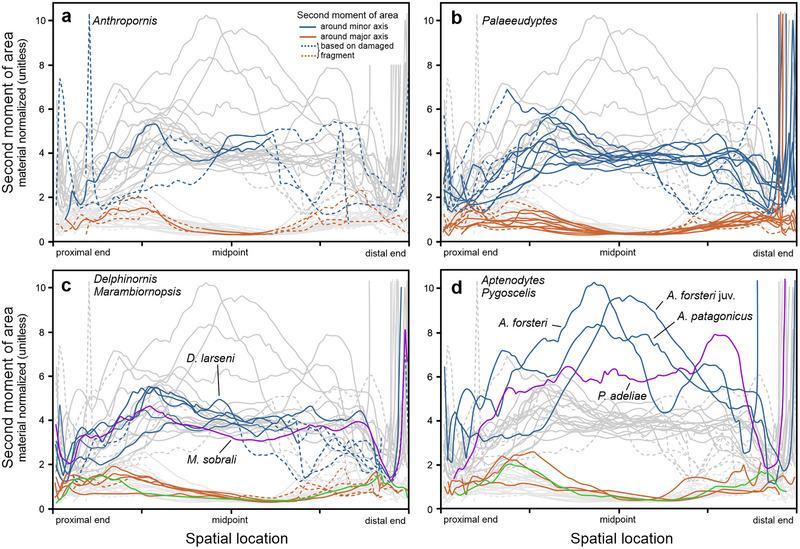 Figure 1
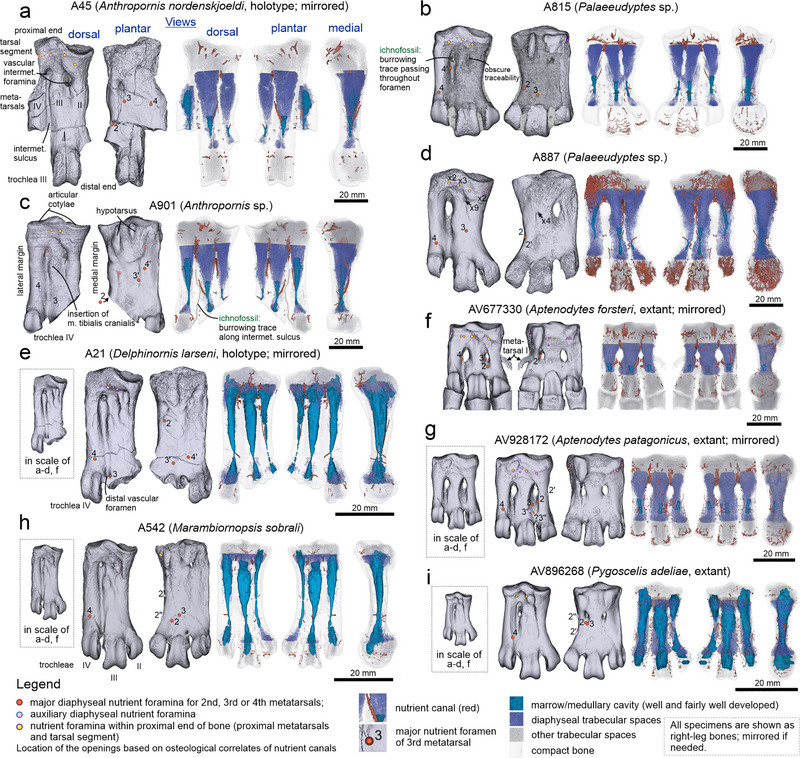 Figure 2
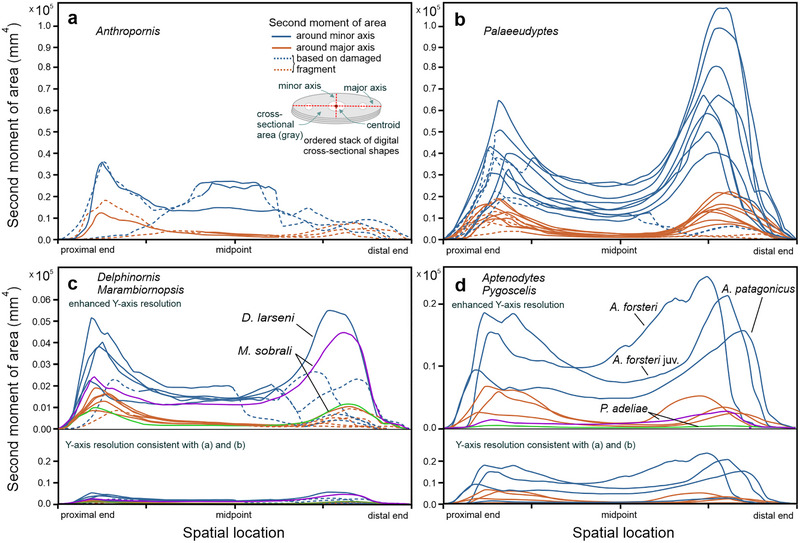 Figure 3
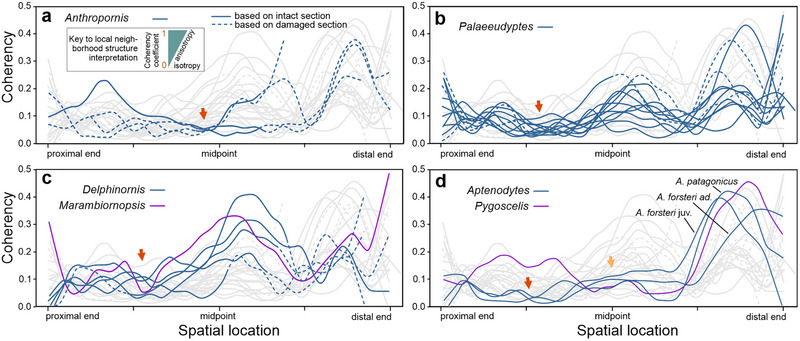 Figure 4
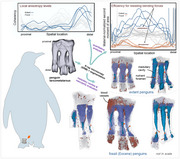 Figure 5
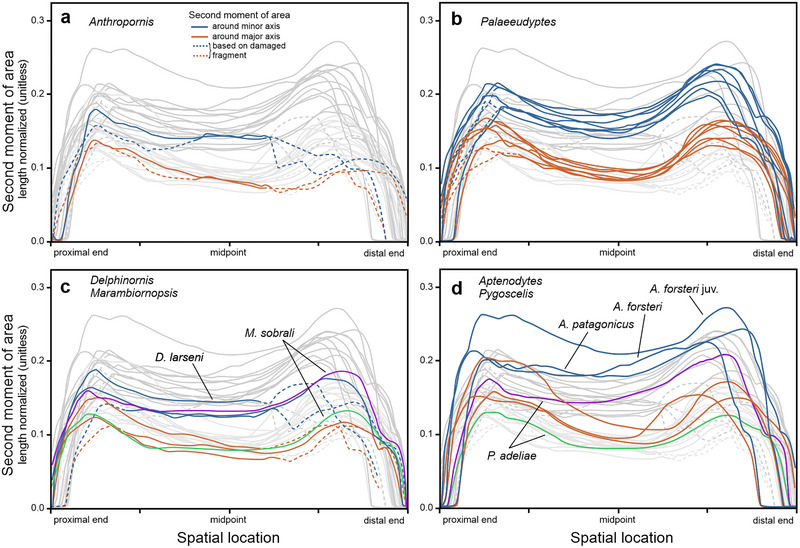 Figure 6
Peer Reviews
No public reviews on file for this paper yet. If you reviewed it on a platform where reviews are public (OpenReview, ICLR, NeurIPS, ICML), you can paste yours below so the community can read it here.
Videos
No videos yet. Explain this paper in a talk, walkthrough, or lecture? Add one.
Taxonomy
TopicsPaleontology and Evolutionary Biology · Ichthyology and Marine Biology · Evolution and Paleontology Studies