In Vivo Quantification of Creatine Kinase Kinetics in Mouse Brain Using 31P‐MRS at 7 T
Mohamed Tachrount, Sean Smart, Jason Lerch, Antoine Cherix

TL;DR
This study shows how to use 31P-MRS on 7-T scanners to measure creatine kinase activity in mouse brains, revealing how respiration changes affect brain energy metabolism.
Contribution
Demonstrates the feasibility of quantifying creatine kinase kinetics in mouse brains using 7-T 31P-MRS and identifies physiological factors affecting brain energy homeostasis.
Findings
A 20% reduction in respiration leads to a 36% increase in the apparent forward rate constant of creatine kinase.
Localized 3D-ISIS sequence provides reliable measurements of 31P-containing metabolites with high SNR and minimal signal loss.
Physiological factors like pH and mitochondrial ATP production significantly influence mouse brain energy homeostasis.
Abstract
31P‐MRS is a method of choice for studying neuroenergetics in vivo, but its application in the mouse brain has been limited, often restricted to ultrahigh field (> 7 T) MRI scanners. Establishing its feasibility on more readily available preclinical 7‐T scanners would create new opportunities to study metabolism and physiology in murine models of brain disorders. Here, we demonstrate that the apparent forward rate constant (k f) of creatine kinase (CK) can be accurately quantified using a progressive saturation‐transfer approach in the mouse brain at 7 T. We also find that a 20% reduction in respiration of anesthetized mice can lead to 36% increase in k f attributable to a drop in cellular pH and mitochondrial ATP production. To achieve this, we used a test–retest analysis to assess the reliability and repeatability of 31P‐MRS acquisition, analysis, and experimental design protocols. We…
Genes, proteins, chemicals, diseases, species, mutations and cell lines named across the full text — each resolved to its canonical identifier and authoritative record.
Click any figure to enlarge with its caption.
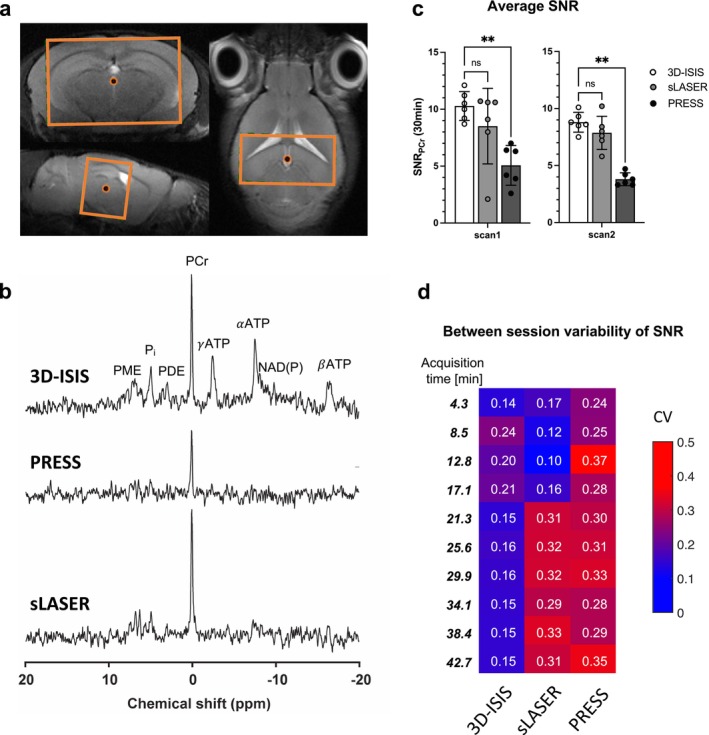 Figure 1
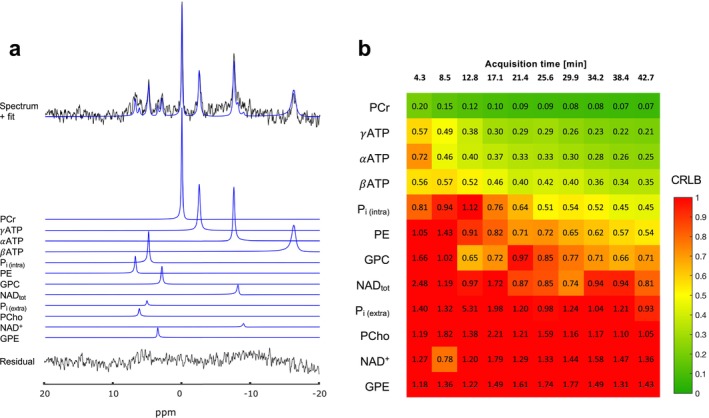 Figure 2
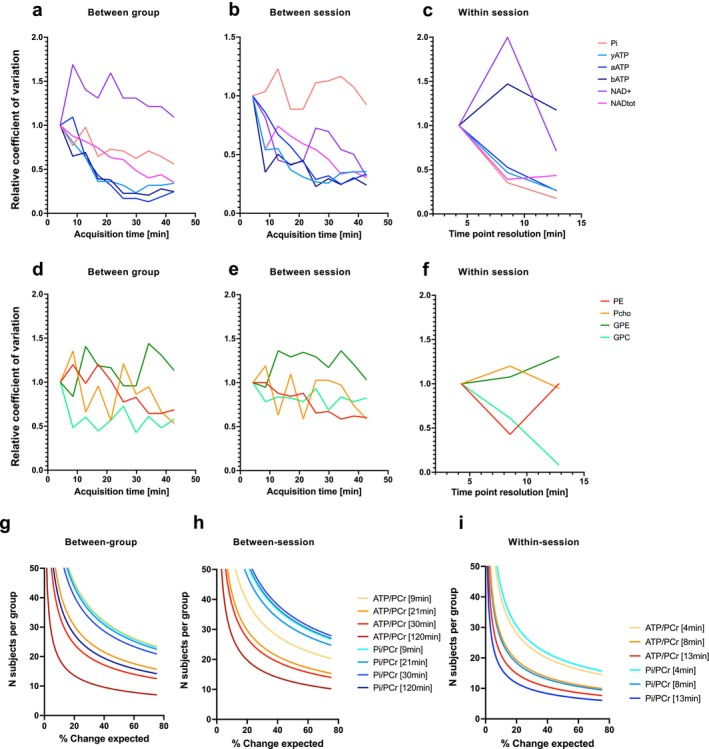 Figure 3
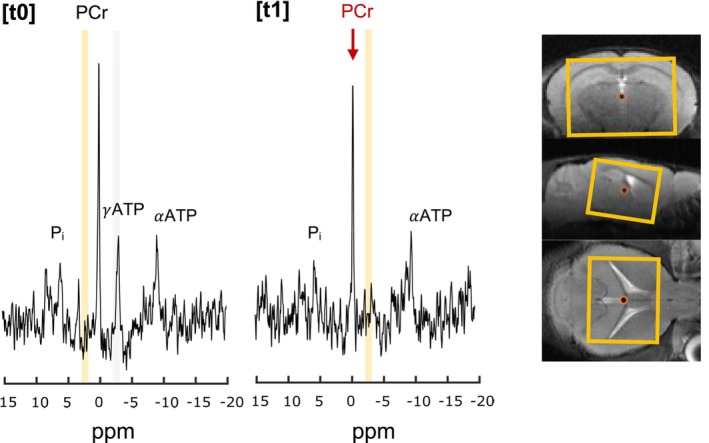 Figure 4
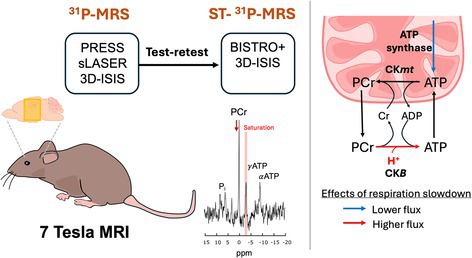 Figure 5
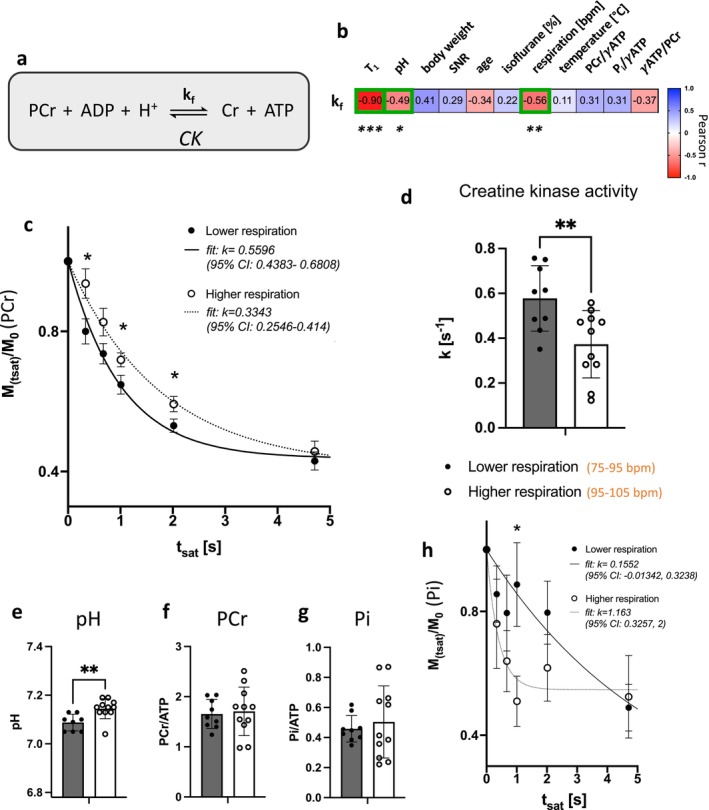 Figure 6
Peer Reviews
No public reviews on file for this paper yet. If you reviewed it on a platform where reviews are public (OpenReview, ICLR, NeurIPS, ICML), you can paste yours below so the community can read it here.
Videos
No videos yet. Explain this paper in a talk, walkthrough, or lecture? Add one.
Taxonomy
TopicsAdvanced MRI Techniques and Applications · Lanthanide and Transition Metal Complexes · Advanced NMR Techniques and Applications