Long‐term results of palliative placement of very low‐axial force self‐expandable metallic stents for malignant colorectal obstruction
Rika Kyo, Takashi Sasaki, Shuntaro Yoshida, Hiroyuki Isayama, Tomonori Yamada, Toshiyuki Enomoto, Yorinobu Sumida, Toshio Kuwai, Masafumi Tomita, Takeaki Matsuzawa, Rintaro Moroi, Toshiyasu Shiratori, Yoshihisa Saida

TL;DR
This study shows that using very low axial force stents for colorectal cancer blockage is safe and effective for long-term palliative care.
Contribution
The study evaluates the long-term safety and effectiveness of very low axial force stents in malignant colorectal obstruction.
Findings
The 1-year survival rate after stent placement was 37.8%.
Cumulative patency rates were 93.6%, 84.2%, and 75.8% at 3, 6, and 12 months.
Major adverse events were low, with perforation at 2.5% and no cases after bevacizumab use.
Abstract
Stent placement is a standard option for palliative decompression in patients with malignant colorectal obstruction. Long‐term stent placement is associated with perforation, migration, and stent occlusion. Perforation is associated with life expectancy. Several studies have shown that stents with a high axial force (AF), which is defined as the force required to maintain the stent straight after it has bent, are associated with a higher perforation rate. Therefore, we evaluated the long‐term outcomes of using a very low AF stent (Niti‐S Enteral Colonic Uncovered stent D‐type) for palliative purposes. Eighty‐one consecutive patients with malignant colorectal obstruction in 33 medical institutions were evaluated. A stent with very low AF was placed using an endoscope system. We evaluated the adverse events (including perforation, migration, and stent occlusion), 1‐year survival rate,…
Genes, proteins, chemicals, diseases, species, mutations and cell lines named across the full text — each resolved to its canonical identifier and authoritative record.
Click any figure to enlarge with its caption.
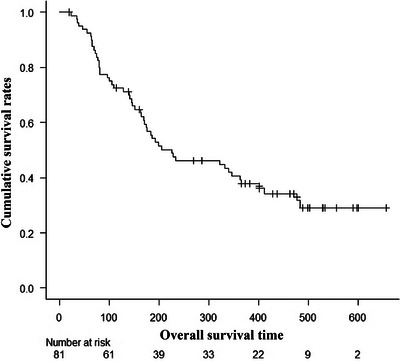 Figure 1
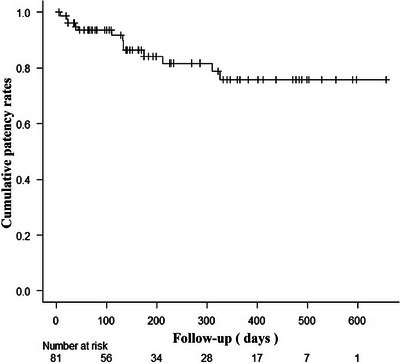 Figure 2
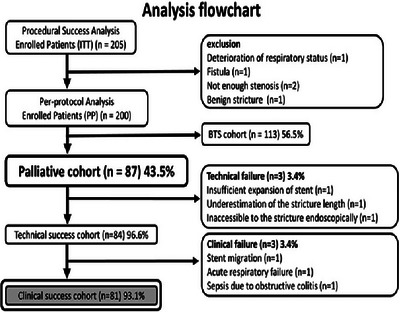 Figure 3
Peer Reviews
No public reviews on file for this paper yet. If you reviewed it on a platform where reviews are public (OpenReview, ICLR, NeurIPS, ICML), you can paste yours below so the community can read it here.
Videos
No videos yet. Explain this paper in a talk, walkthrough, or lecture? Add one.
Taxonomy
TopicsEsophageal and GI Pathology · Colorectal Cancer Surgical Treatments · Biliary and Gastrointestinal Fistulas