Ventilatory efficiency in cardiac amyloidosis—A systematic review and meta‐analysis
Robin Willixhofer, Elisabetta Salvioni, Nicolò Capra, Mauro Contini, Jeness Campodonico, Piergiuseppe Agostoni

TL;DR
This study finds that patients with cardiac amyloidosis have poor ventilatory efficiency during exercise, with differences between disease subtypes and exercise testing methods.
Contribution
The study provides the first meta-analysis of ventilatory efficiency in cardiac amyloidosis, comparing subtypes and exercise testing modalities.
Findings
Patients with transthyretin amyloidosis (ATTR) have elevated VE/VCO2 slopes, indicating ventilatory inefficiency.
ATTR patients are older and have higher VE/VCO2 slopes compared to AL amyloidosis patients.
Peak oxygen uptake (VO2) varies by exercise modality, with treadmill testing showing the lowest values in ATTR patients.
Abstract
In cardiac amyloidosis (CA) cardiopulmonary exercise testing (CPET) is underexplored. This study evaluated exercise limitations in CA using CPET, focusing on the ventilation‐to‐carbon dioxide production (VE/VCO2) slope and peak oxygen uptake (VO2). Seventeen studies involving 1505 patients were analyzed and systematically reviewed according to PRISMA reporting guidelines. Subgroup analyses assessed differences by diagnosis (ATTR vs. AL), CPET modality, and age. The cohort included 12% with AL, 80% with ATTR (23% hereditary [ATTRv], 70% wild‐type [ATTRwt], 7% unspecified), and 8% unidentified subtypes. VE/VCO2 slope was elevated across ATTR subgroups: 38.4 (95% CI: 36.9–40.0, I 2 = 57%) in ATTRwt and 37.9 (95% CI: 35.1–40.7, I 2 = 70%) in ATTRv. ATTR patients were older than AL patients by 9.0 years (95% CI: 0.4–17.6, I 2 = 88%) and had a higher VE/VCO2 slope: 2.5 (95% CI: 0.2–4.8, I 2 =…
Genes, proteins, chemicals, diseases, species, mutations and cell lines named across the full text — each resolved to its canonical identifier and authoritative record.
Click any figure to enlarge with its caption.
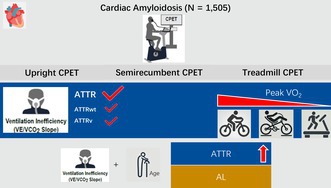 Figure 1
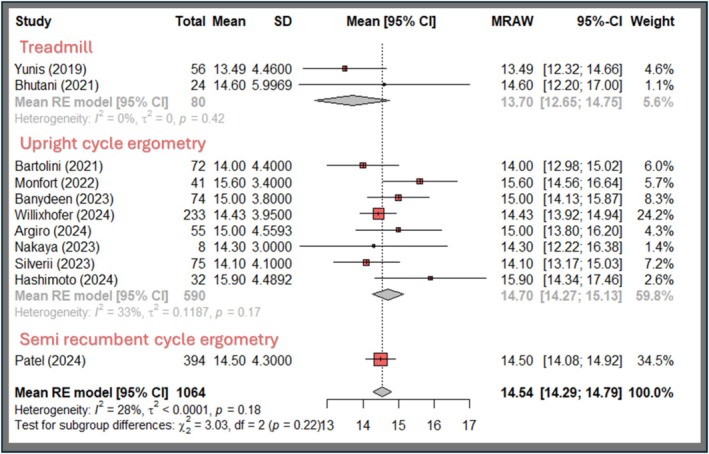 Figure 2
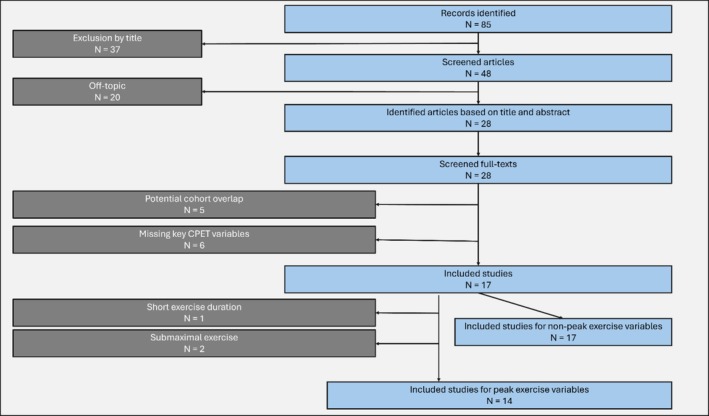 Figure 3
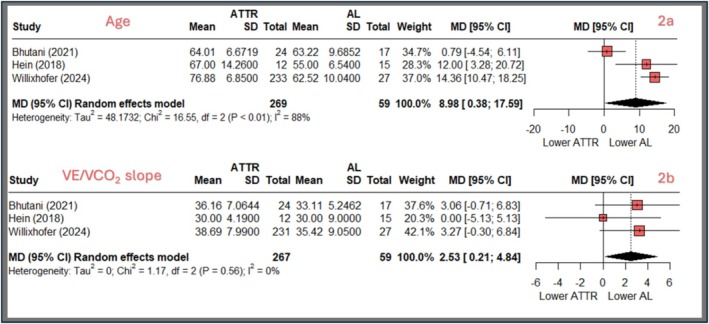 Figure 4
Peer Reviews
No public reviews on file for this paper yet. If you reviewed it on a platform where reviews are public (OpenReview, ICLR, NeurIPS, ICML), you can paste yours below so the community can read it here.
Videos
No videos yet. Explain this paper in a talk, walkthrough, or lecture? Add one.
Taxonomy
TopicsCardiovascular Function and Risk Factors · Cardiac electrophysiology and arrhythmias · Amyloidosis: Diagnosis, Treatment, Outcomes