PPARG contributes to urothelial integrity in the murine ureter by activating the expression of Shh and superficial cell-specific genes
Carsten Rudat, Philipp Straube, Jan Hegermann, Mark-Oliver Trowe, Hauke Thiesler, Herbert Hildebrandt, Lisa Witt, Andreas Kispert

TL;DR
PPARG helps maintain the structure of the mouse ureter by activating genes in different layers of the urothelium.
Contribution
This study reveals PPARG's dual role in activating Shh and superficial cell-specific genes for urothelial integrity.
Findings
Pparg deletion in ureteric epithelium leads to a dilated ureter with undifferentiated luminal and proliferating basal cells.
Pharmacological SHH activation in Pparg-deficient ureters restores normal urothelial structure and cell numbers.
PPARG independently activates structural genes in superficial cells and Shh in basal and intermediate cells.
Abstract
The urothelium is a stratified epithelium with an important barrier function in the urinary drainage system. The differentiation and maintenance of the three major urothelial cell types (basal, intermediate and superficial cells) is incompletely understood. Here, we show that mice with a conditional deletion of the transcription factor gene peroxisome proliferator activated receptor gamma (Pparg) in the ureteric epithelium have a dilated ureter at postnatal stages with a urothelium consisting of a layer of undifferentiated luminal cells and a layer of proliferating basal cells. Molecular analysis of fetal stages revealed that the expression of a large number of genes is not activated in superficial cells and that of a few genes, including Shh, is not activated in intermediate and basal cells. Pharmacological activation of SHH signaling in explant cultures of perinatal Pparg-deficient…
Genes, proteins, chemicals, diseases, species, mutations and cell lines named across the full text — each resolved to its canonical identifier and authoritative record.
Click any figure to enlarge with its caption.
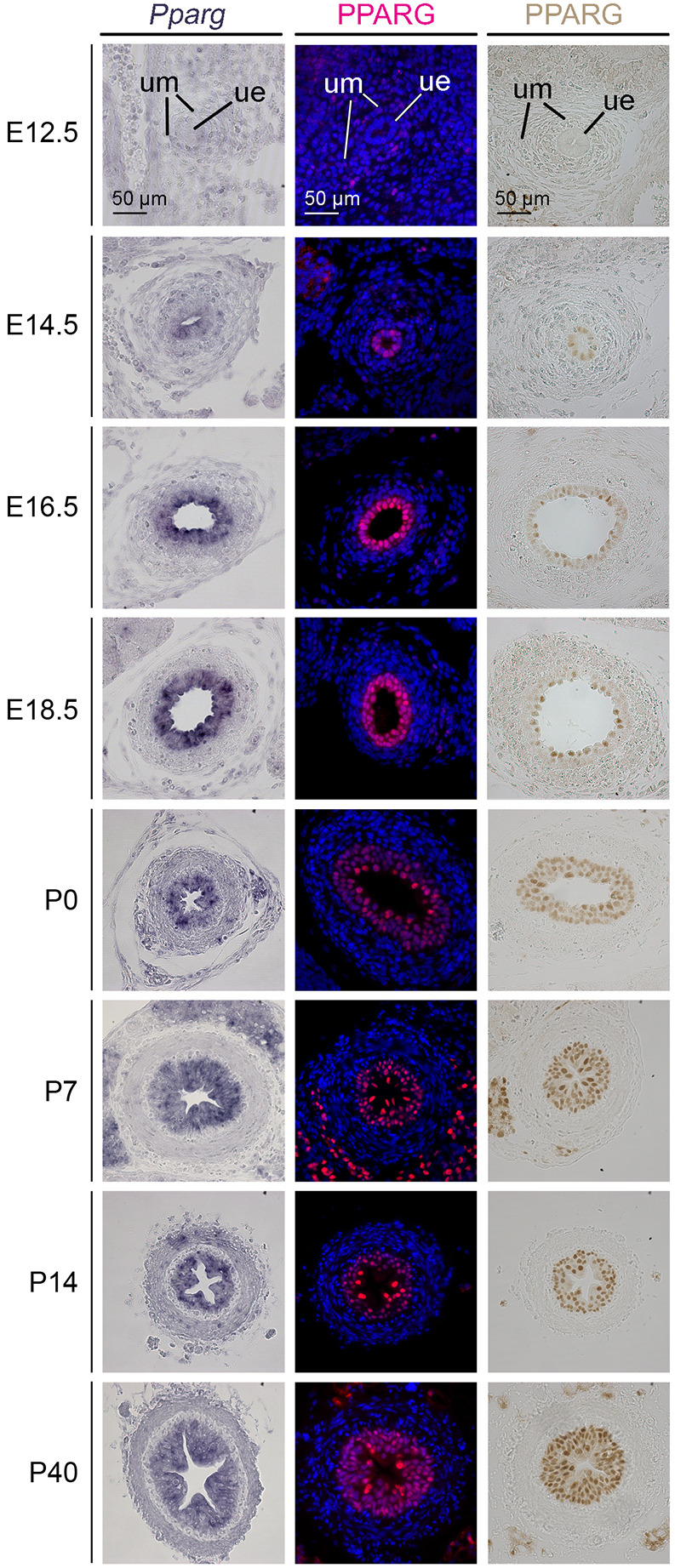 Figure 1
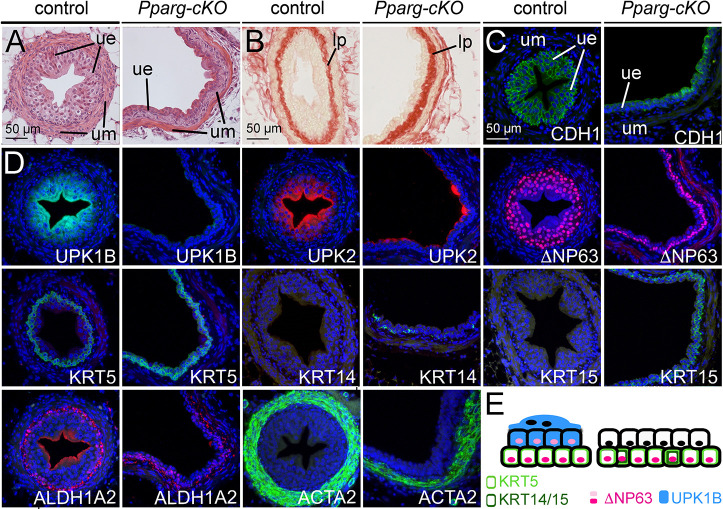 Figure 2
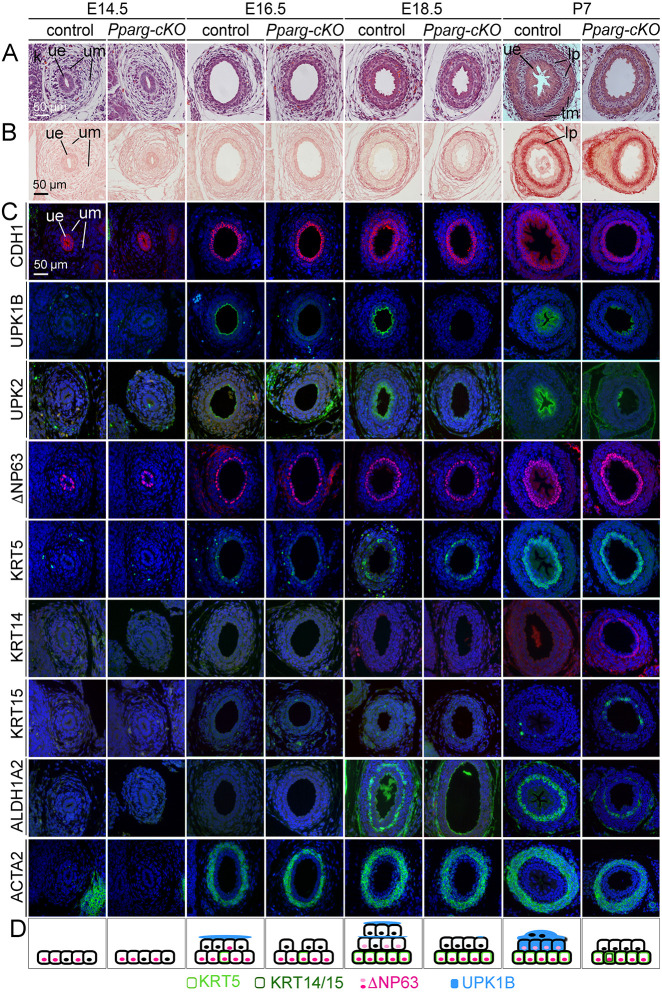 Figure 3
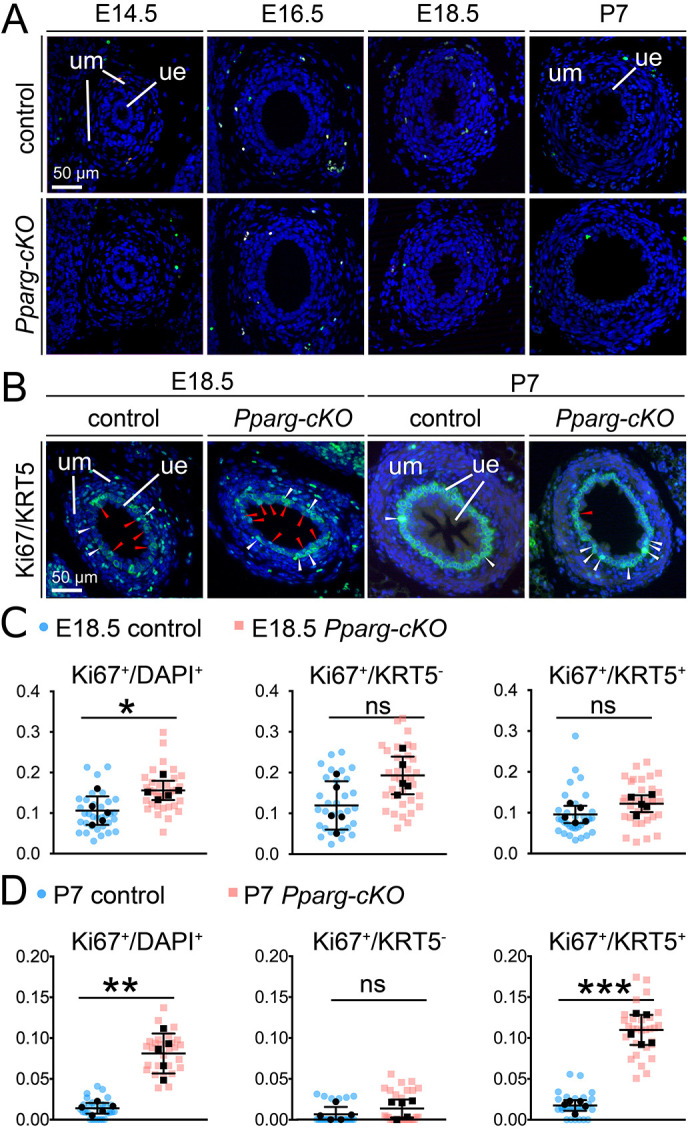 Figure 4
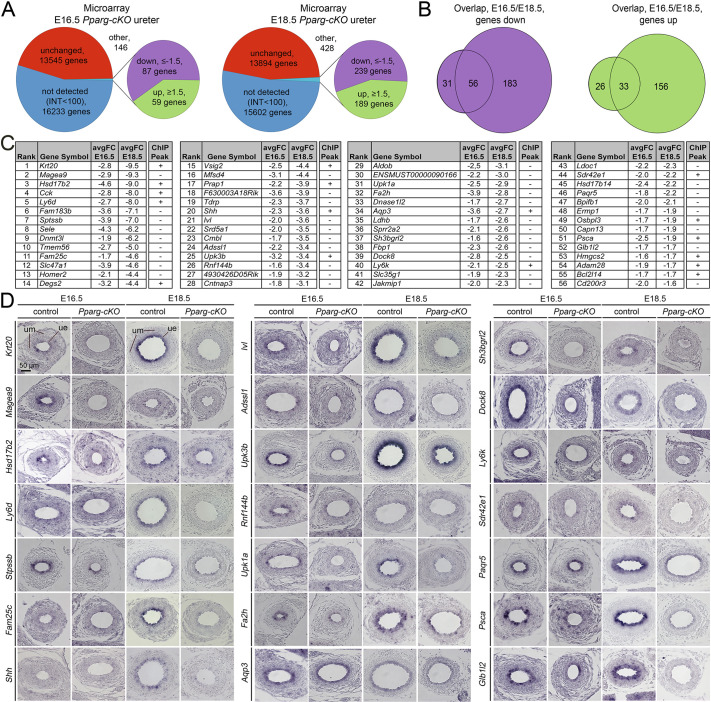 Figure 5
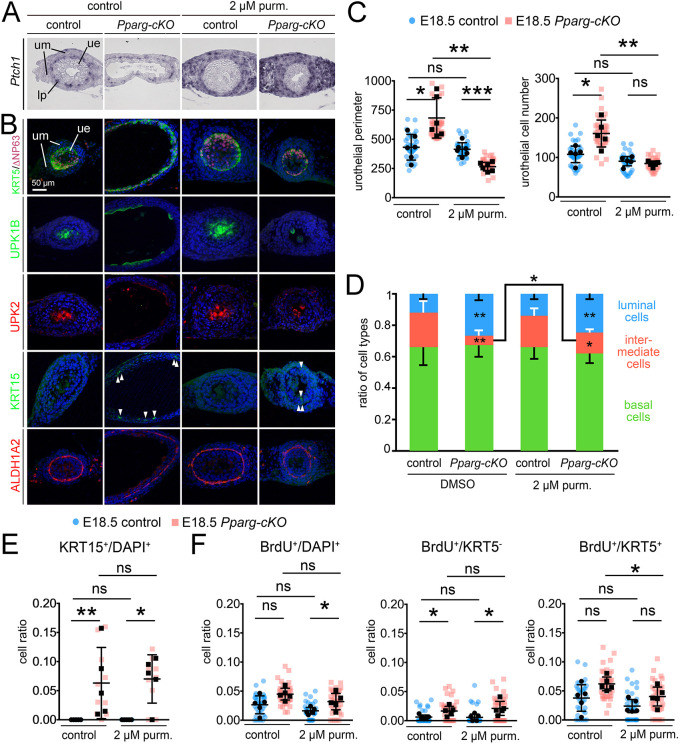 Figure 6
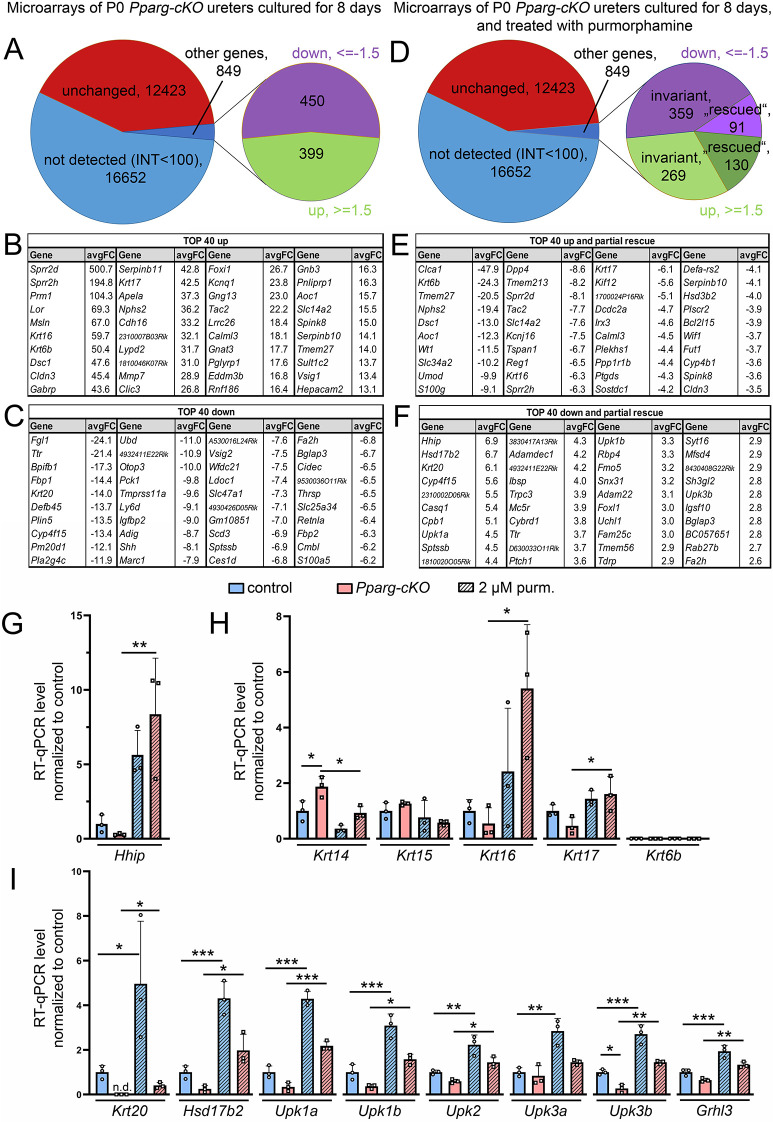 Figure 7
Peer Reviews
No public reviews on file for this paper yet. If you reviewed it on a platform where reviews are public (OpenReview, ICLR, NeurIPS, ICML), you can paste yours below so the community can read it here.
Videos
No videos yet. Explain this paper in a talk, walkthrough, or lecture? Add one.
Taxonomy
TopicsUrological Disorders and Treatments · Birth, Development, and Health · Aldose Reductase and Taurine