Relationship Between Within-Session Digital Motor Skill Acquisition and Alzheimer Disease Risk Factors Among the MindCrowd Cohort: Cross-Sectional Descriptive Study
Andrew Hooyman, Matt J Huentelman, Matt De Both, Lee Ryan, Kevin Duff, Sydney Y Schaefer

TL;DR
A web-based motor skill game called Super G shows potential as a tool for identifying Alzheimer's disease risk factors in a large and diverse population.
Contribution
The study introduces a remote, unsupervised digital motor skill task as a scalable method for assessing Alzheimer's risk factors.
Findings
APOE ε4 carriers had slower response times in the Super G task.
Males showed greater time in target (TinT) performance in the game.
Older age was associated with lower TinT scores, and there was a sex-based interaction with verbal learning.
Abstract
Previous research has shown that in-lab motor skill acquisition (supervised by an experimenter) is sensitive to biomarkers of Alzheimer disease (AD). However, remote unsupervised screening of AD risk through a skill-based task via the web has the potential to sample a wider and more diverse pool of individuals at scale. The purpose of this study was to examine a web-based motor skill game (“Super G”) and its sensitivity to risk factors of AD (eg, age, sex, APOE ε4 carrier status, and verbal learning deficits). Emails were sent to 662 previous MindCrowd participants who had agreed to be contacted for future research and have their APOE ε4 carrier status recorded and those who were at least 45 years of age or older. Participants who chose to participate were redirected to the Super G site where they completed the Super G task using their personal computer remotely and unsupervised. Once…
Genes, proteins, chemicals, diseases, species, mutations and cell lines named across the full text — each resolved to its canonical identifier and authoritative record.
Click any figure to enlarge with its caption.
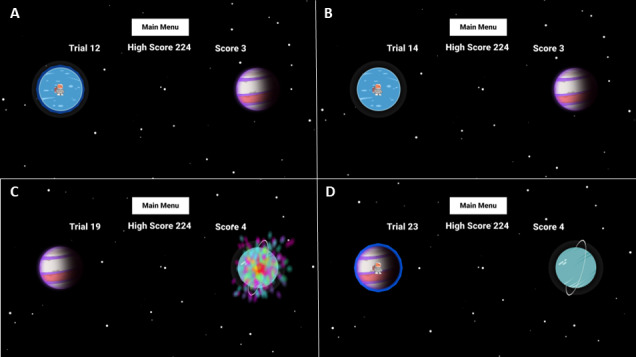 Figure 1
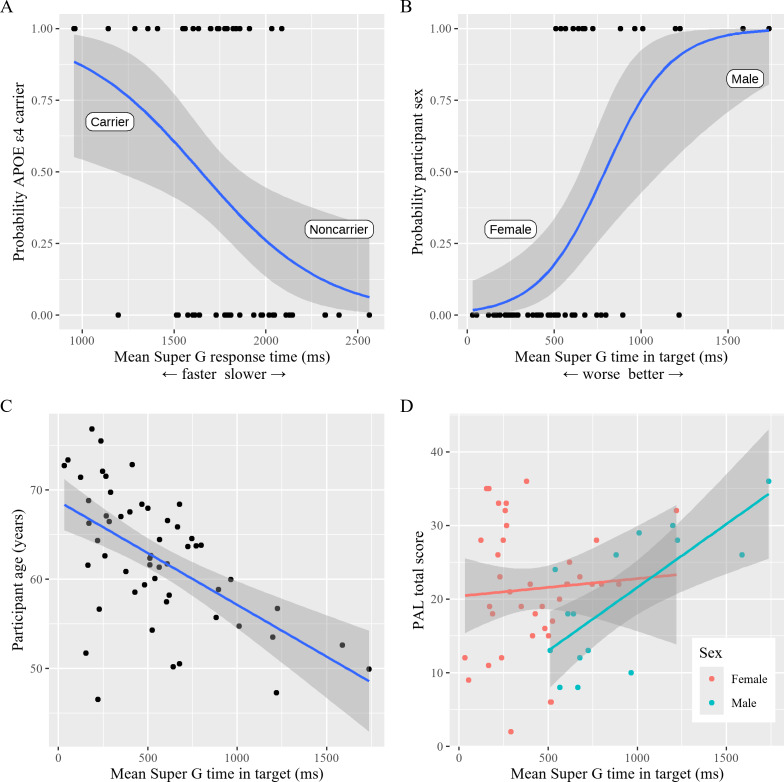 Figure 2
Peer Reviews
No public reviews on file for this paper yet. If you reviewed it on a platform where reviews are public (OpenReview, ICLR, NeurIPS, ICML), you can paste yours below so the community can read it here.
Videos
No videos yet. Explain this paper in a talk, walkthrough, or lecture? Add one.
Taxonomy
TopicsStroke Rehabilitation and Recovery · Neurobiology of Language and Bilingualism · Dementia and Cognitive Impairment Research