Larval habitat diversity, physicochemical characteristics and their effect on the larval density of malaria vectors in the city of Accra, Ghana
Abdul Rahim Mohammed Sabtiu, Isaac Amankona Hinne, Isaac Kwame Sraku, Daniel Kodjo Halou, Richard Tettey Doe, Simon Kwaku Attah, Fred Aboagye-Antwi, Yaw Asare Afrane

TL;DR
This study explores how urban habitats in Accra, Ghana, affect the breeding of malaria-carrying mosquitoes, finding high larval densities in polluted and agricultural areas.
Contribution
The study identifies urban irrigation and polluted habitats as key drivers of malaria vector breeding in Accra, with the first detection of An. stephensi in the region.
Findings
Drainage ditches were the most common habitats for Anopheles larvae, with high larval density in irrigated urban farming areas.
Polluted habitats showed higher ammonium levels and lower dissolved oxygen compared to unpolluted ones.
An. coluzzii was the predominant malaria vector, and invasive An. stephensi was detected for the first time in the study area.
Abstract
Malaria is more prevalent in rural areas than urban partly due to less availability of Anopheles breeding habitats of natural origin in urban settings. However, urban factors such as irrigated farming, open sewers, and discarded containers create mosquito breeding sites. This study investigates the diversity and distribution of mosquito larval habitats and the impact of physicochemical characteristics on the presence and density of Anopheles gambiae s.l. larvae in Accra, Ghana. Larval surveys and collections were conducted at fifteen locations in Accra, during both the dry season (February to March) and the rainy season (June to July) of 2022, using the WHO standard dipping method. These sites were divided into five categories: Irrigated Urban Farming (IUF), Lower Socioeconomic Status (LS), Middle Socioeconomic Status (MS), High Socioeconomic Status (HS), and Peri-urban (PU) areas.…
Genes, proteins, chemicals, diseases, species, mutations and cell lines named across the full text — each resolved to its canonical identifier and authoritative record.
Click any figure to enlarge with its caption.
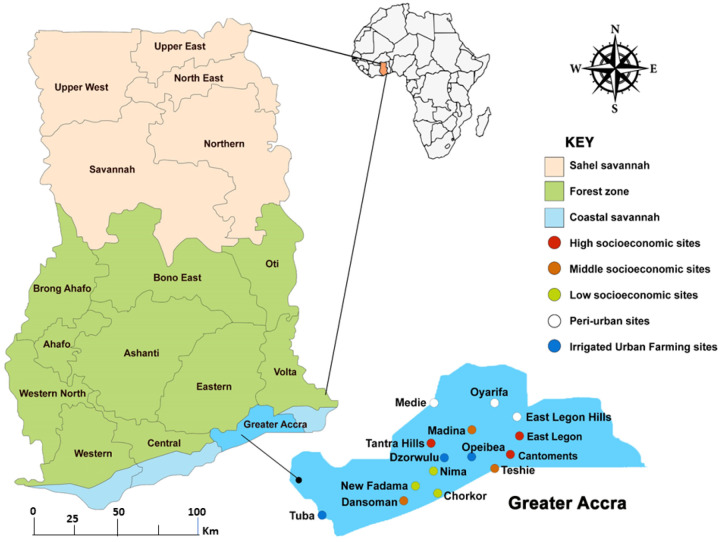 Figure 1
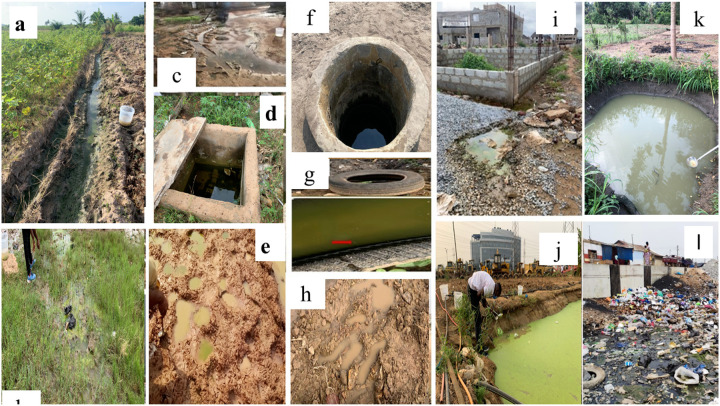 Figure 2
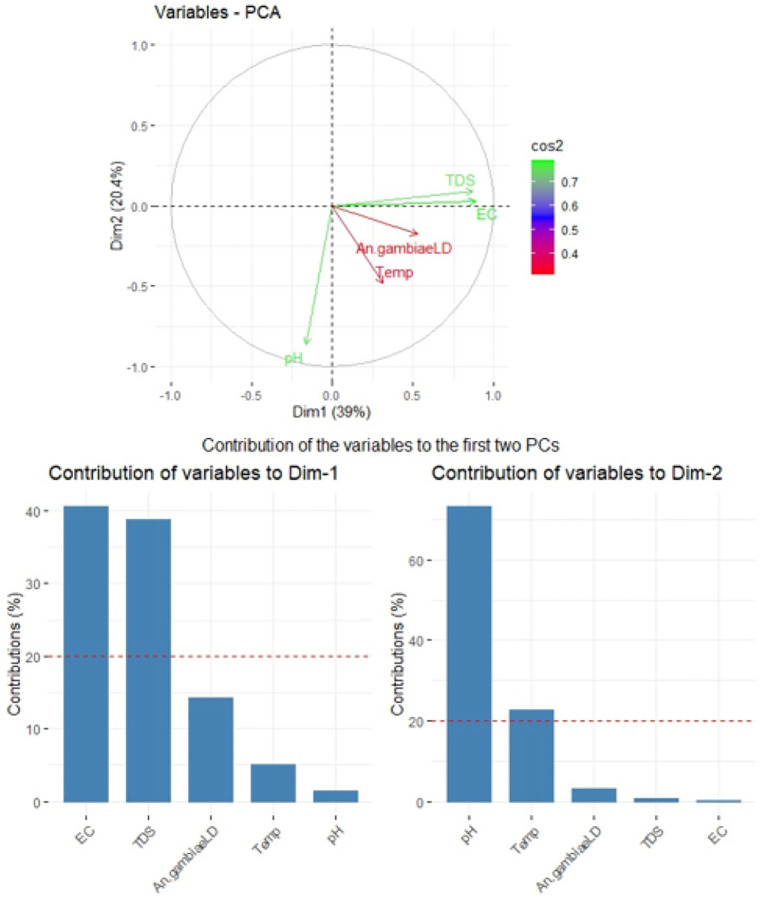 Figure 3
Peer Reviews
No public reviews on file for this paper yet. If you reviewed it on a platform where reviews are public (OpenReview, ICLR, NeurIPS, ICML), you can paste yours below so the community can read it here.
Videos
No videos yet. Explain this paper in a talk, walkthrough, or lecture? Add one.
Taxonomy
TopicsMalaria Research and Control · Mosquito-borne diseases and control · Insect Pest Control Strategies