Mechanisms of delayed ischemia/reperfusion evoked ROS generation in the hippocampal CA1 zone of adult mouse brain slices
Yuliya V. Medvedeva, Edward Sharman, John H. Weiss

TL;DR
This study explores how reactive oxygen species (ROS) are produced in the brain after reperfusion following ischemia, identifying mitochondrial hyperpolarization and zinc accumulation as key contributors.
Contribution
The study identifies mitochondrial hyperpolarization and Zn2+ accumulation as novel mechanisms contributing to delayed ROS production after reperfusion.
Findings
OGD evokes a two-stage ROS production: an initial increase during OGD and a delayed burst after reperfusion.
Mitochondrial hyperpolarization shortly after OGD contributes to the delayed ROS burst.
Zn2+ chelation reduces the late ROS surge, supporting a role for mitochondrial Zn2+ accumulation.
Abstract
ROS overproduction is an important contributor to delayed ischemia/reperfusion induced neuronal injury, but relevant mechanisms remain poorly understood. We used oxygen-glucose deprivation (OGD)/reperfusion in mouse hippocampal slices to investigate ROS production in the CA1 pyramidal cell layer during and after transient ischemia. OGD evoked a 2-stage increase in ROS production: 1st – an abrupt increase in ROS generation starting during OGD followed by a marked slowing; and 2nd – a sharp ROS burst starting ~ 40 min after reperfusion. We further found that a slight mitochondrial hyperpolarization occurs shortly after OGD termination. Consequently, we showed that administration of low dose FCCP or of FTY720 (both of which cause mild, ~ 10%, mitochondrial depolarization), markedly diminished the delayed ROS burst, suggesting that mitochondrial hyperpolarization contributes to ROS…
Genes, proteins, chemicals, diseases, species, mutations and cell lines named across the full text — each resolved to its canonical identifier and authoritative record.
Click any figure to enlarge with its caption.
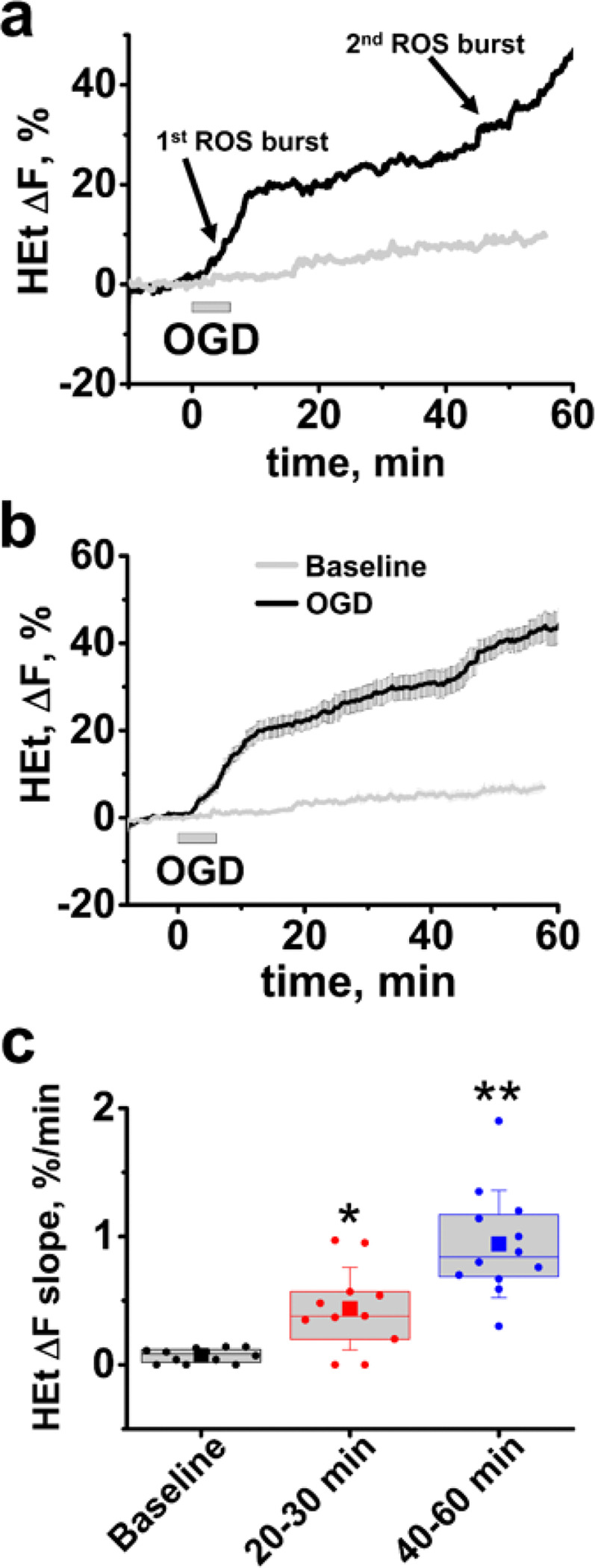 Figure 1
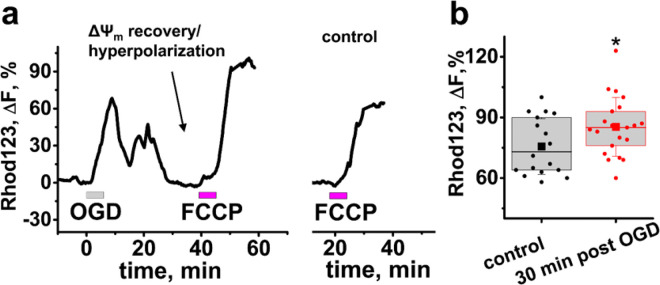 Figure 2
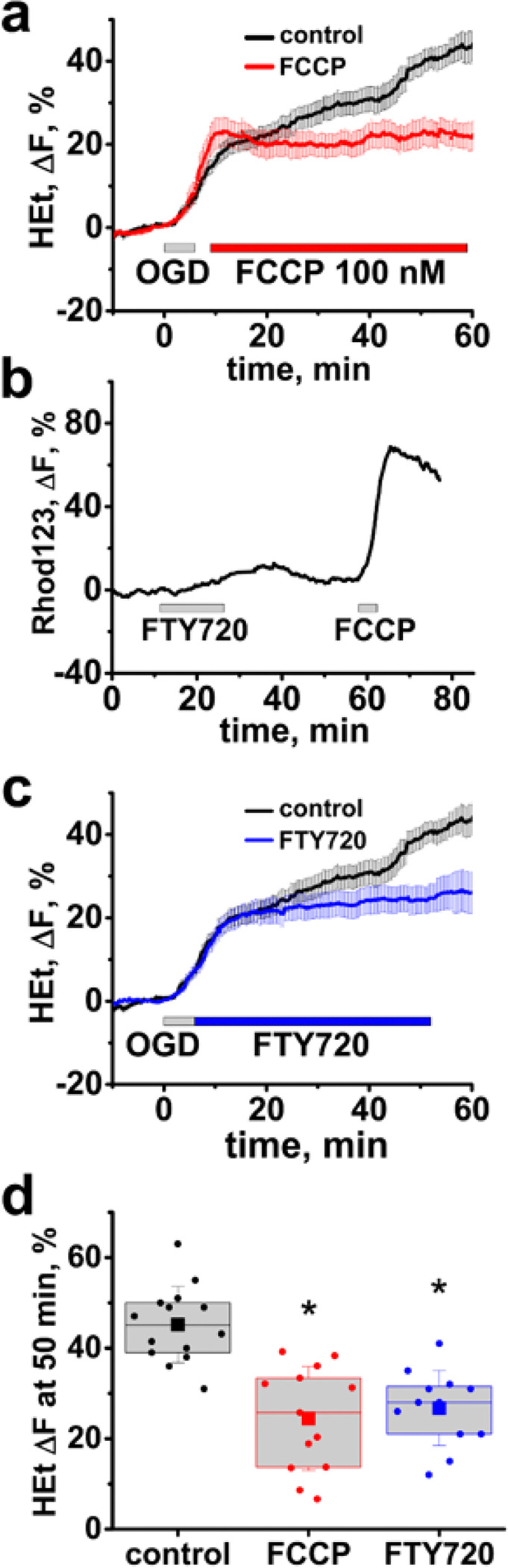 Figure 3
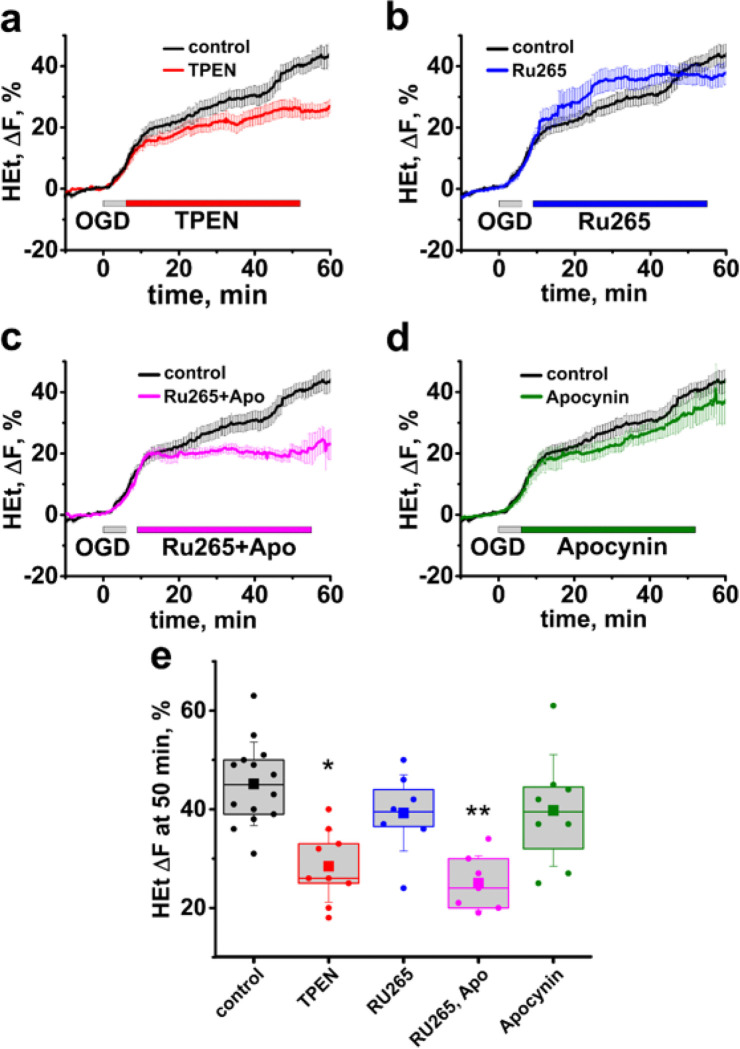 Figure 4
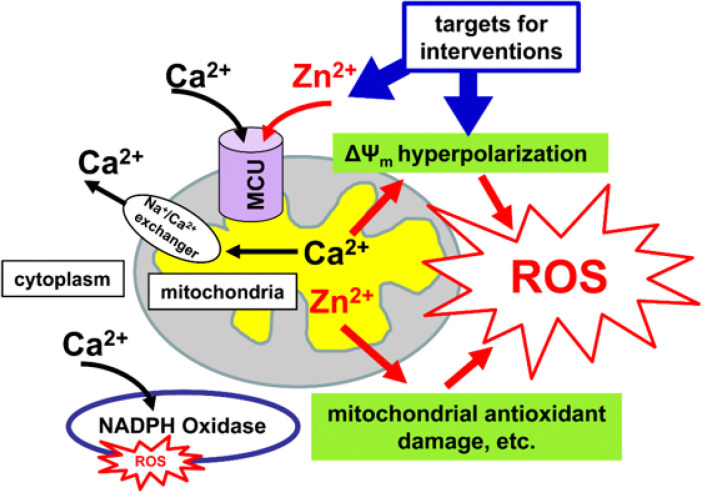 Figure 5
Peer Reviews
No public reviews on file for this paper yet. If you reviewed it on a platform where reviews are public (OpenReview, ICLR, NeurIPS, ICML), you can paste yours below so the community can read it here.
Videos
No videos yet. Explain this paper in a talk, walkthrough, or lecture? Add one.
Taxonomy
TopicsAnesthesia and Neurotoxicity Research · Neuroscience and Neuropharmacology Research · Cardiac Ischemia and Reperfusion