Cochlear Amyloid-β42 Accumulation Drives Progressive Auditory Neuropathy in 5XFAD Mice: A Potential Biomarker for Early Alzheimer’s Disease
Dheyaa Al-Sallami, Raheem F. H. AL Aameri, Shelley Tischkau, Leonard P. Rybak, Vickram Ramkumar

TL;DR
This study shows that amyloid-beta 42 buildup in the inner ear causes hearing issues in mice, suggesting it could be an early sign of Alzheimer’s disease.
Contribution
The study identifies cochlear Aβ42 accumulation as a novel biomarker for early Alzheimer’s disease.
Findings
Aβ42 was detected in cochlear neurons and blood vessels as early as 8 weeks in 5XFAD mice.
Multimetric ABR analysis revealed impaired neural encoding and progressive auditory nerve desynchronization.
Wave I amplitude changes indicated advanced neural deterioration by 16 weeks in 5XFAD mice.
Abstract
Emerging evidence suggests auditory dysfunction may serve as an early biomarker of Alzheimer’s disease (AD). This study investigates amyloid-beta 42 (Aβ42) accumulation in the cochlea and its relationship to auditory dysfunction in 5XFAD mice. Immunofluorescence imaging assessed Aβ42 deposition in cochlear structures (spiral ganglion neurons [SGNs], vasculature) at 8 weeks. Auditory brainstem responses (ABR) were analyzed using multimetric methods (Wave I amplitude, signal-to-noise ratio [SNR], phase-locking precision, cross-correlation) at 8 and 16 weeks. Aβ42 deposition was detected in SGNs and vasculature by 8 weeks. 5XFAD mice exhibited reduced ABR Wave I amplitude (p < 0.01) and SNR versus wild-type, indicating impaired neural encoding. By 16 weeks, Wave I amplitude merged with cochlear microphonics, reflecting advanced neural deterioration. Synchrony analyses confirmed…
Genes, proteins, chemicals, diseases, species, mutations and cell lines named across the full text — each resolved to its canonical identifier and authoritative record.
Click any figure to enlarge with its caption.
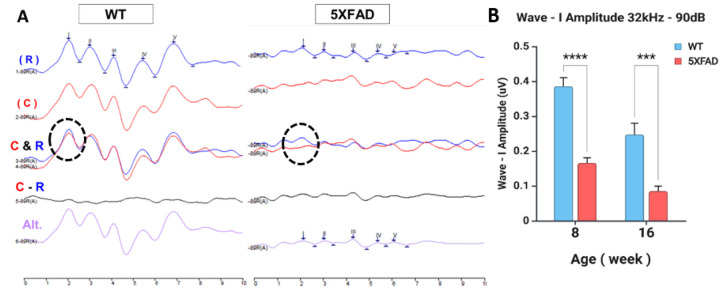 Figure 1
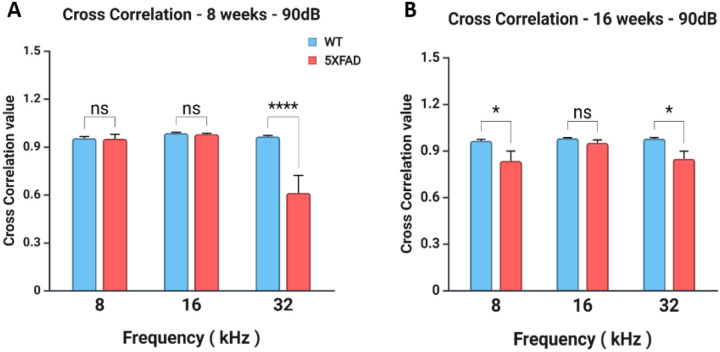 Figure 2
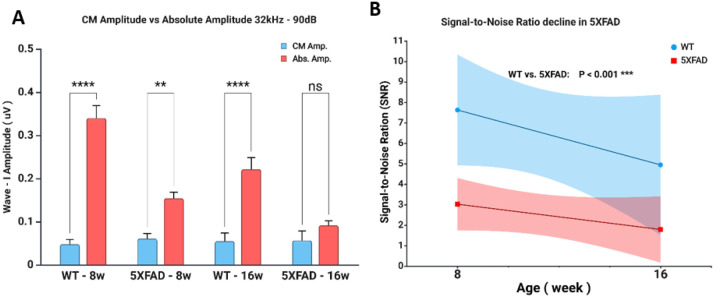 Figure 3
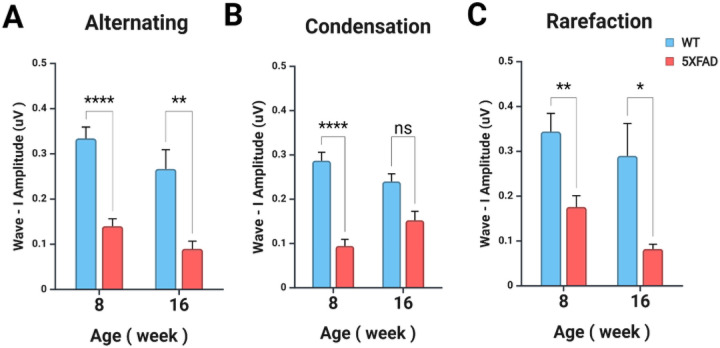 Figure 4
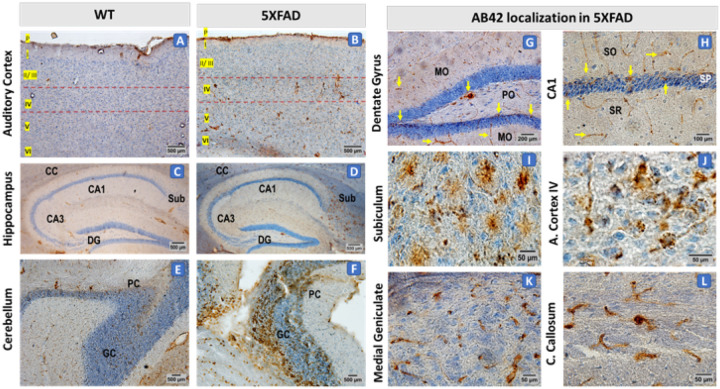 Figure 5
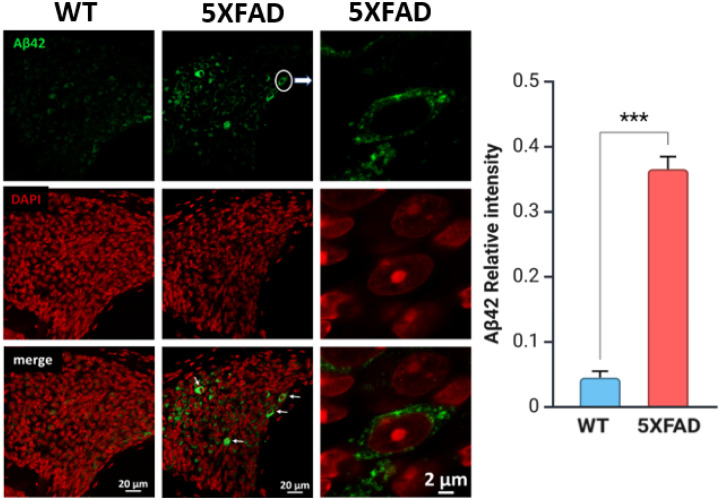 Figure 6
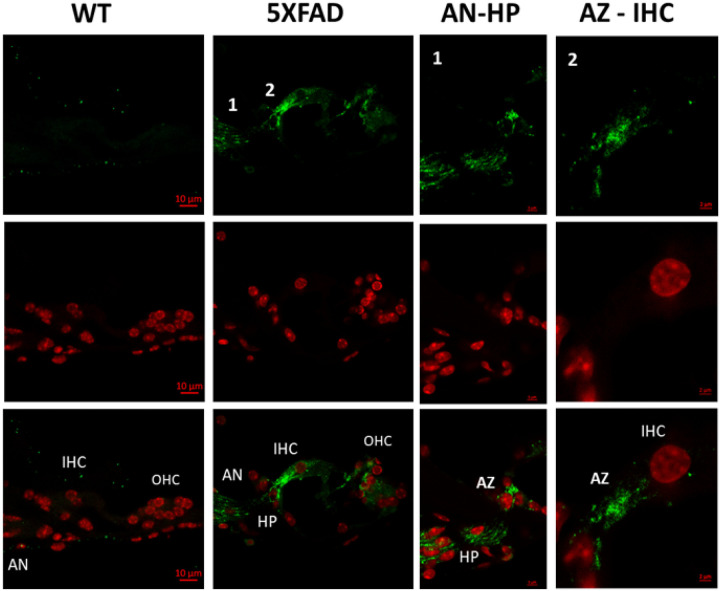 Figure 7
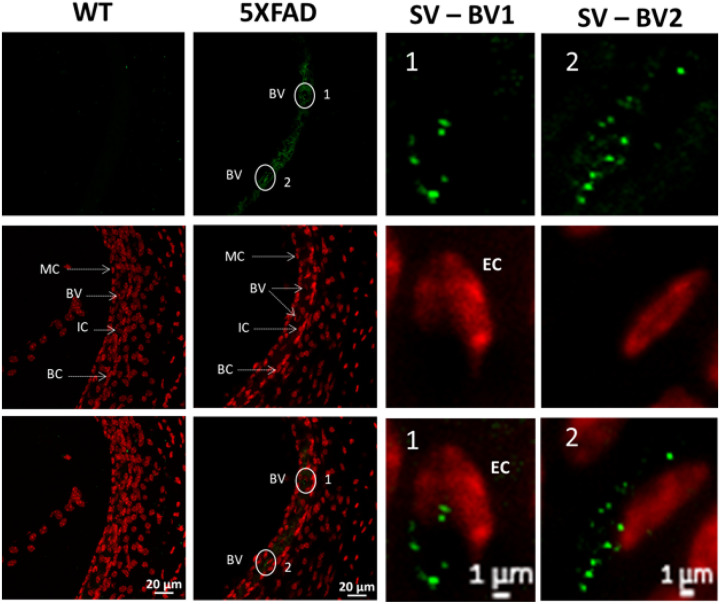 Figure 8
Peer Reviews
No public reviews on file for this paper yet. If you reviewed it on a platform where reviews are public (OpenReview, ICLR, NeurIPS, ICML), you can paste yours below so the community can read it here.
Videos
No videos yet. Explain this paper in a talk, walkthrough, or lecture? Add one.
Taxonomy
TopicsHearing, Cochlea, Tinnitus, Genetics · Noise Effects and Management · Biochemical Analysis and Sensing Techniques