Long-Term Follow-Up of Omental Cranial Transposition to Bypass the Blood-Brain Barrier for Recurrent Glioblastoma: A Case Report and Scientific Rationale
Souvik Singha, Julianna Cavallaro, Tamika Wong, Olivia Albers, Samer Ali, Avraham Zlochower, Robert Andrews, John Boockvar

TL;DR
A patient with recurrent glioblastoma had a 30-month survival after a novel surgery that uses omental tissue to bypass the blood-brain barrier.
Contribution
This case report presents long-term survival data using omental cranial transposition for recurrent glioblastoma.
Findings
The patient had 21 months of progression-free survival and 30 months of overall survival.
Omental neovascularization may help bypass the blood-brain barrier and improve tumor control.
Omental-derived immune cells may recognize tumor antigens and penetrate the tumor microenvironment.
Abstract
Recurrent glioblastoma multiforme (GBM) is associated with a very poor prognosis due to the limited efficacy of existing therapies and constraints of blood-brain barrier (BBB) permeability. Particularly in the recurrent setting, there is no uniform standard of care treatment. In one of the proposed treatments for recurrent GBM, a laparoscopically harvested omental free tissue autograft is used to favor neovascularization and bypass the BBB, in which patients receive an autologous abdominal omental tissue intracranially following attempted gross total resection of the tumor. In this paper, we report the long-term survival and follow-up data of a patient who underwent this procedure. The progression-free and overall survival were 21 months and 30 months, respectively. We hypothesize that neovascularization from the omental flap helps bypass the BBB, and omental-derived autologous immune…
Genes, proteins, chemicals, diseases, species, mutations and cell lines named across the full text — each resolved to its canonical identifier and authoritative record.
Click any figure to enlarge with its caption.
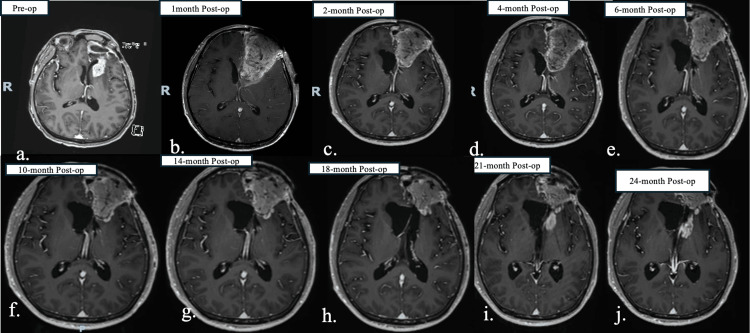 Figure 1
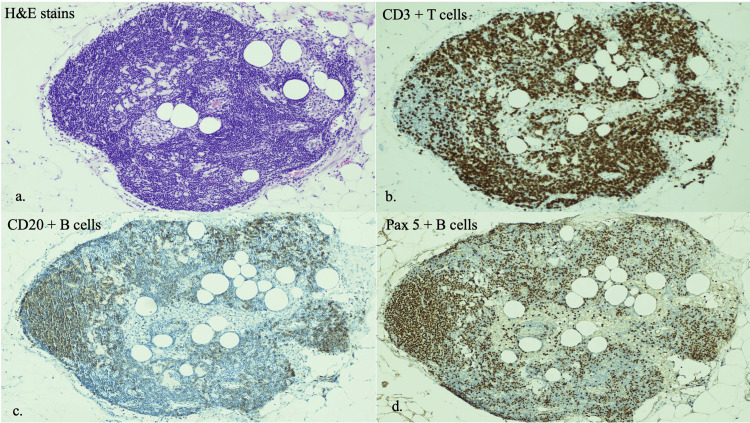 Figure 2
Peer Reviews
No public reviews on file for this paper yet. If you reviewed it on a platform where reviews are public (OpenReview, ICLR, NeurIPS, ICML), you can paste yours below so the community can read it here.
Videos
No videos yet. Explain this paper in a talk, walkthrough, or lecture? Add one.
Taxonomy
TopicsMoyamoya disease diagnosis and treatment · Coronary Artery Anomalies · Aortic Disease and Treatment Approaches