Orientation-tuned surround-suppression is strongest within perceived 3D surfaces
Jessy K. Possel, Pieter R. Roelfsema, Matthew W. Self

TL;DR
The study shows that the strength of orientation-tuned surround suppression depends on whether the visual elements are perceived as part of the same 3D surface.
Contribution
It reveals that perceived 3D surface continuity, not just depth, modulates suppressive visual interactions.
Findings
Suppression is strongest when the surround forms a continuous 3D surface with the center.
Disparity alone does not determine suppression strength; surface continuity is more important.
Perceived surface organization influences neural interactions in early vision.
Abstract
Our perception of contrast is strongly affected by contextual factors. A well-known example is that of orientation-tuned surround suppression (OTSS). Surrounds have more suppressive effects on the perceived contrast of the center when they have the same orientation. This phenomenon has been linked to horizontal interactions within the early visual cortex. Here we show that the strength of suppression is modulated strongly by the perceived three-dimensional structure of the scene. Placing the surround at a different retinal disparity, and therefore perceived depth, decreased OTSS, regardless of whether the surround was placed behind or in front of the center. The difference in disparity was, however, not the key determinant of the strength of OTSS. Suppressive interactions were strongest when the surround formed a three-dimensional surface that was continuous with the center and weaker…
Genes, proteins, chemicals, diseases, species, mutations and cell lines named across the full text — each resolved to its canonical identifier and authoritative record.
Click any figure to enlarge with its caption.
 Figure 1
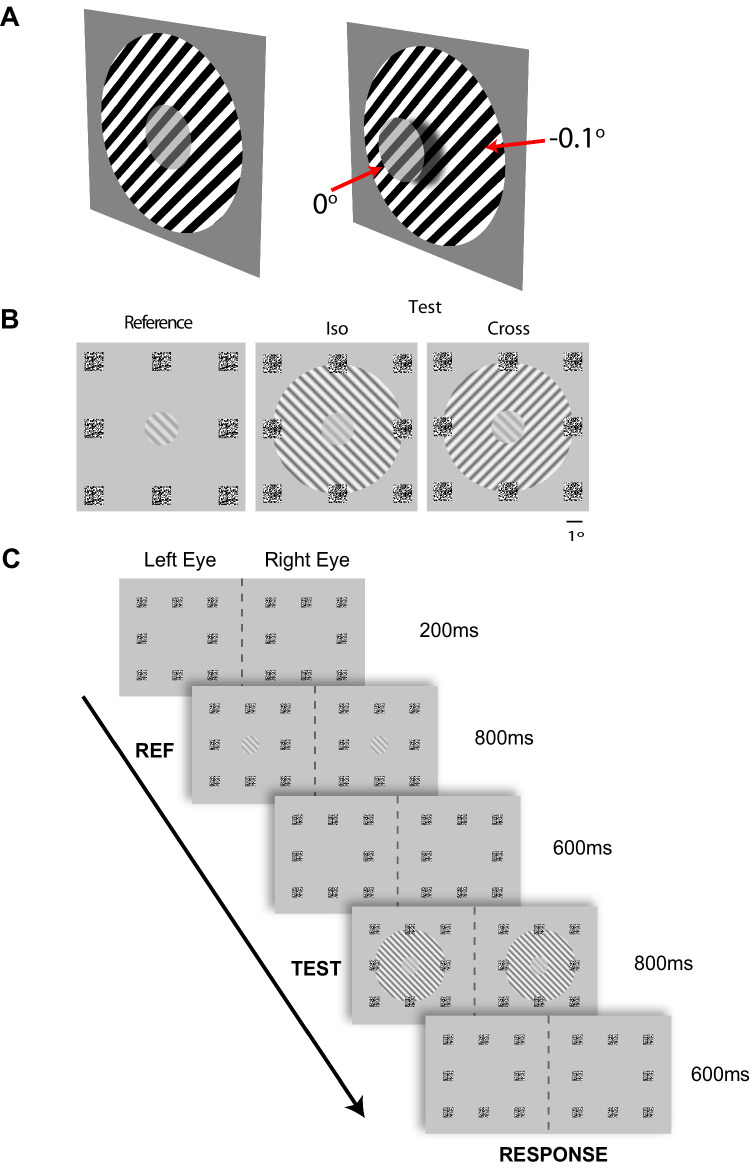 Figure 2
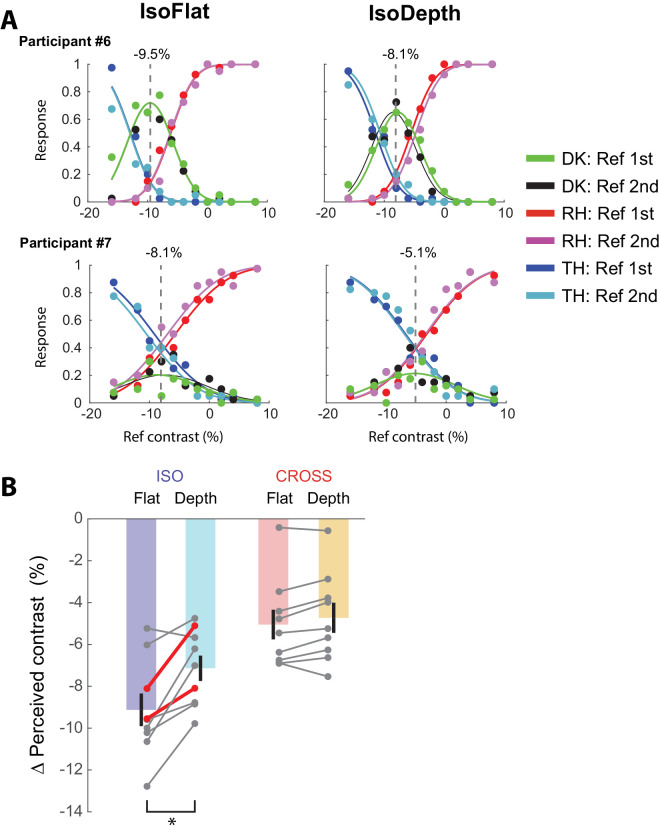 Figure 3
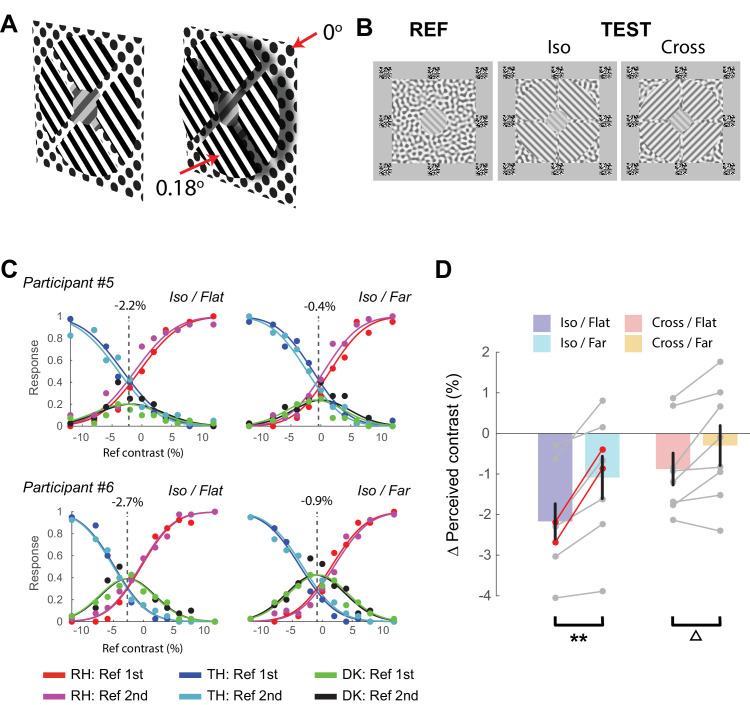 Figure 4
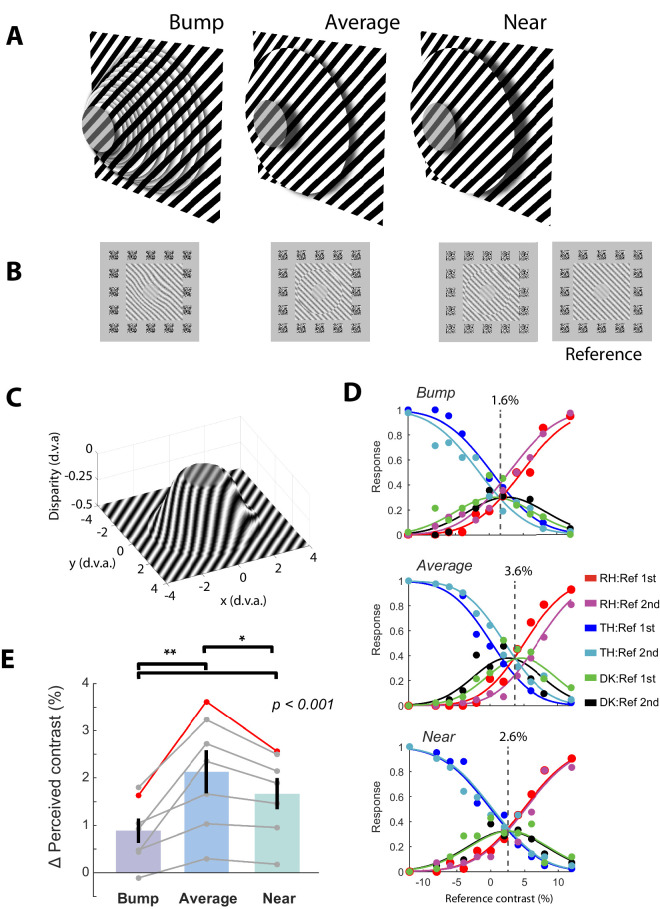 Figure 5
Peer Reviews
No public reviews on file for this paper yet. If you reviewed it on a platform where reviews are public (OpenReview, ICLR, NeurIPS, ICML), you can paste yours below so the community can read it here.
Videos
No videos yet. Explain this paper in a talk, walkthrough, or lecture? Add one.
Taxonomy
TopicsVisual perception and processing mechanisms · Advanced Optical Imaging Technologies · Advanced Vision and Imaging