Enhancing 18F-FDG PET image quality and lesion diagnostic performance across different body mass index using the deep progressive learning reconstruction algorithm
Zhihao Chen, Hongxing Yang, Ming Qi, Wen Chen, Fei Liu, Shaoli Song, Jianping Zhang

TL;DR
This study shows that a new AI-based PET image reconstruction method improves image quality and lesion detection in patients of all body types.
Contribution
The novel deep progressive learning algorithm maintains PET image quality and diagnostic accuracy across varying body mass indexes.
Findings
DPL outperformed OSEM in PET image quality and lesion detection across all BMI categories.
DPL maintained stable signal-to-noise ratios in the liver and lesions even with increasing BMI.
Quantitative metrics like SUVmax and contrast ratios were significantly higher with DPL compared to OSEM.
Abstract
As body mass index (BMI) increases, the quality of 2-deoxy-2-[fluorine-18]fluoro-D-glucose (18F-FDG) positron emission tomography (PET) images reconstructed with ordered subset expectation maximization (OSEM) declines, negatively impacting lesion diagnostics. It is crucial to identify methods that ensure consistent diagnostic accuracy and maintain image quality. Deep progressive learning (DPL) algorithm, an Artificial Intelligence(AI)-based PET reconstruction technique, offers a promising solution. 150 patients underwent 18F-FDG PET/CT scans and were categorized by BMI into underweight, normal, and overweight groups. PET images were reconstructed using both OSEM and DPL and their image quality was assessed both visually and quantitatively. Visual assessment employed a 5-point Likert scale to evaluate overall score, image sharpness, image noise, and diagnostic confidence. Quantitative…
Genes, proteins, chemicals, diseases, species, mutations and cell lines named across the full text — each resolved to its canonical identifier and authoritative record.
Click any figure to enlarge with its caption.
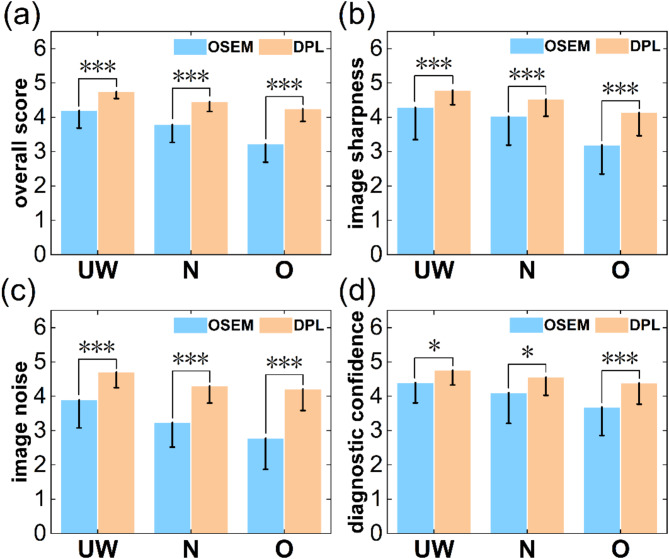 Figure 1
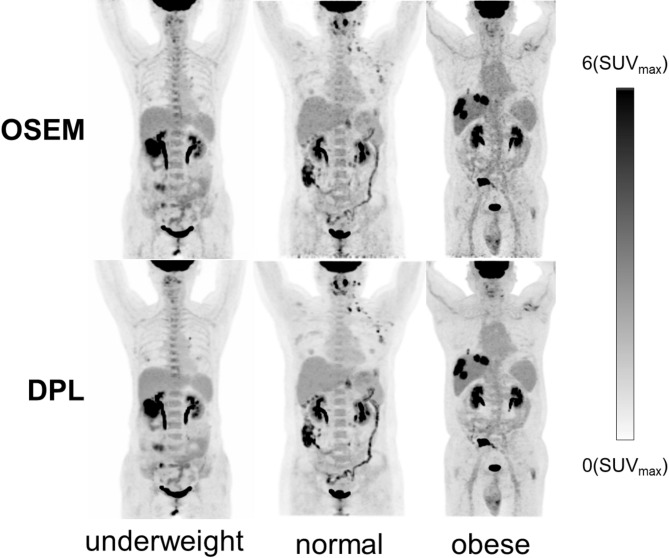 Figure 2
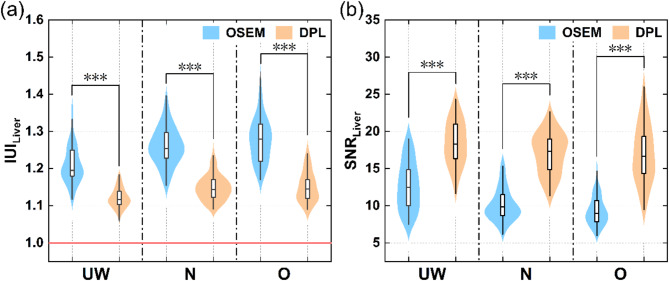 Figure 3
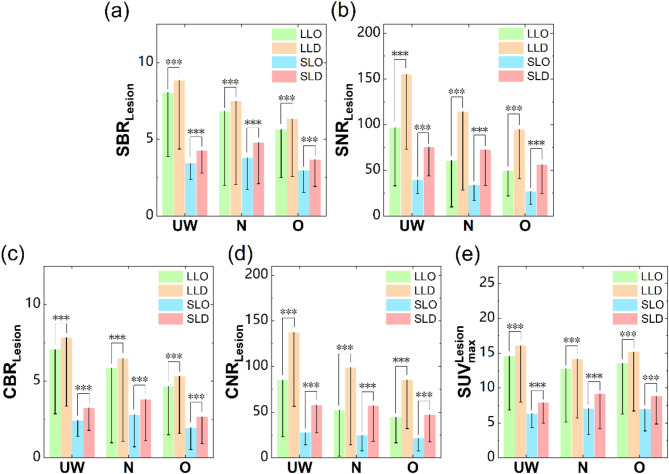 Figure 4
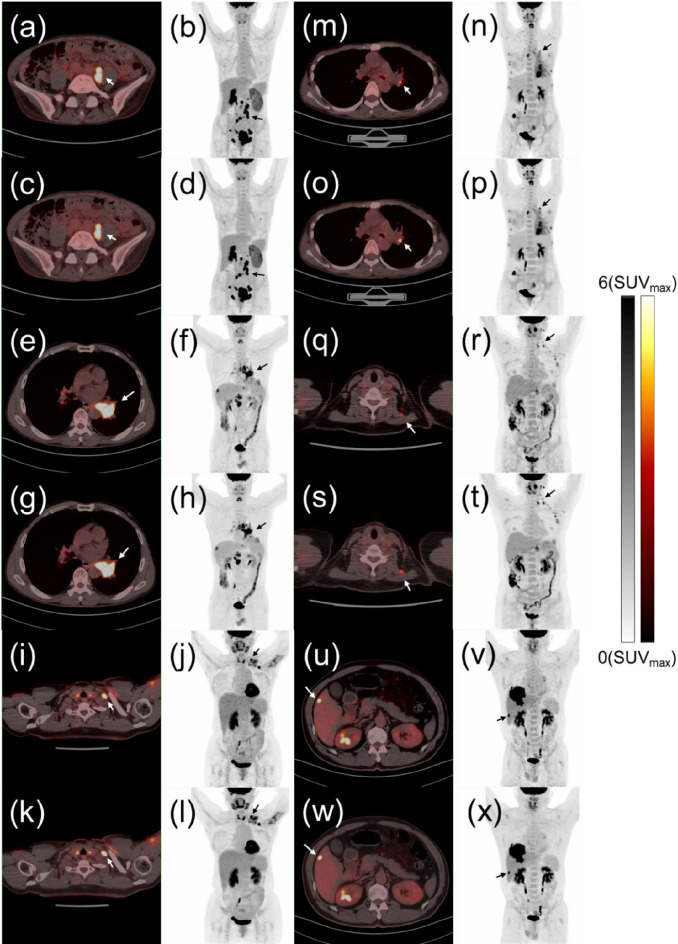 Figure 5
Peer Reviews
No public reviews on file for this paper yet. If you reviewed it on a platform where reviews are public (OpenReview, ICLR, NeurIPS, ICML), you can paste yours below so the community can read it here.
Videos
No videos yet. Explain this paper in a talk, walkthrough, or lecture? Add one.
Taxonomy
TopicsMedical Imaging Techniques and Applications · Radiomics and Machine Learning in Medical Imaging · Advanced X-ray and CT Imaging