Characterization of Biobased Polymers at the Gas–Solid Interface—Analysis of Surface and Bulk Properties during Artificial Degradation
T. Borgmeyer, Y. Kupper, M. J. Rossi, J. S. Luterbacher, C. Ludwig

TL;DR
This study examines how biobased polymers change at their surface and inside when exposed to artificial degradation, revealing how these changes affect their reactivity and environmental impact.
Contribution
The study introduces a combined interfacial and bulk analysis approach to better understand early-stage polymer degradation and its environmental implications.
Findings
Degradation can decrease specific surface area while reactivity varies depending on available reactive groups.
UV exposure increases water affinity, acidification, and ozone reactivity in both polymers.
Surface hydroxyl groups in PAXA reduced significantly under UV and ozone exposure.
Abstract
Accurately assessing the interfacial composition and reactivity of (bio)polymers under controlled but environmentally relevant conditions remains challenging. This study explores the evolution of surface functionalities of novel polyesters Poly(Butylene Xylose) (PBX) and Poly(Alkyl Xylose Amide) (PAXA) under artificial degradation conditions. Employing a Knudsen Flow Reactor (KFR) and a gas-titration approach, we systematically analyze the chemical transformations occurring at the polymer’s solid–gas interface. Both polymers are derived from the same functionalized lignocellulosic sugar building block, Diglyoxylic Acid Xylose (DGAX). Virgin (V), long-term UV (UV), and short-term Ozone (O3) exposures induce specific but differing alterations in molecular integrity and surface reactivity, resulting in notable shifts in material properties and polymer structure. Contrary to the assumption…
Genes, proteins, chemicals, diseases, species, mutations and cell lines named across the full text — each resolved to its canonical identifier and authoritative record.
Click any figure to enlarge with its caption.
 Figure 1
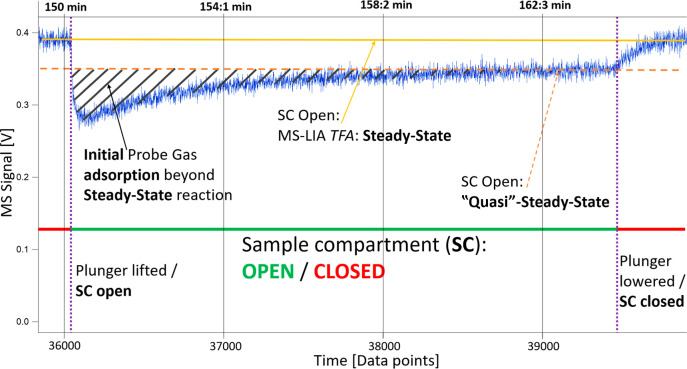 Figure 2
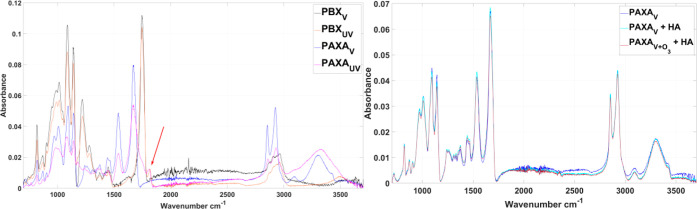 Figure 3
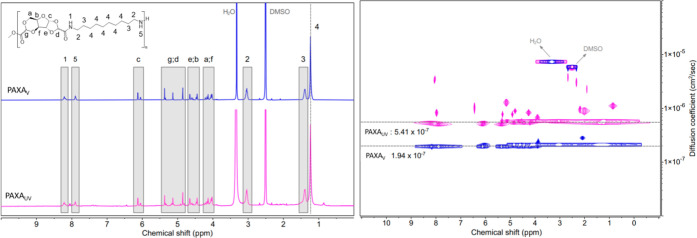 Figure 4
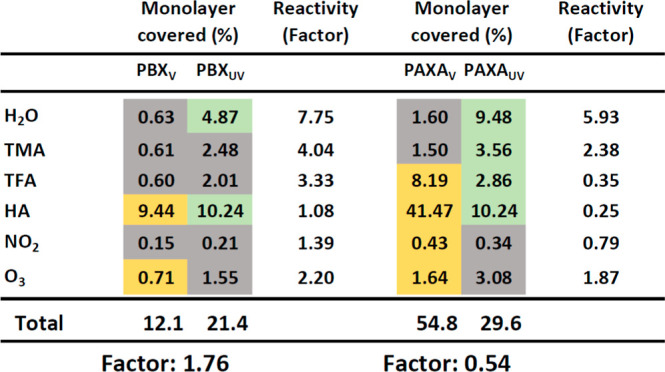 Figure 5
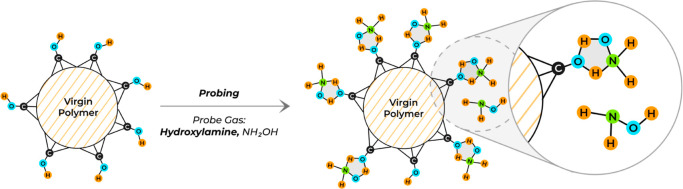 Figure 6
Peer Reviews
No public reviews on file for this paper yet. If you reviewed it on a platform where reviews are public (OpenReview, ICLR, NeurIPS, ICML), you can paste yours below so the community can read it here.
Videos
No videos yet. Explain this paper in a talk, walkthrough, or lecture? Add one.
Taxonomy
TopicsSurface Modification and Superhydrophobicity · TiO2 Photocatalysis and Solar Cells · Recycling and Waste Management Techniques