Ionic Recognition Controlled by Conformational Change: A DFT Investigation
Renato P Orenha, Ana L. O. Andrade, Renato G. Rocha, Alvaro Muñoz−Castro, Thiago F. Santos, Maurício J. Piotrowski, Giovanni F. Caramori, Renato L. T. Parreira

TL;DR
This paper explores how molecular conformations affect the recognition of cations and anions, offering insights for designing functional materials.
Contribution
The study reveals how conformational changes influence ion recognition mechanisms through electrostatic and orbital interactions.
Findings
Conformer 1 preferentially recognizes cations like K+ due to stronger electrostatic N···.cation interactions.
Conformer 2 favors anion recognition, particularly Br–, via favorable C–H···.anion interactions.
Electron-donor groups enhance cation recognition, while electron-acceptor groups improve anion recognition.
Abstract
Ions play a crucial role in the production of important materials and are associated with various health and environmental issues. Noncovalent interactions serve as fundamental tools for controlling the availability of cations and/or anions. Herein, we investigate the ability of two conformations of the 2,6-bis(1,2,3-triazol-4-yl)pyridine molecule to recognize cations (1), such as Li+, Na+, or K+, and anions (2), including F–, Cl–, or Br–. EDA-NOCV analysis demonstrates that the conformers preferentially recognize ions based on the size of the cations (K+ → Na+ → Li+) and anions (Br– → Cl– → F–). The preferential interaction with smaller cations (and anions) arises from the more attractive electrostatic and orbital interactions (N···.cation and C–H···.anion bonds). The presence of electron-donor groups (−NH2) in the first conformer (1) enhances cation recognition through stronger…
Genes, proteins, chemicals, diseases, species, mutations and cell lines named across the full text — each resolved to its canonical identifier and authoritative record.
Click any figure to enlarge with its caption.
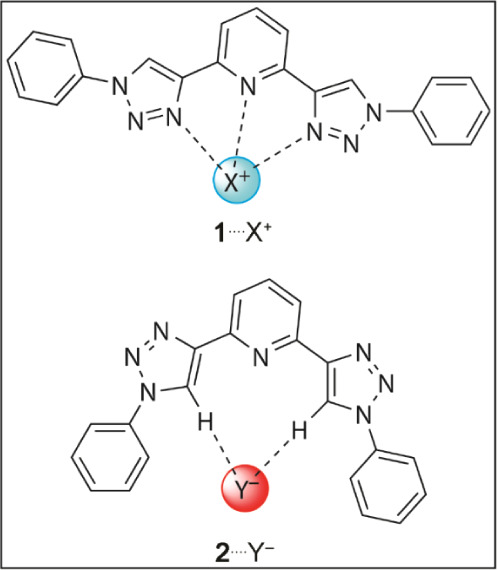 Figure 1
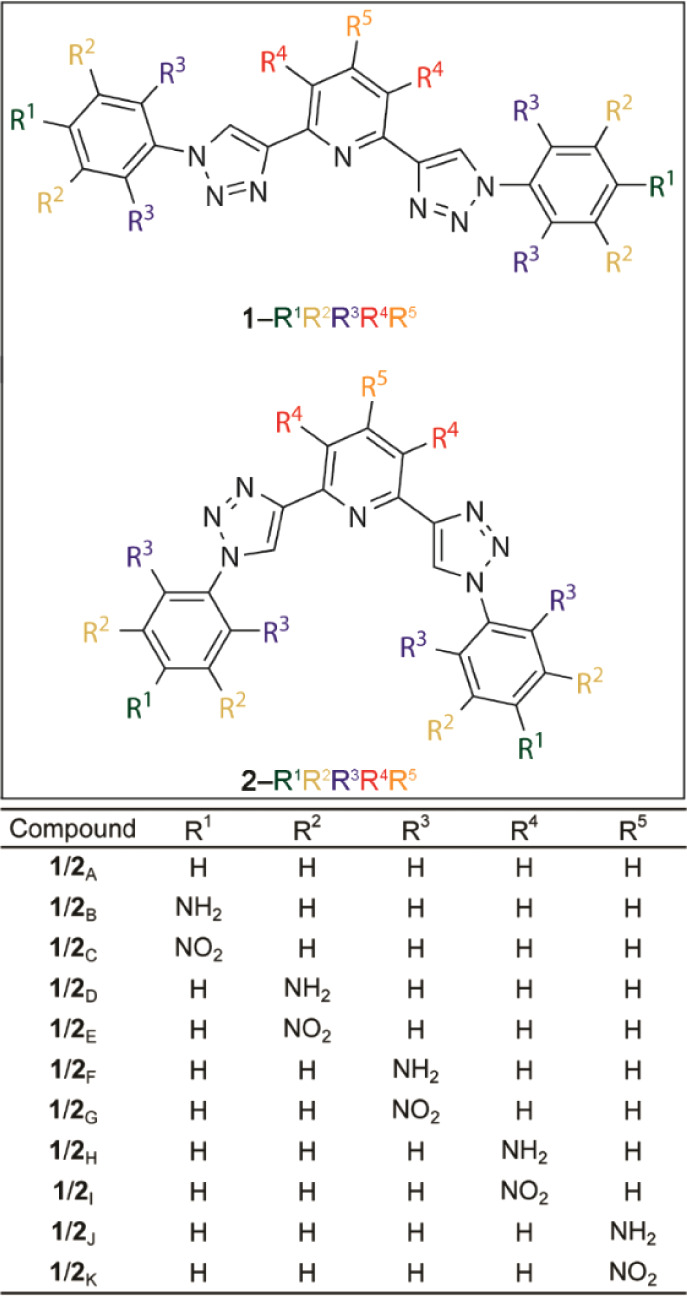 Figure 2
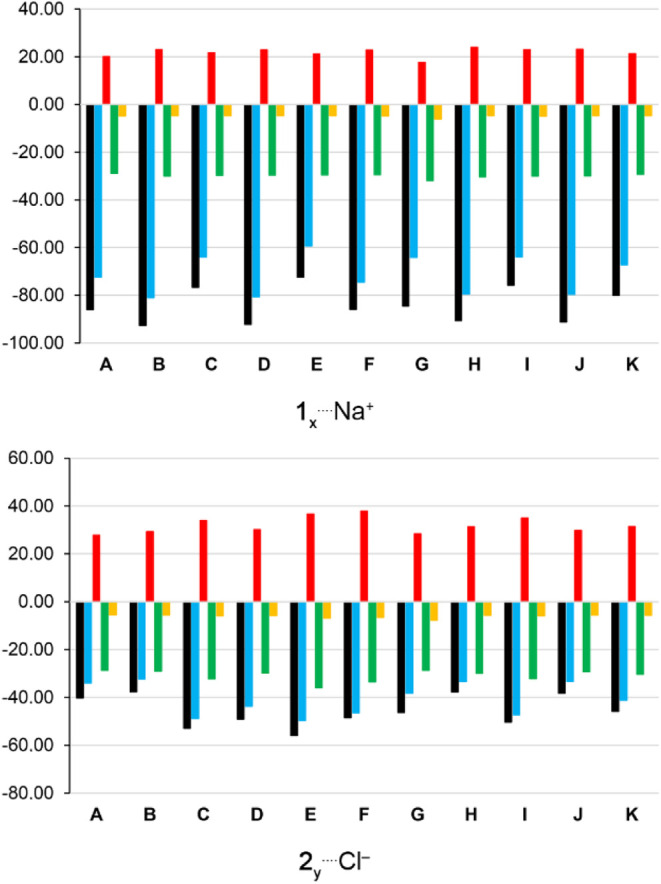 Figure 3
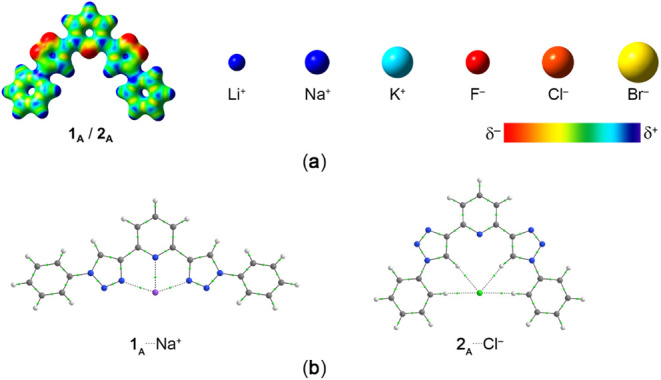 Figure 4
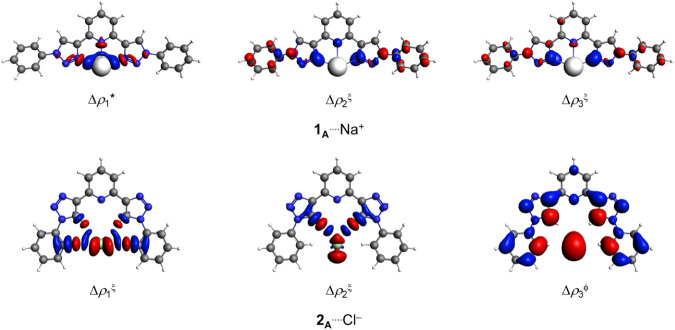 Figure 5
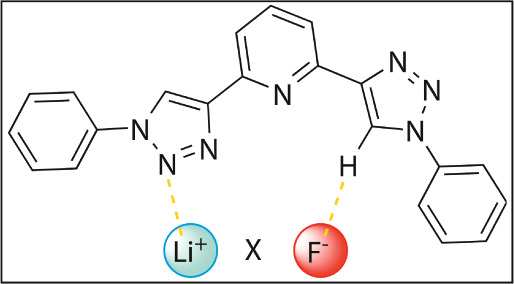 Figure 6
 Figure 7
Peer Reviews
No public reviews on file for this paper yet. If you reviewed it on a platform where reviews are public (OpenReview, ICLR, NeurIPS, ICML), you can paste yours below so the community can read it here.
Videos
No videos yet. Explain this paper in a talk, walkthrough, or lecture? Add one.
Taxonomy
TopicsAdvanced Chemical Sensor Technologies · Analytical Chemistry and Sensors · Electrochemical Analysis and Applications