Applications of environmental DNA monitoring for seaweed reproductive phenology: A case study with giant kelp (Macrocystis pyrifera)
Madeline R. Ward, Christopher P. Burridge, Sharee McCammon, Adam Smolenski, Catriona L. Hurd, Wouter Visch

TL;DR
This study shows how environmental DNA (eDNA) can be used to monitor the reproductive cycles of giant kelp, offering a more efficient alternative to traditional methods.
Contribution
The study introduces eDNA as a novel method for tracking giant kelp reproduction, demonstrating its effectiveness at high zoospore concentrations.
Findings
eDNA concentration strongly correlates with zoospore concentration (ρ = 0.982, p < 0.001).
Sporophyte tissue significantly affects eDNA detection, masking zoospore signals at low concentrations.
eDNA is effective for monitoring reproductive peaks when zoospore concentrations are high.
Abstract
Monitoring the seasonal reproductive cycles of seaweeds is crucial for effective population and ecosystem management, as well as mariculture seedstock collection. Traditional methods, such as visual monitoring by SCUBA diving or snorkeling, are costly, labor‐intensive, and limited in temporal and spatial coverage. This study explores substituting these methods with environmental DNA (eDNA) techniques for giant kelp (Macrocystis pyrifera, order Laminariales). This laboratory study aimed to determine the minimum detectable concentration of zoospores and sporophyte tissue needed for detecting the reproductive phenology of M. pyrifera and to assess the ability and sensitivity to discriminate between life stages. The study involved syringe‐filtering seawater samples through 0.45‐μm pore‐size filters before quantitative polymerase chain reaction (qPCR) analysis with species‐specific primers.…
Genes, proteins, chemicals, diseases, species, mutations and cell lines named across the full text — each resolved to its canonical identifier and authoritative record.
Click any figure to enlarge with its caption.
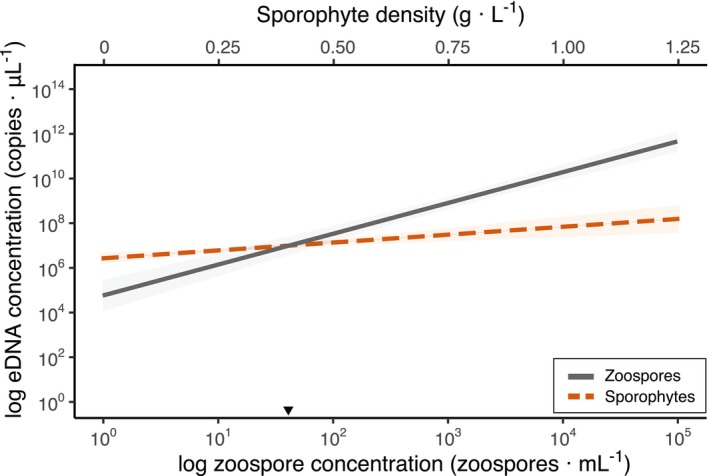 Figure 1
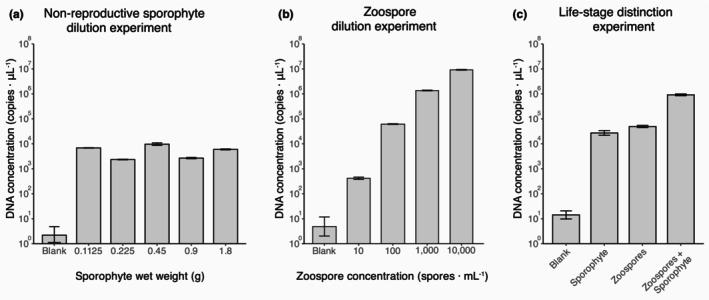 Figure 2
Peer Reviews
No public reviews on file for this paper yet. If you reviewed it on a platform where reviews are public (OpenReview, ICLR, NeurIPS, ICML), you can paste yours below so the community can read it here.
Videos
No videos yet. Explain this paper in a talk, walkthrough, or lecture? Add one.
Taxonomy
TopicsMarine and coastal plant biology · Environmental DNA in Biodiversity Studies · Coastal wetland ecosystem dynamics