Electrotaxis disrupts patterns of cell-cell interactions of human corneal epithelial cells in vitro
Rebecca M. Crossley, Simon F. Martina-Perez

TL;DR
Electric fields disrupt how human corneal epithelial cells interact with each other in lab settings.
Contribution
The study reveals how electric fields alter cell-cell interactions during electrotaxis.
Findings
Electric fields affect contact inhibition of locomotion and velocity alignment between cells.
Cell-cell contact location influences interaction behaviors under electric fields.
Electric fields change the spatial distribution of cell response to contact.
Abstract
Electrotaxis, the process by which eukaryotic cells establish polarity and move directionally along an electric field, is a well-studied mechanism to steer the migration of cells in vitro and in vivo. Although the influence of an electric field on single cells in culture is well documented, the influence of the electric field on cell-cell interactions has not been well studied. In this work, we quantify the length, duration, and number of cell-cell interactions during electrotaxis of human corneal epithelial cells and compare the properties of these interactions with those arising in the absence of an electric field. We find that contact inhibition of locomotion and velocity alignment, two key behaviors observed during dynamic physical interactions between cells in vitro, are strongly affected by an electric field. Furthermore, we establish a link between the location of a cell-cell…
Genes, proteins, chemicals, diseases, species, mutations and cell lines named across the full text — each resolved to its canonical identifier and authoritative record.
Click any figure to enlarge with its caption.
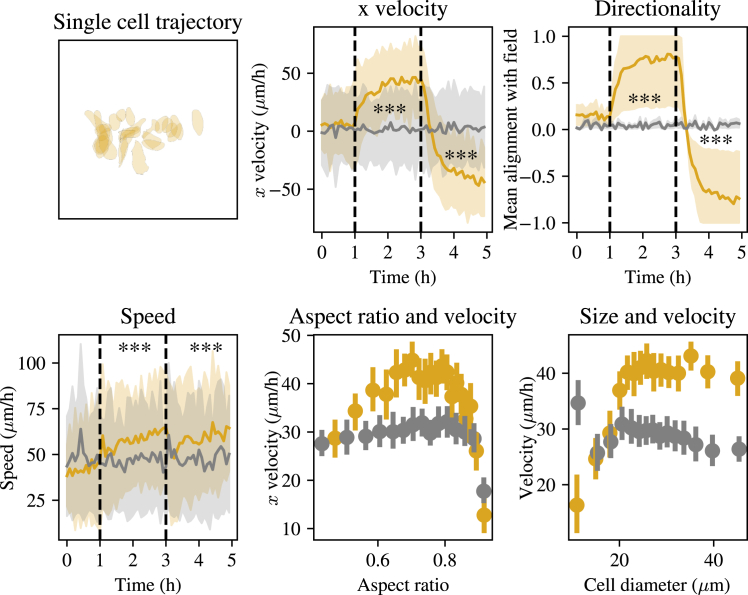 Figure 1
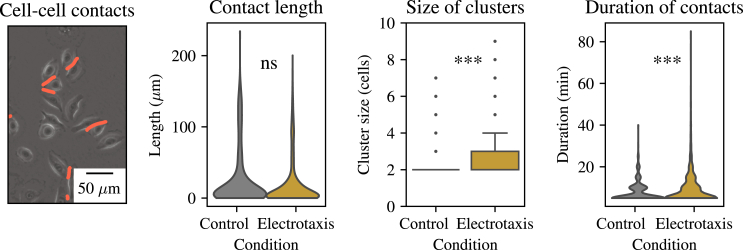 Figure 2
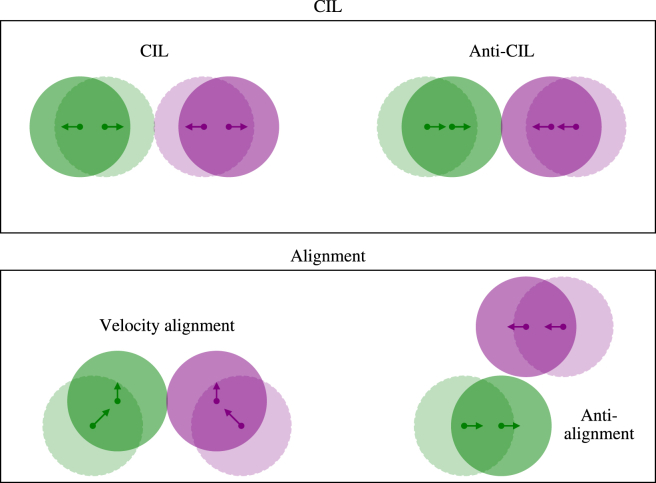 Figure 3
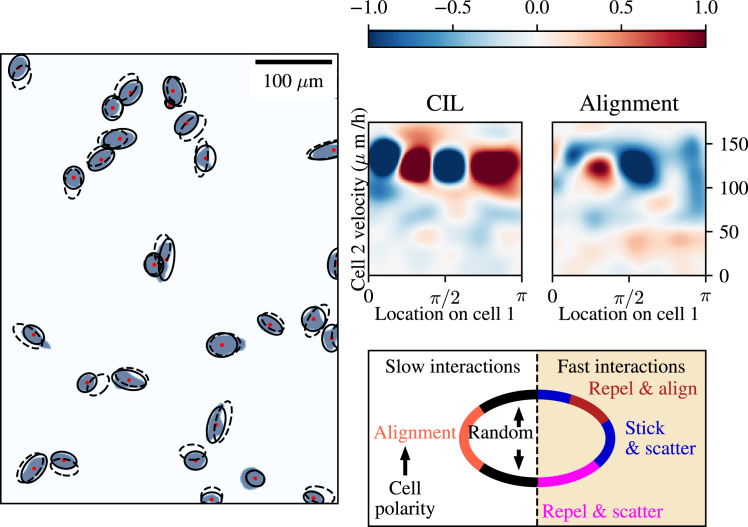 Figure 4
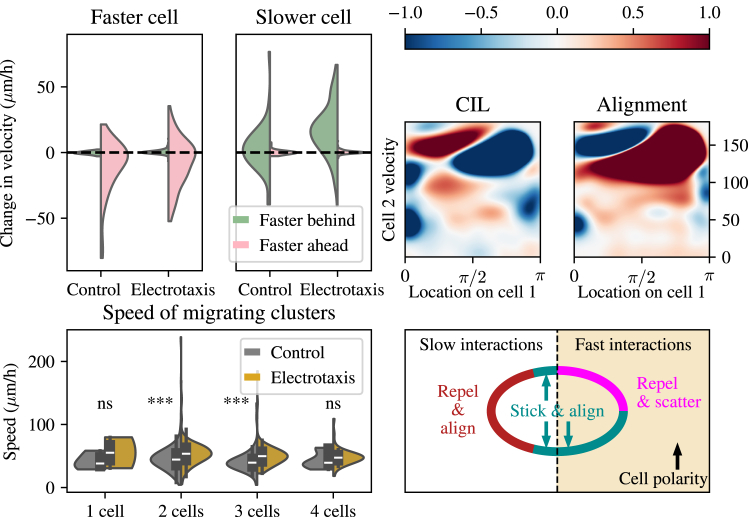 Figure 5
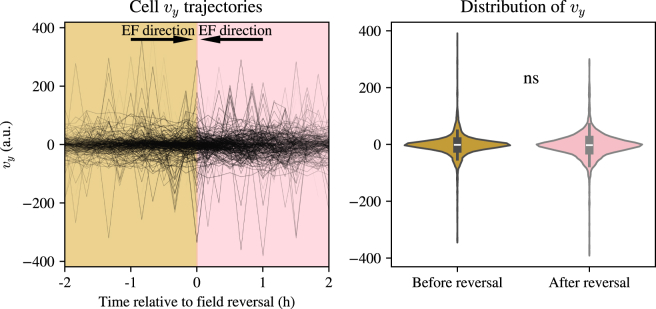 Figure 6
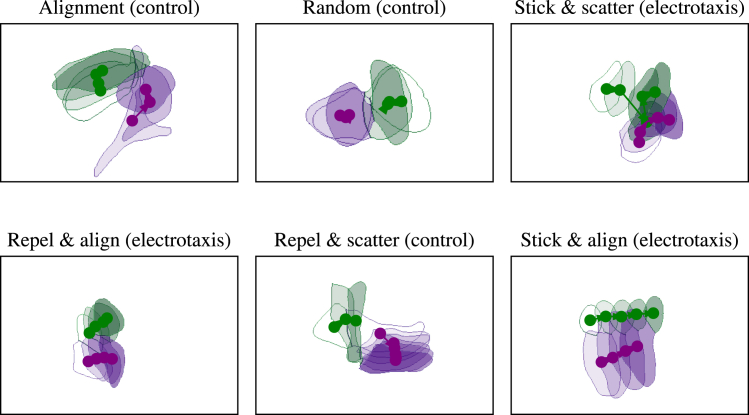 Figure 7
Peer Reviews
No public reviews on file for this paper yet. If you reviewed it on a platform where reviews are public (OpenReview, ICLR, NeurIPS, ICML), you can paste yours below so the community can read it here.
Videos
No videos yet. Explain this paper in a talk, walkthrough, or lecture? Add one.
Taxonomy
TopicsNeuroscience and Neural Engineering · Planarian Biology and Electrostimulation · 3D Printing in Biomedical Research