In situ monitoring of ligand-to-metal energy transfer in combination with synchrotron-based X-ray diffraction methods to elucidate the synthesis mechanism and structural evolution of lanthanide complexes
Ban H. Al-Tayyem, Philipp Müscher-Polzin, Kanupriya Pande, Oleksandr Yefanov, Valerio Mariani, Anja Burkhardt, Henry N. Chapman, Christian Näther, Michael Braun, Marvin Radke, Steve Waitschat, Kenneth R. Beyerlein, Huayna Terraschke

TL;DR
Researchers used in situ luminescence and X-ray diffraction to study how lanthanide complexes form, revealing a new crystallization pathway and validating a new method for structural analysis.
Contribution
The study introduces a combined in situ luminescence and synchrotron XRD approach to track lanthanide complex synthesis and structural evolution.
Findings
A reaction intermediate was identified in the crystallization of [Tb(bipy)2(NO3)3].
Serial crystallography at a microfocused synchrotron beamline confirmed the structure of [Tb(bipy)2(NO3)3].
The new method enables in situ monitoring of synthesis kinetics without beam damage.
Abstract
Despite wide application of lanthanide complexes in solar cells, light-emitting diodes and sensors, their crystallization mechanisms have not been studied in detail. Further investigations of this kind can lead to the development of targeted synthesis protocols and tailoring of their structure-related physical properties. In this work, the structural evolution during the synthesis of the luminescent [Tb (bipy)2(NO3)3] (bipy = 2,2′-bipyridine) complex is studied by monitoring the ligand-to-metal energy transfer through in situ luminescence measurements combined with synchrotron-based X-ray diffraction (XRD) analysis. These experiments reveal an interesting crystallization pathway involving the formation of a reaction intermediate that is dependent on parameters such as ligand-to-metal molar ratios. In addition, the structure of [Tb (bipy)2(NO3)3] is solved from serial crystallography…
Genes, proteins, chemicals, diseases, species, mutations and cell lines named across the full text — each resolved to its canonical identifier and authoritative record.
Click any figure to enlarge with its caption.
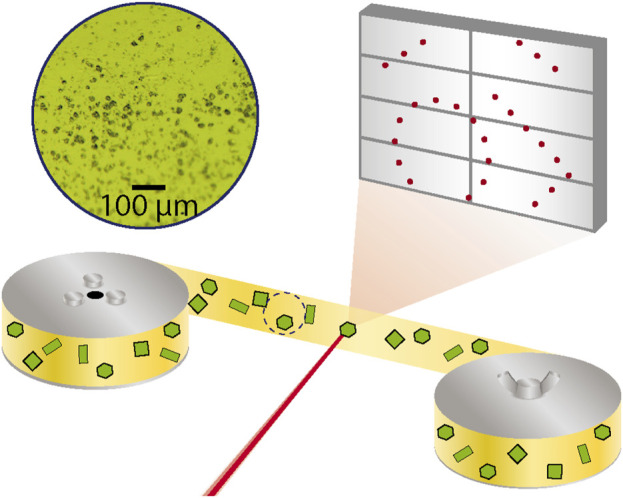 Figure 1
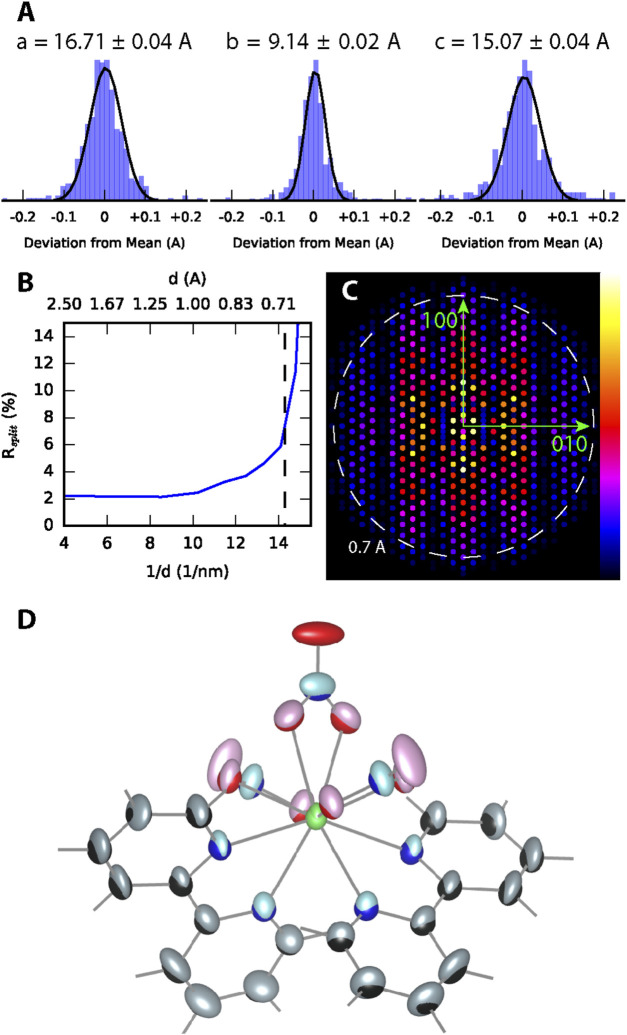 Figure 2
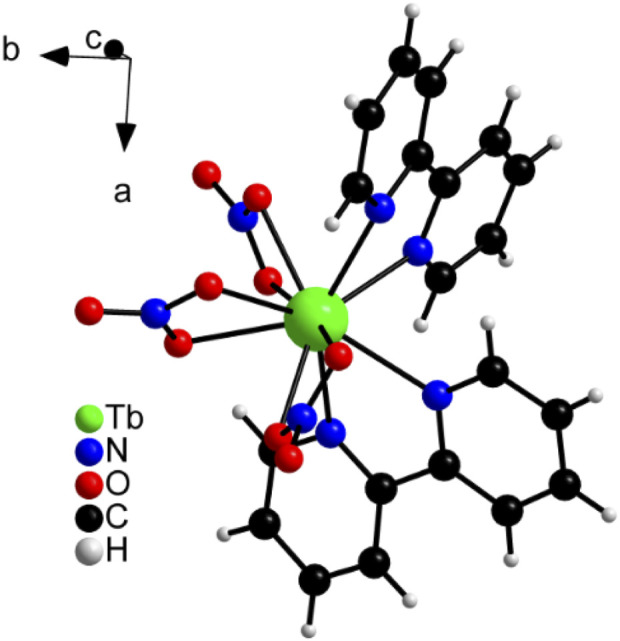 Figure 3
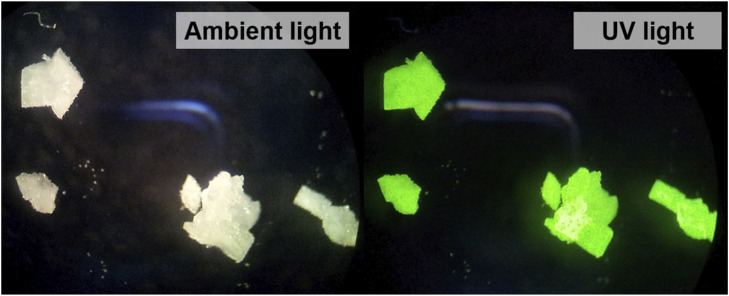 Figure 4
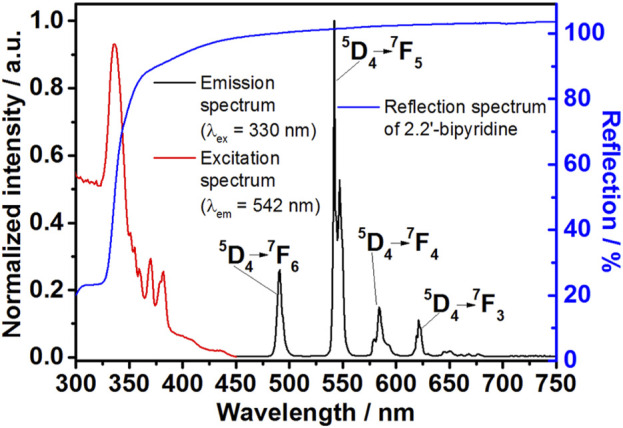 Figure 5
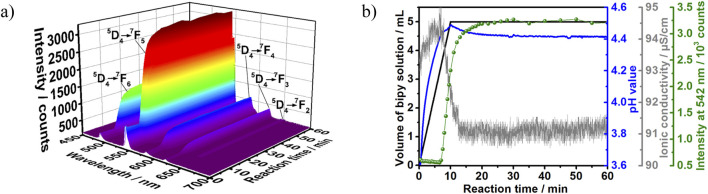 Figure 6
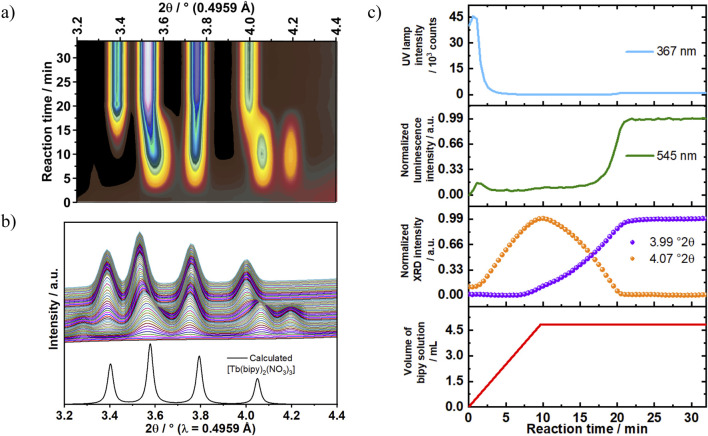 Figure 7
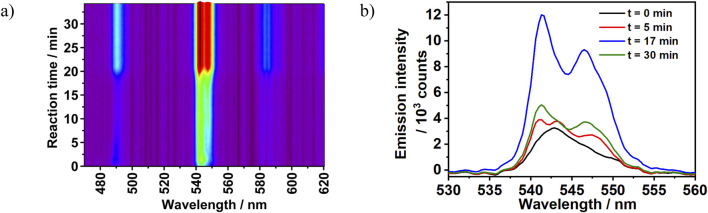 Figure 8
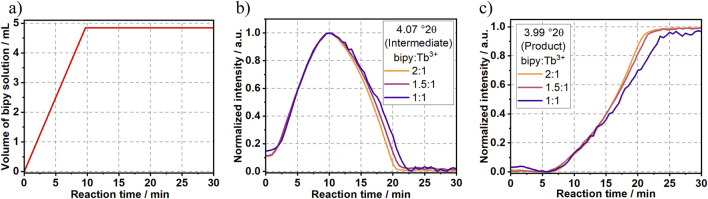 Figure 9
Peer Reviews
No public reviews on file for this paper yet. If you reviewed it on a platform where reviews are public (OpenReview, ICLR, NeurIPS, ICML), you can paste yours below so the community can read it here.
Videos
No videos yet. Explain this paper in a talk, walkthrough, or lecture? Add one.
Taxonomy
TopicsLanthanide and Transition Metal Complexes · Magnetism in coordination complexes · Radioactive element chemistry and processing