Utility of Polymerase Chain Reaction, Enzyme-linked Immunosorbent Assay, and Gene Sequencing in Detecting Orientia tsutsugamushi Infection Among Pediatric Acute Encephalitis Syndrome Cases in Northern India
Hricha Mishra, Amita Jain, Chandra Kanta, Shantanu Prakash, Rajkumar Kalyan

TL;DR
This study compares PCR, ELISA, and gene sequencing for detecting scrub typhus in children with acute encephalitis syndrome in northern India.
Contribution
The study provides a comparative evaluation of diagnostic methods for Orientia tsutsugamushi in pediatric acute encephalitis syndrome cases.
Findings
ELISA for scrub typhus IgM showed the highest positivity rate at 26.52%.
PCR detection rates in CSF and PBMC samples were lower at 4.17% and 9.47%, respectively.
Phylogenetic analysis revealed many Gilliam-like strains of Orientia tsutsugamushi.
Abstract
Introduction This study aims to evaluate the diagnostic performance of polymerase chain reaction (PCR), enzyme-linked immunosorbent assay (ELISA) methods, and gene sequencing in detecting Orientia tsutsugamushi, the causative agent of scrub typhus, in pediatric patients with acute encephalitis syndrome (AES). Methods The study was conducted at a tertiary care teaching hospital in northern India. In all, 264 children presenting with AES were enrolled between August 2018 and November 2019. Cerebrospinal fluid (CSF), serum, and peripheral blood mononuclear cell (PBMC) samples were analyzed using real-time PCR and ELISA to detect the presence of scrub typhus. The 56 kDa gene sequencing was performed in 15 samples. Results The ELISA for scrub typhus IgM demonstrated the highest cumulative positivity rate at 26.52%. In contrast, PCR testing of CSF and PBMC samples showed lower detection…
Genes, proteins, chemicals, diseases, species, mutations and cell lines named across the full text — each resolved to its canonical identifier and authoritative record.
Click any figure to enlarge with its caption.
 Figure 1
 Figure 2
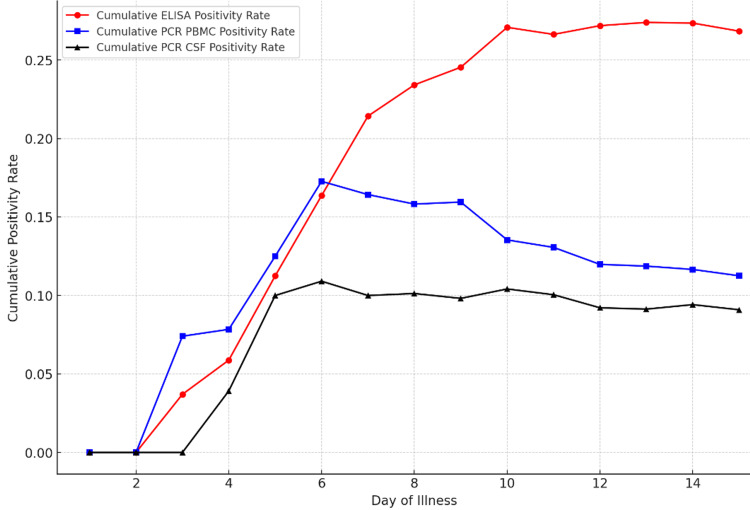 Figure 3
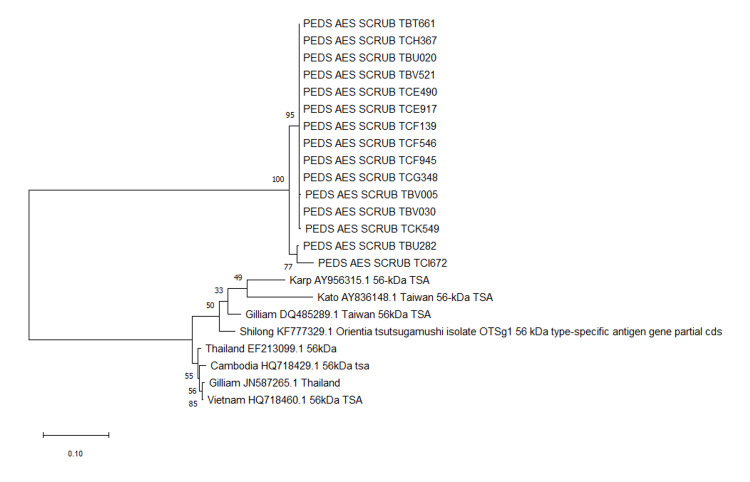 Figure 4
Peer Reviews
No public reviews on file for this paper yet. If you reviewed it on a platform where reviews are public (OpenReview, ICLR, NeurIPS, ICML), you can paste yours below so the community can read it here.
Videos
No videos yet. Explain this paper in a talk, walkthrough, or lecture? Add one.
Taxonomy
TopicsMosquito-borne diseases and control · Vector-borne infectious diseases · Viral Infections and Vectors