Postexposure Antimicrobial Drug Therapy in Goats Infected with Burkholderia pseudomallei
Richard A. Bowen, Airn E. Hartwig, Angela M. Bosco-Lauth, Josilene N. Seixas, Jana M. Ritter, Pamela S. Fair, Mindy G. Elrod, Zachary P. Weiner, Robyn A. Stoddard, Antonio R. Vieira, Rachel M. Maison, Elizabeth Lawrence, Hannah Sueper, Mckinzee Barker, William A. Bower

TL;DR
This study tests different antibiotic treatments in goats infected with Burkholderia pseudomallei to find effective post-exposure therapy.
Contribution
The study evaluates novel combination therapy for postexposure treatment of B. pseudomallei in a naturally susceptible animal model.
Findings
Untreated goats or those treated with amoxicillin/clavulanate or sulfamethoxazole/trimethoprim developed widespread infection.
Combination therapy with four antimicrobial drugs may have eradicated the infection in goats.
Findings suggest combination therapy could be useful for human postexposure prophylaxis.
Abstract
Infection with Burkholderia pseudomallei, the causative agent of melioidosis, occurs by exposure to the organism in soil or water. There is concern for B. pseudomallei use as a potential bioweapon and as an exposure hazard in diagnostic laboratories processing samples or cultures containing the bacterium. The optimal strategies for treatment and postexposure prophylaxis are inadequately developed. This study used goats to evaluate 3 antimicrobial drug treatment regimens for postexposure therapy because they are a species naturally susceptible to B. pseudomallei infection. Goats were infected by percutaneous inoculation, and antimicrobial drug therapies were initiated 48 hours later. Widespread infection with abscess formation in multiple organs developed in untreated goats and goats treated with either amoxicillin/clavulanate or sulfamethoxazole/trimethoprim. In contrast, treatment with…
Genes, proteins, chemicals, diseases, species, mutations and cell lines named across the full text — each resolved to its canonical identifier and authoritative record.
Click any figure to enlarge with its caption.
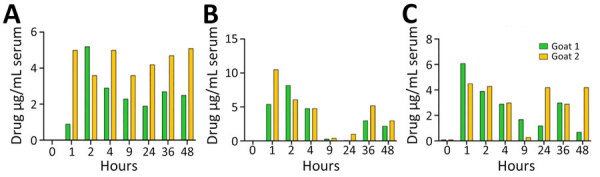 Figure 1
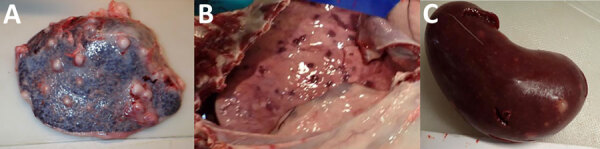 Figure 2
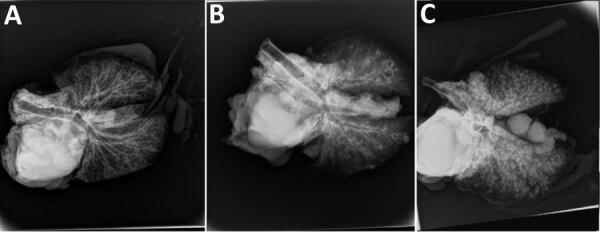 Figure 3
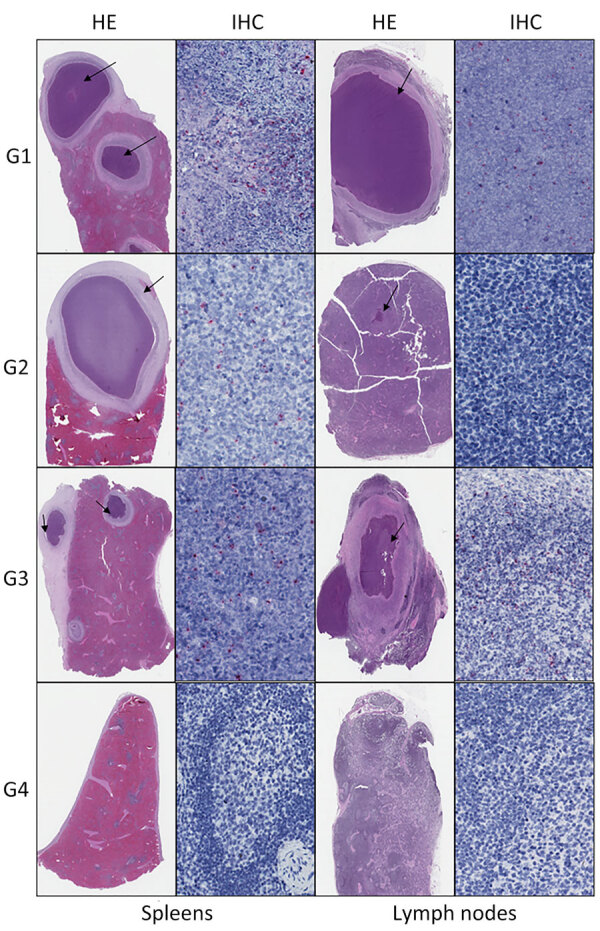 Figure 4
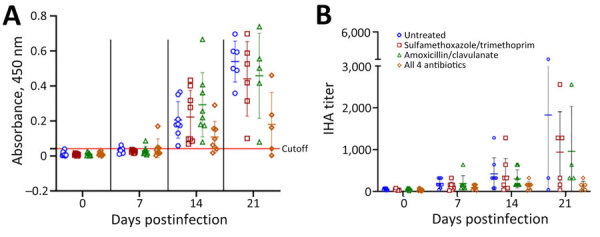 Figure 5
Peer Reviews
No public reviews on file for this paper yet. If you reviewed it on a platform where reviews are public (OpenReview, ICLR, NeurIPS, ICML), you can paste yours below so the community can read it here.
Videos
No videos yet. Explain this paper in a talk, walkthrough, or lecture? Add one.
Taxonomy
TopicsBurkholderia infections and melioidosis · Chemical Looping and Thermochemical Processes