Clinical and Epidemiologic Characteristics of Mpox Cases, Dominican Republic, July 2022–February 2023
Robert Paulino-Ramirez, Wilfredo Rafael Matias, Hector Lora-Rodríguez, Grey Benoît, Joel Ureña, Monica Thormann, Ronald Skewes-Ramm

TL;DR
This study analyzed mpox cases in the Dominican Republic from July 2022 to February 2023, finding notable differences in transmission patterns compared to global trends.
Contribution
The study highlights unique transmission characteristics of mpox in the Dominican Republic, emphasizing the need for tailored public health strategies.
Findings
Mpox was confirmed in 32.4% of suspected cases involving women.
22.5% of confirmed cases were children under 10 years of age.
Transmission patterns differed from global trends, suggesting localized dynamics.
Abstract
During July 2022–February 2023, mpox was confirmed in 71 of 283 suspected cases in the Dominican Republic; 32.4% of patients were women, and 22.5% children <10 years of age. We found differences in transmission compared with global trends, emphasizing the need for continued surveillance, diagnostics, and public health interventions.
Genes, proteins, chemicals, diseases, species, mutations and cell lines named across the full text — each resolved to its canonical identifier and authoritative record.
Click any figure to enlarge with its caption.
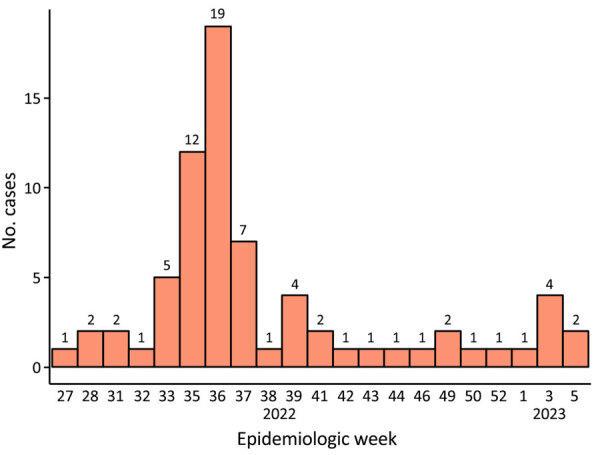 Figure 1
Peer Reviews
No public reviews on file for this paper yet. If you reviewed it on a platform where reviews are public (OpenReview, ICLR, NeurIPS, ICML), you can paste yours below so the community can read it here.
Videos
No videos yet. Explain this paper in a talk, walkthrough, or lecture? Add one.
Taxonomy
TopicsPoxvirus research and outbreaks · Bacillus and Francisella bacterial research · Zoonotic diseases and public health