Transjugular approach percutaneous closure: a preferred solution for challenging surgical management of ventricular septal rupture
Hendri Susilo, Emil Prabowo, Roy Bagus Kurniawan, Dian Paramita Kartikasari, Aditha Satria Maulana, Yudi Her Oktaviono

TL;DR
This paper presents a successful case of using a transjugular percutaneous closure to treat a challenging ventricular septal rupture after a heart attack.
Contribution
The study demonstrates the feasibility of transjugular percutaneous closure as an alternative to surgery for high-risk patients with ventricular septal rupture.
Findings
A 20-mm ASD occluder device was successfully deployed to treat a large VSR in a high-risk patient.
Post-procedure, the patient showed clinical improvement and stable hemodynamics.
Follow-up imaging confirmed proper device placement with minimal residual shunt.
Abstract
Ventricular septal rupture (VSR) is a rare but life-threatening complication following myocardial infarction (MI). While traditional management typically involves surgical repair, percutaneous closure techniques are increasingly being considered, particularly in cases where surgery is challenging or patients are high risk. We present the case of a 62-year-old male with anterior ST-segment elevation MI, complicated by a large VSR. Transthoracic echocardiography (TTE) revealed an 11.8-mm VSR, hypokinetic anteroseptal and anterior walls, and an ejection fraction of 52%. Surgical repair was considered high risk due to the patient’s advanced age, hypertension, anterior MI and apical VSR. Consequently, the heart team opted for a transjugular percutaneous closure approach. A 20-mm ASD occluder device was successfully deployed across the defect, as confirmed by cineangiography. Post-procedure,…
Genes, proteins, chemicals, diseases, species, mutations and cell lines named across the full text — each resolved to its canonical identifier and authoritative record.
Click any figure to enlarge with its caption.
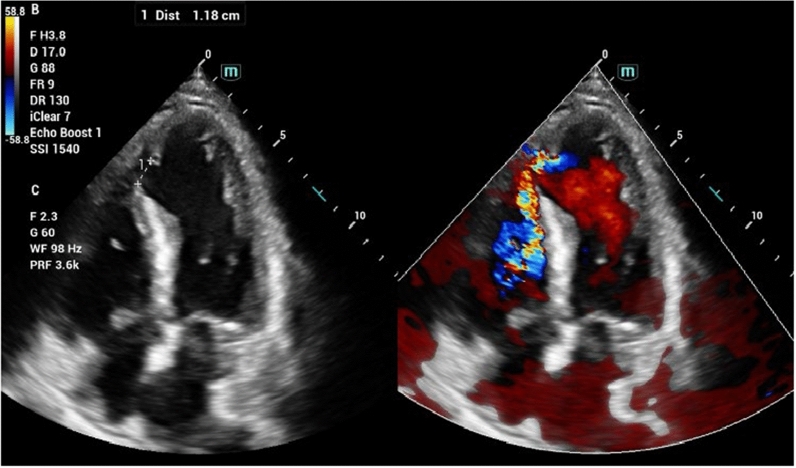 Figure 1
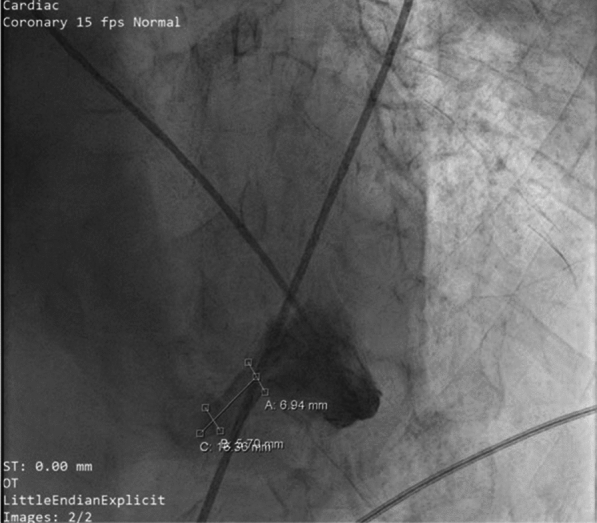 Figure 2
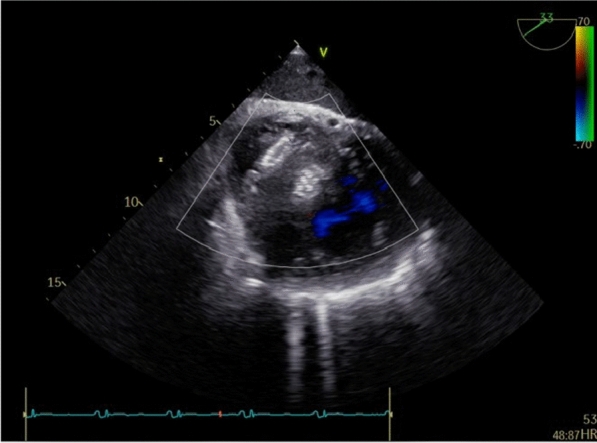 Figure 3
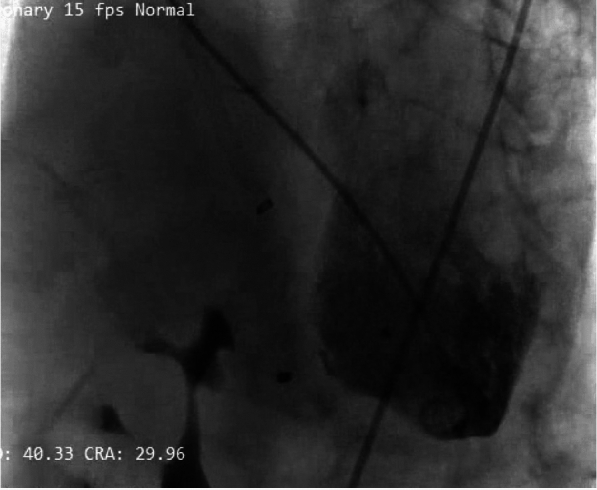 Figure 4
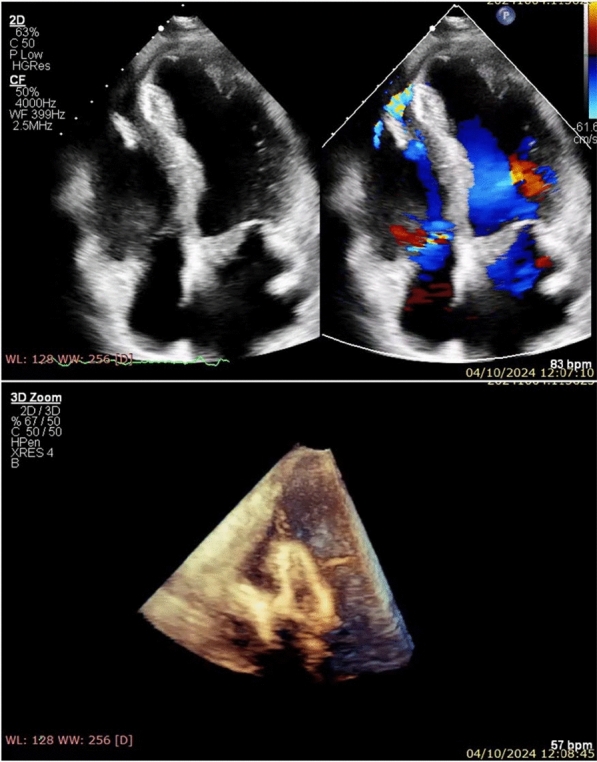 Figure 5
Peer Reviews
No public reviews on file for this paper yet. If you reviewed it on a platform where reviews are public (OpenReview, ICLR, NeurIPS, ICML), you can paste yours below so the community can read it here.
Videos
No videos yet. Explain this paper in a talk, walkthrough, or lecture? Add one.
Taxonomy
TopicsCardiac Structural Anomalies and Repair · Mechanical Circulatory Support Devices · Trauma Management and Diagnosis