The N-terminal PA domains of signal-peptide-peptidase-like 2 (SPPL2) proteases impact on TNFα cleavage
Christine Schlosser, Kinda Sharrouf, Alkmini A. Papadopoulou, Martina Haug-Kröper, Suman Singh, Maximilian Johler, Jonas Pettinger, Henrike Horn, Marco Koch, Sabine Hoeppner, Regina Fluhrer

TL;DR
This study shows that the N-terminal PA domains of SPPL2 proteases influence how they recognize and process substrates like TNFα, revealing key differences in their function.
Contribution
The study identifies the role of PA domains in SPPL2 proteases for substrate recognition and processing, highlighting functional distinctions within the SPPL family.
Findings
The SPPL2c PA domain impairs TNFα cleavage by SPPL2a/b in cells and in vitro.
The SPPL2a PA domain enhances SPPL2b processing of TNFα.
SPPL3 exhibits non-canonical shedding activity on full-length TNFα.
Abstract
Signal peptide peptidase-like (SPPL) proteases, members of the intramembrane aspartyl protease family, have attracted increased interest due to their involvement in immune cell differentiation and cellular glycan structure regulation. However, the enzymatic domain involved in substrate recognition remains enigmatic. Here we provide evidence that the N-terminal protease-associated (PA) domains of the SPPL2 subfamily are involved in substrate recognition and discrimination of substrates that differ slightly in their luminal/extracellular domain. Presence of the SPPL2c PA domain impairs SPPL2a/b mediated tumor necrosis factor α (TNFα) initial cleavage, kinetics, and processivity in cells and in vitro. In contrast, the SPPL2a PA domain enhances processing by SPPL2b. Additionally, we demonstrate non-canonical shedding activity of SPPL3 on full-length TNFα and that the ability for consecutive…
Genes, proteins, chemicals, diseases, species, mutations and cell lines named across the full text — each resolved to its canonical identifier and authoritative record.
Click any figure to enlarge with its caption.
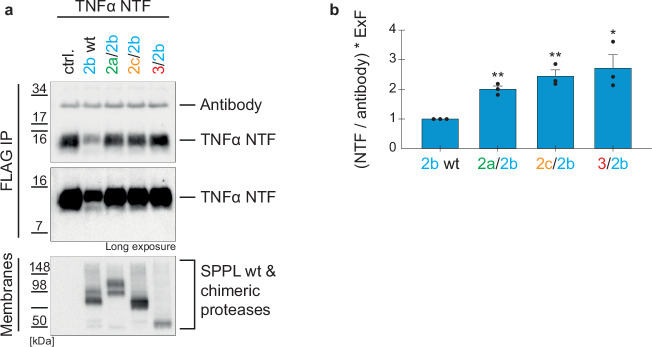 Figure 10
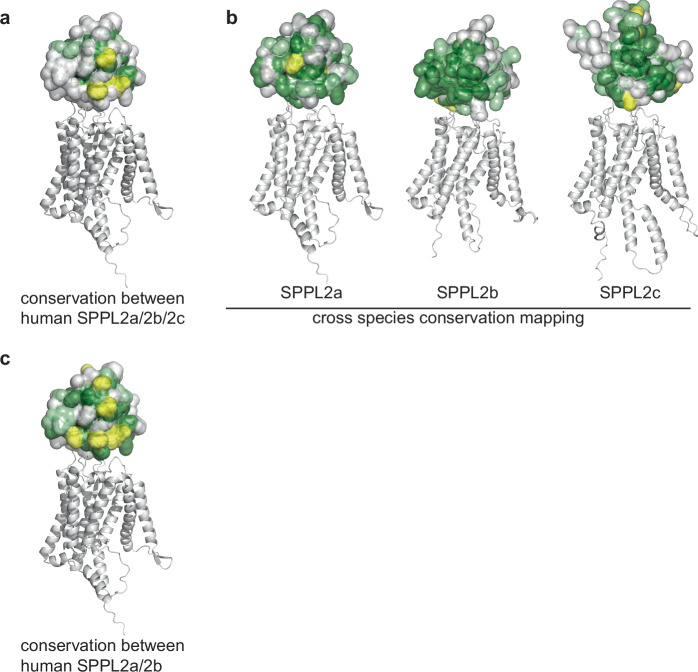 Figure 1
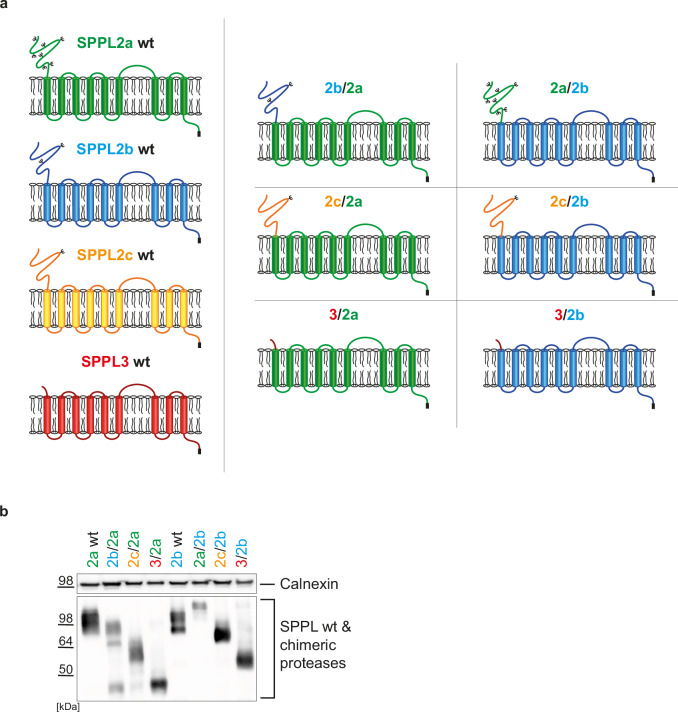 Figure 2
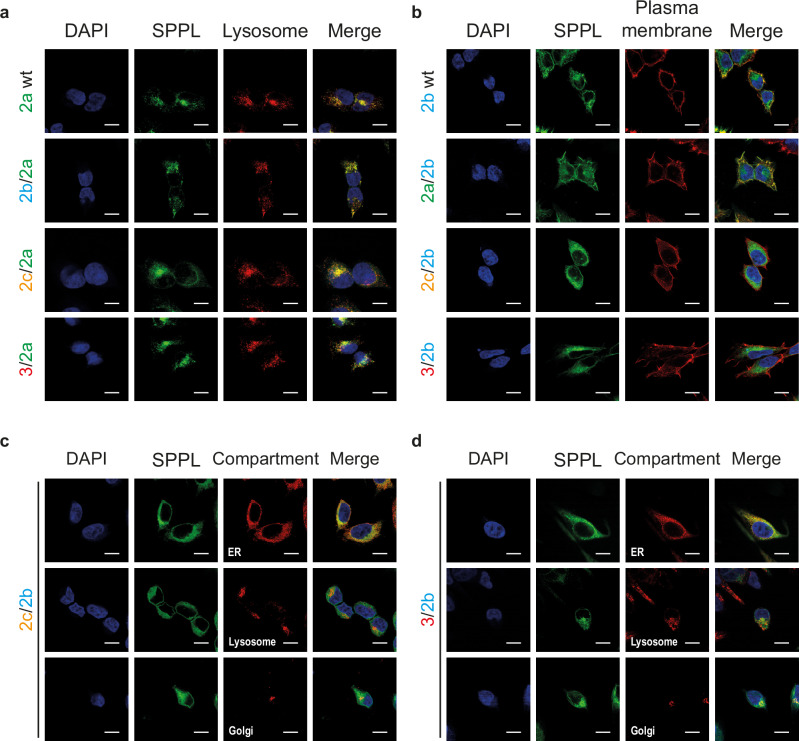 Figure 3
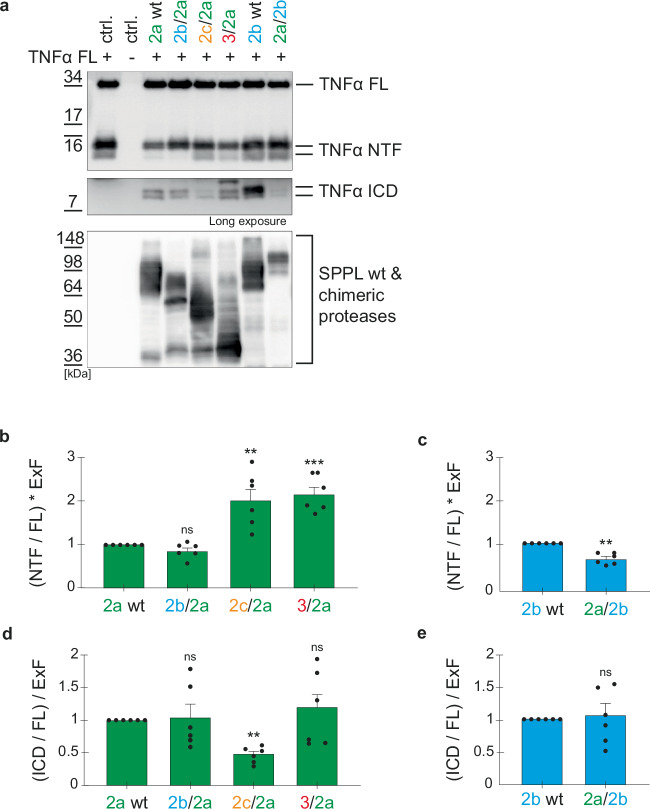 Figure 4
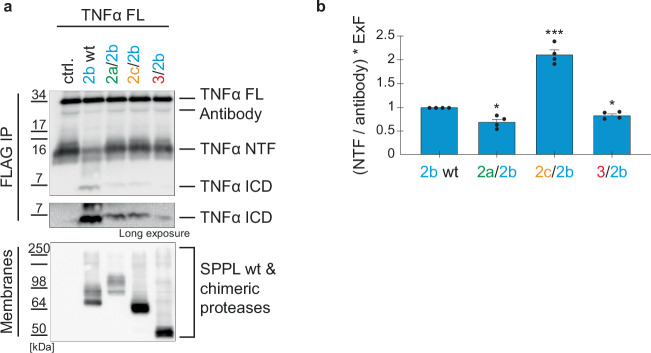 Figure 5
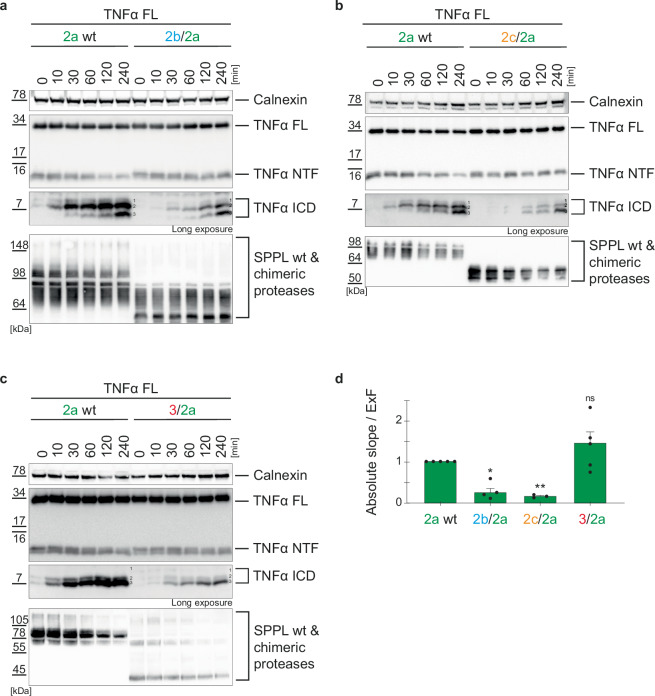 Figure 6
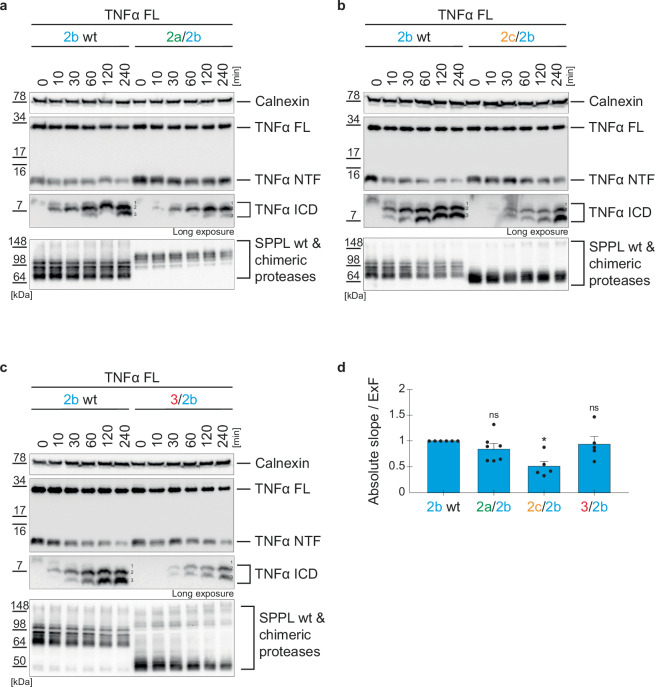 Figure 7
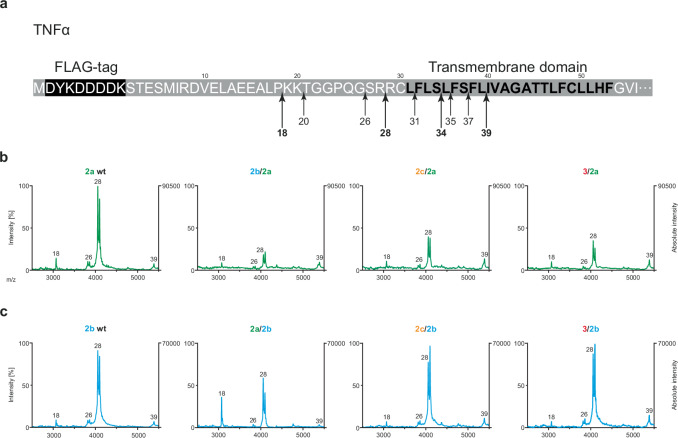 Figure 8
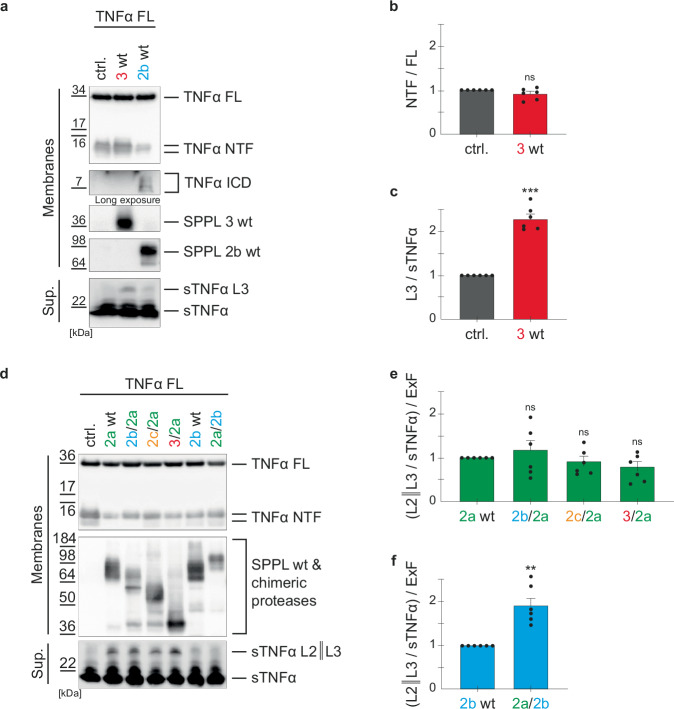 Figure 9
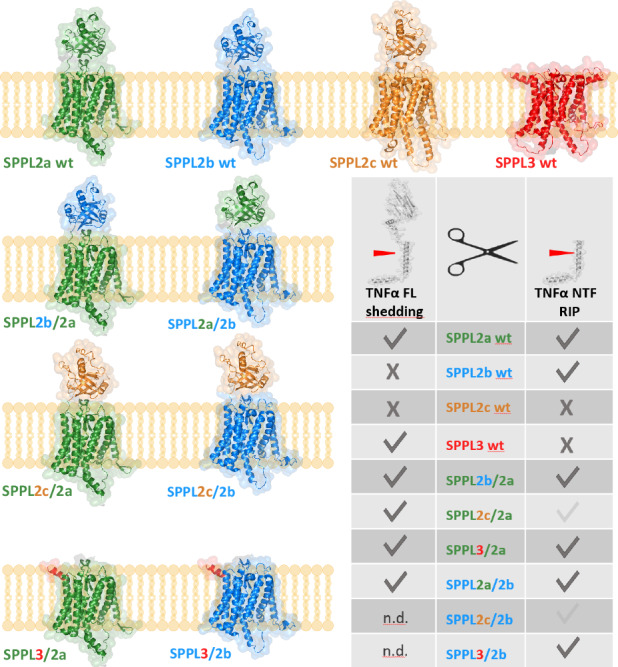 Figure 11
Peer Reviews
No public reviews on file for this paper yet. If you reviewed it on a platform where reviews are public (OpenReview, ICLR, NeurIPS, ICML), you can paste yours below so the community can read it here.
Videos
No videos yet. Explain this paper in a talk, walkthrough, or lecture? Add one.
Taxonomy
TopicsPeptidase Inhibition and Analysis · Ubiquitin and proteasome pathways · Protease and Inhibitor Mechanisms