A comprehensive evaluation of the ecological status of Wadi Mariout ponds, Egypt
Alaa I. Khedr, Mohamed H. Abdo, Radwan G. Abd Ellah, Shaimaa M. Ibrahim, Eman I. Abdel-Aal, Howayda H. Abd El-Hady, Nehad Khalifa, Heba E. A. Elsebaie, Amal A. Othman, Salem G. Salem, Mohamed E. Goher

TL;DR
This study evaluates the ecological health of Wadi Mariout ponds in Egypt, finding eutrophication and poor water quality in some areas.
Contribution
This is the first comprehensive study on the ecological status of Wadi Mariout ponds, providing a detailed assessment of water quality and biodiversity.
Findings
The western basin of Wadi Mariout ponds has lower water quality and higher eutrophication compared to the eastern basin.
Phytoplankton and zooplankton are more diverse in the western basin, while macrobenthic invertebrates are more abundant in the eastern basin.
The study identifies the need for wastewater control to manage eutrophication in Wadi Mariout ponds.
Abstract
The present study is the first pioneer study on the ecological status of the Wadi Mariout ponds in the southern part of the Mediterranean Sea, Egypt. The physicochemical variables referred to brackish water (salinity: 12.28–16‰). The WQI indicated a lower water quality status in the western basin than the eastern one. The average TSI values (64.61 and 63.52) refer to high ecological productivity and poor water quality. However, the Arithmetic Water Quality Index (Ar-WQI) indicates the excellent water quality of the eastern pond for aquatic life, while the water quality of the western pond varies from good to very poor. The predominant groups’ species and low biodiversity indices of phytoplankton (1.29–2.2), zooplankton (1.23–1.93), and macroinvertebrates (0.45–1.85), as well as the biochemical composition of phytoplankton, reveal a high protein-carbohydrate ratio (> 11), indicating…
Genes, proteins, chemicals, diseases, species, mutations and cell lines named across the full text — each resolved to its canonical identifier and authoritative record.
Click any figure to enlarge with its caption.
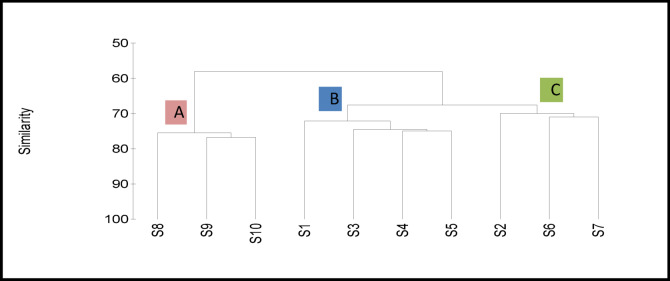 Figure 10
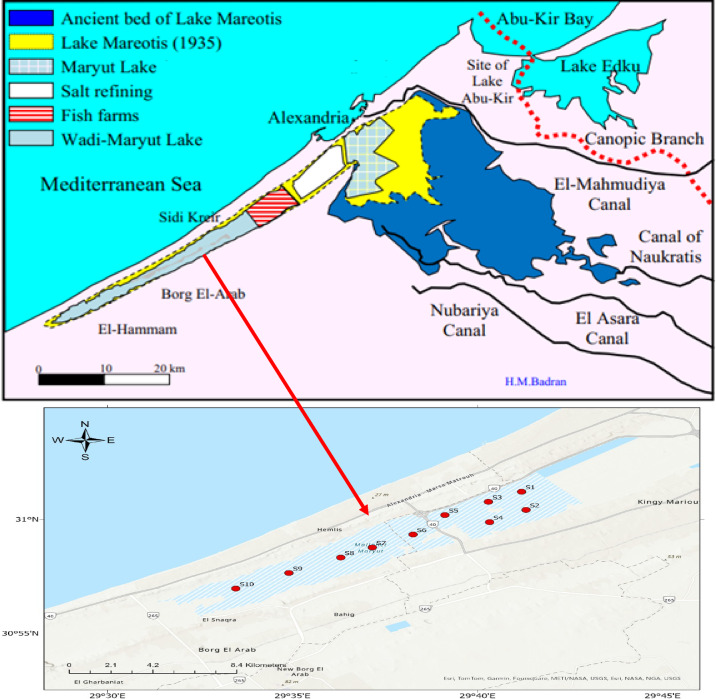 Figure 11
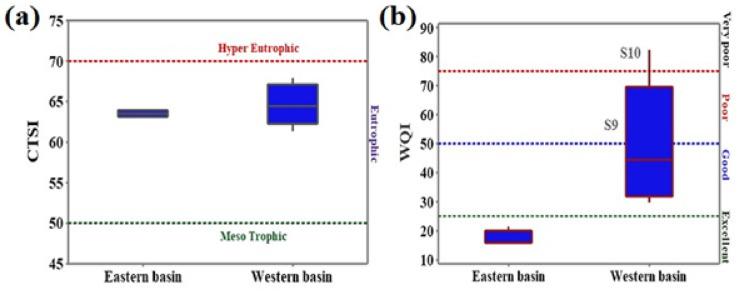 Figure 1
 Figure 2
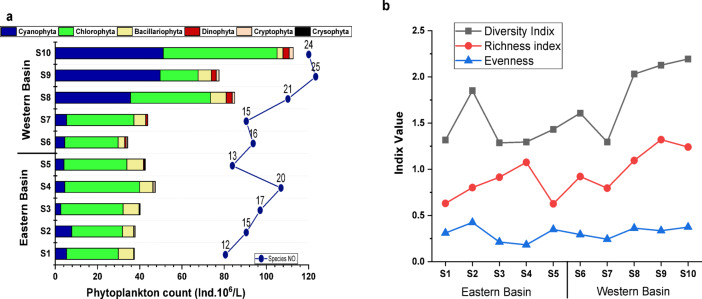 Figure 3
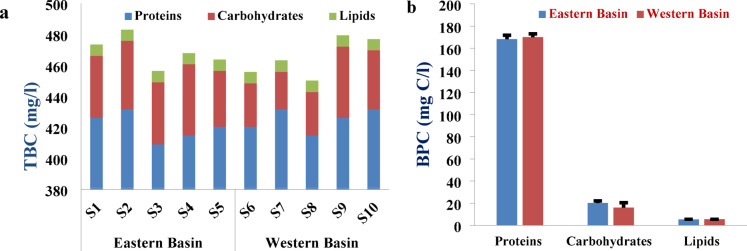 Figure 4
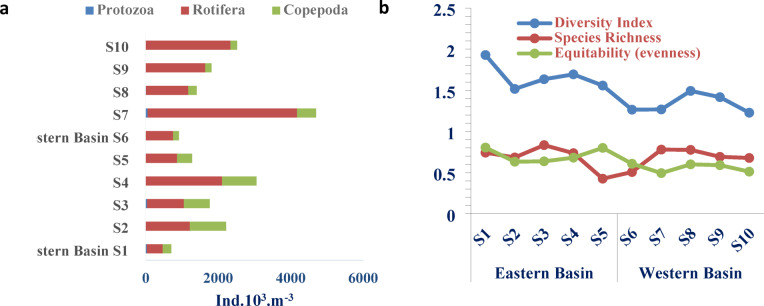 Figure 5
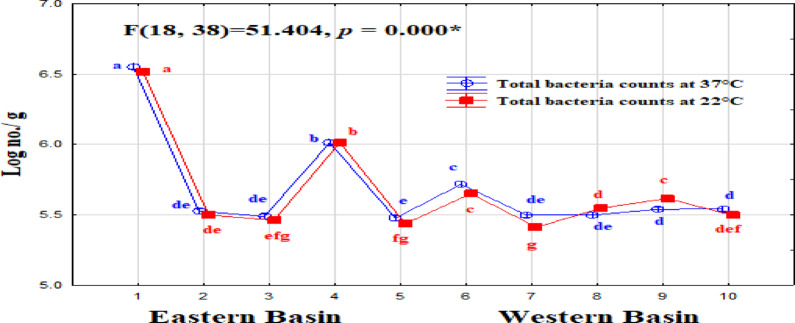 Figure 6
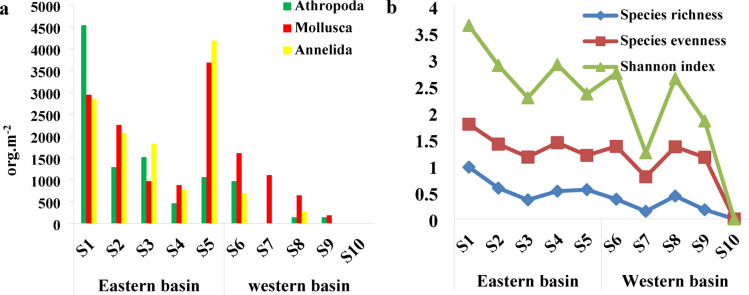 Figure 7
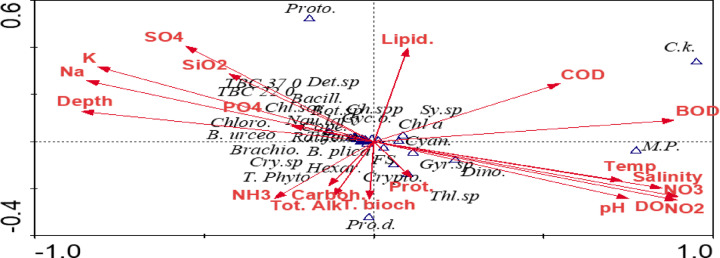 Figure 8
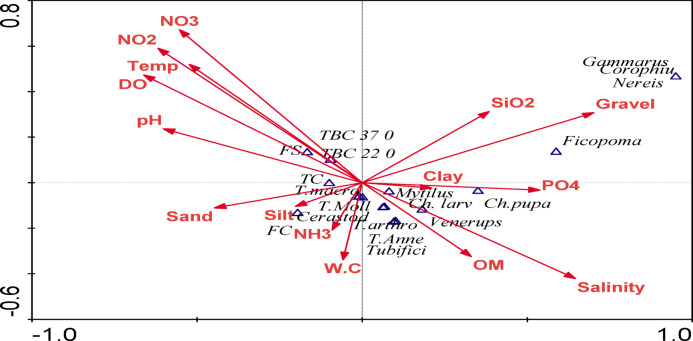 Figure 9
Peer Reviews
No public reviews on file for this paper yet. If you reviewed it on a platform where reviews are public (OpenReview, ICLR, NeurIPS, ICML), you can paste yours below so the community can read it here.
Videos
No videos yet. Explain this paper in a talk, walkthrough, or lecture? Add one.
Taxonomy
TopicsWater Quality and Pollution Assessment · Aquatic Invertebrate Ecology and Behavior · Fish Biology and Ecology Studies