Identification of a novel homozygous SLC13A5 nonstop mutation in a Chinese family with epileptic encephalopathy and developmental delay
Hua He, Lijuan Long, Manling Tang, Qiang Xu, Shengwu Duan, Ge Chen, Yan Zhao, Qiongfang Wu, Jia Chen

TL;DR
A new mutation in the SLC13A5 gene was found in a Chinese family with epilepsy and developmental delay, expanding the known genetic causes of this condition.
Contribution
The study reports the first SLC13A5 mutation in the Chinese population and expands the mutation spectrum of this gene.
Findings
A novel homozygous nonstop mutation c.1705T>G in SLC13A5 was identified in a Chinese patient with DEE25.
The mutation leads to a protein extension of 174 amino acids and is associated with overlapping symptoms seen in other DEE25 cases.
The patient's parents and unaffected sister were heterozygous carriers of the mutation.
Abstract
Biallelic loss-of-function variants in the SLC13A5 (solute carrier family 13, member 5) gene are responsible for autosomal recessive developmental and epileptic encephalopathy 25 with amelogenesis imperfecta (DEE25). Until now, no pathogenic variants of SLC13A5 has been reported among the Chinese population. A Chinese Han pediatric patient with epilepsy and global developmental delay was described in this study. Trio-whole exome sequencing (WES) including the patient and her parents was performed to determine the genetic basis of the phenotype. Potential pathogenic variants were subsequently confirmed by Sanger sequencing. Additionally, we conducted an extensive review of the literature regarding SLC13A5 variants to analyze their associated phenotypic characteristics. Trio-WES revealed a novel homozygous variant c.1705T>G in SLC13A5 associated with clinical manifestations in the…
Genes, proteins, chemicals, diseases, species, mutations and cell lines named across the full text — each resolved to its canonical identifier and authoritative record.
Click any figure to enlarge with its caption.
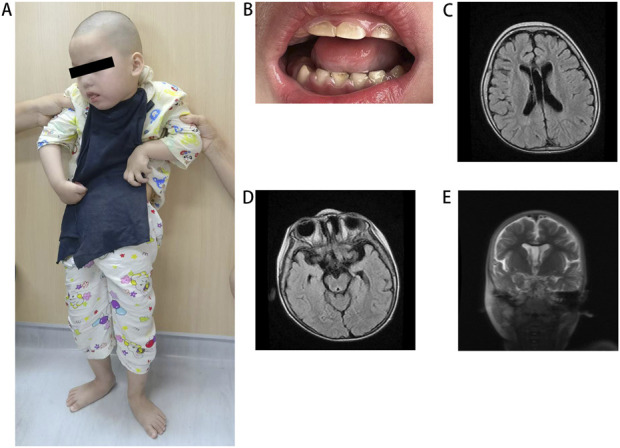 Figure 1
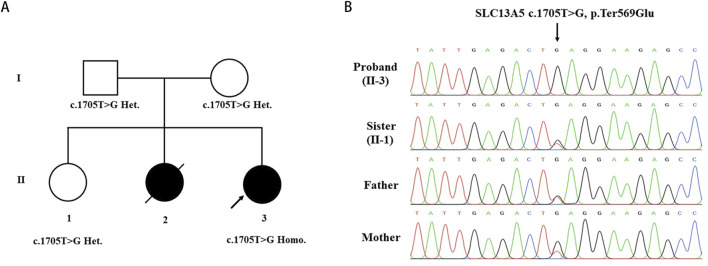 Figure 2
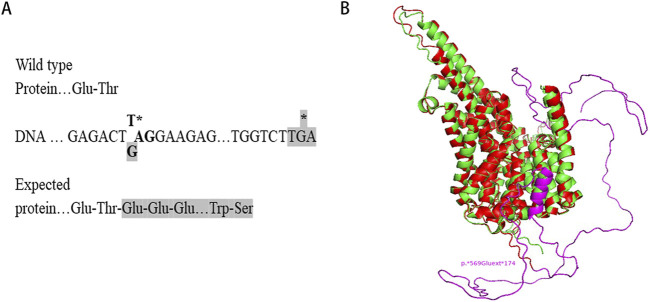 Figure 3
Peer Reviews
No public reviews on file for this paper yet. If you reviewed it on a platform where reviews are public (OpenReview, ICLR, NeurIPS, ICML), you can paste yours below so the community can read it here.
Videos
No videos yet. Explain this paper in a talk, walkthrough, or lecture? Add one.
Taxonomy
TopicsGenetics and Neurodevelopmental Disorders · Genomics and Rare Diseases · Epilepsy research and treatment