Recombinant chymase inhibits fibrinolysis induced by endogenous plasmin in clotted human blood
Laurence Vincent, Catherine Lapointe, Patrick P. McDonald, Christos Rammos, Tienush Rassaf, Maria Köllnberger, Hanna Tinel, Stefan Heitmeier, Pedro D’Orléans-Juste

TL;DR
This study shows that chymase, a protease from mast cells, can block the breakdown of blood clots by inhibiting plasmin activity, suggesting potential new treatments for clot-related diseases.
Contribution
The novel finding is that recombinant chymase inhibits endogenous plasmin activity in human blood clots, supporting its role in clot stabilization and the potential of chymase inhibitors as fibrinolytic agents.
Findings
Recombinant chymase (rCMA-1) reduces clot lysis by inhibiting plasmin activity in human blood clots.
Chymase activity in thrombi from thrombectomy patients is sensitive to the inhibitor fulacimstat.
Fulacimstat accelerates clot dissolution by reversing chymase's antifibrinolytic effects.
Abstract
Our group recently reported that chymase, a serine protease synthetized and released by mast cells, plays a pivotal role in thrombi stabilization in murine deep vein thrombosis (DVT) models, by interfering with the fibrinolytic properties of endogenous plasmin within thrombi. However, the impact of mast cell-derived chymase on endogenous plasmin activity in human blood clots has yet to be explored. The antifibrinolytic properties of human recombinant chymase (rCMA-1) were investigated using an in vitro thrombolysis assay based on halo-shaped human blood clots. In addition, a fluorogenic assay was used to detect chymase activity in human thromboembolic biopsies. In both assays, the activity of human chymase was validated using a specific chymase inhibitor, fulacimstat (BAY 1142524). Although rapidly neutralized in plasma, rCMA-1 remains active within the local microenvironment of a…
Genes, proteins, chemicals, diseases, species, mutations and cell lines named across the full text — each resolved to its canonical identifier and authoritative record.
Click any figure to enlarge with its caption.
 Figure 1
 Figure 2
 Figure 3
 Figure 4
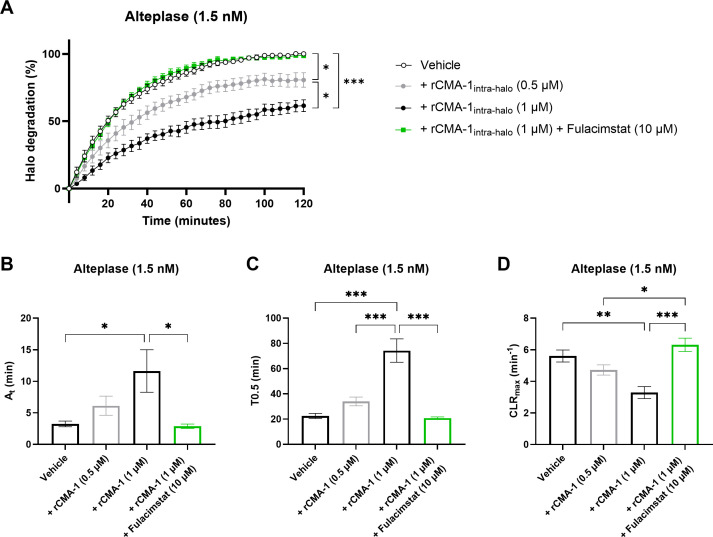 Figure 5
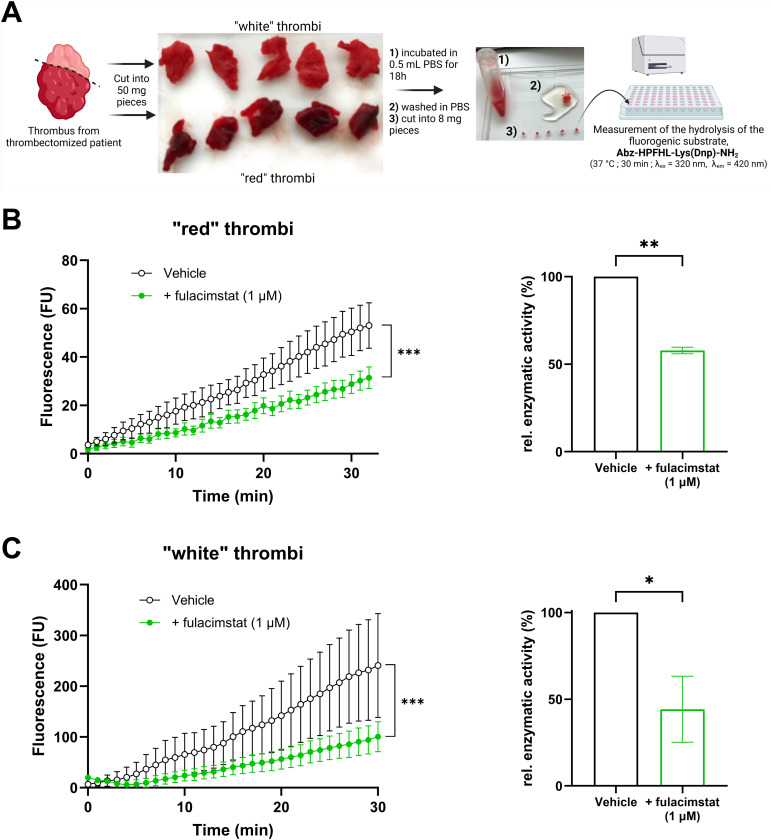 Figure 6
Peer Reviews
No public reviews on file for this paper yet. If you reviewed it on a platform where reviews are public (OpenReview, ICLR, NeurIPS, ICML), you can paste yours below so the community can read it here.
Videos
No videos yet. Explain this paper in a talk, walkthrough, or lecture? Add one.
Taxonomy
TopicsMast cells and histamine · melanin and skin pigmentation · Dermatologic Treatments and Research