Small Supernumerary Marker Chromosome (sSMC) 15 in Male Primary Infertility: A Case Study
Filomena Mottola, Renata Finelli, Veronica Feola, Kristian Leisegang, Lucia Rocco

TL;DR
A 39-year-old man with infertility was found to have a small extra chromosome from chromosome 15, which may be linked to his fertility issues.
Contribution
This case study reports a novel association between a specific sSMC(15) and male infertility without Prader-Willi/Angelman syndrome.
Findings
The patient's sSMC(15) is an inv dup(15) from the 15q11.2 region, excluding the Prader-Willi/Angelman syndrome critical region.
35% of the patient's spermatozoa carried the sSMC(15), suggesting a potential disruption in spermatogenesis.
The sSMC(15) may contribute to oligoasthenozoospermia in males with primary infertility.
Abstract
This case report describes a 39-year-old phenotypically normal male patient of a married couple with primary infertility presenting as candidates for assisted reproductive techniques. The medical history of the couple is unremarkable, with both partners phenotypically normal. Semen analysis revealed oligoasthenzoospermia (OAT), 15% sperm DNA fragmentation and 4% aneuploidies in the sperm nuclei. Genetic analysis showed no Y chromosome of cystic fibrosis transmembrane conductance regulator gene mutations. Karyotype analysis in the male partner revealed a small supernumerary marker chromosome (sSMC) derived from chromosome 15, specifically inverted and duplicated (inv dup(15)) corresponding to the 15q11.2 region but lacking the Prader-Willi/Angelman syndrome critical region (PWACR). Further investigations revealed that 35% of the patient's spermatozoa carried the sSMC(15). This case study…
Genes, proteins, chemicals, diseases, species, mutations and cell lines named across the full text — each resolved to its canonical identifier and authoritative record.
Click any figure to enlarge with its caption.
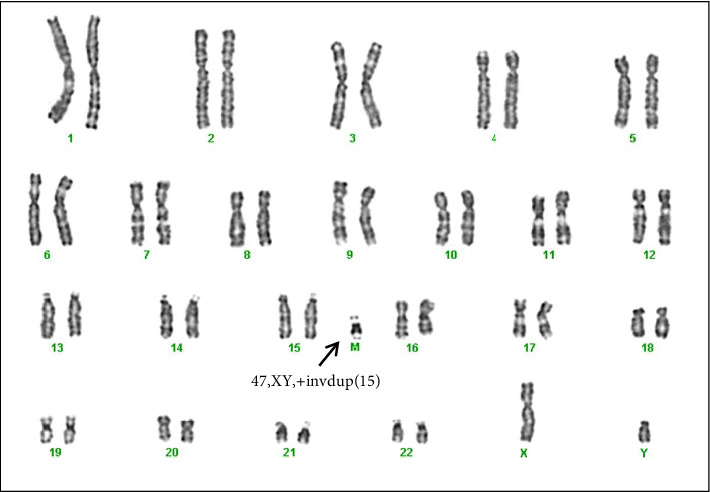 Figure 1
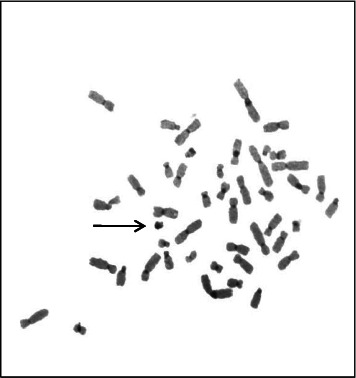 Figure 2
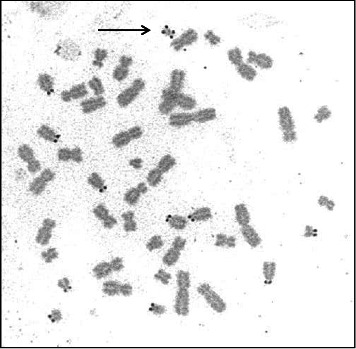 Figure 3
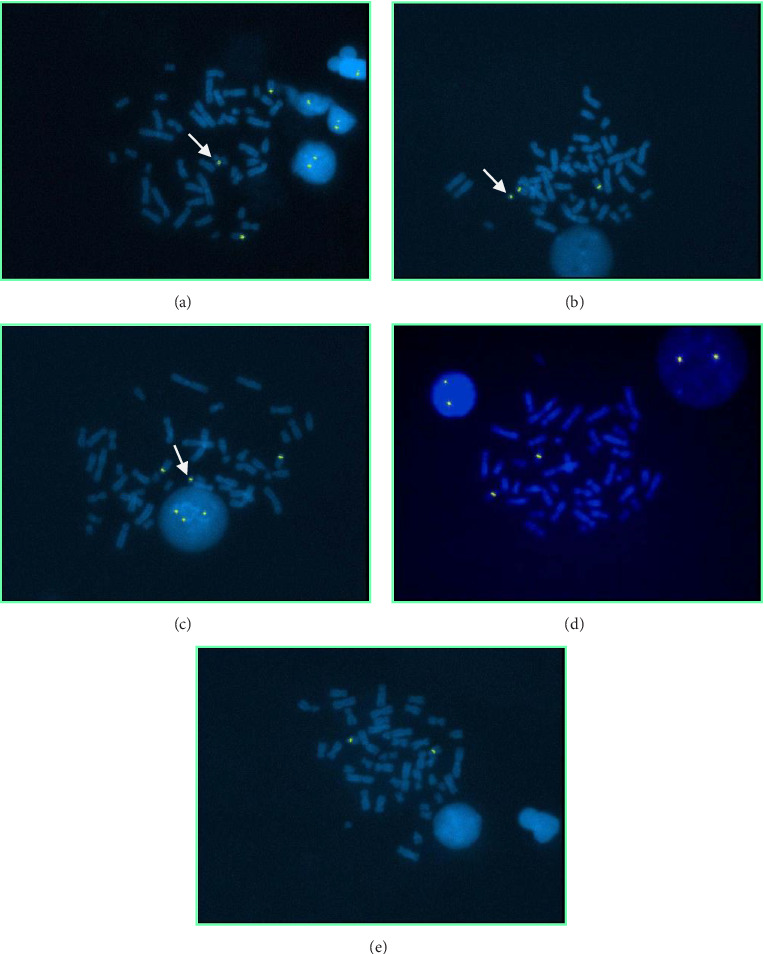 Figure 4
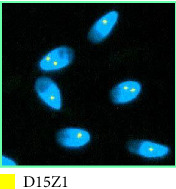 Figure 5
Peer Reviews
No public reviews on file for this paper yet. If you reviewed it on a platform where reviews are public (OpenReview, ICLR, NeurIPS, ICML), you can paste yours below so the community can read it here.
Videos
No videos yet. Explain this paper in a talk, walkthrough, or lecture? Add one.
Taxonomy
TopicsGenomics and Chromatin Dynamics · Genetic Syndromes and Imprinting · Genomic variations and chromosomal abnormalities