Impact of surgery on rehabilitation care and quality of life perceived by patient with post-stroke upper limb spasticity: Study protocol for a randomized controlled trial
Patricia Hurtado-Olmo, Ángela González-Santos, Laura del Olmo Iruela, Belén Castro-Ropero, Lourdes Zúñiga-Gómez, Ana Isabel Bueno-García, Pilar Guijosa-Campos, Basilio Gómez-Pozo, Fidel Hita-Contreras, Pedro Hernández-Cortés

TL;DR
This study compares surgery and botulinum toxin for treating upper limb spasticity after stroke to determine which improves patients' quality of life and rehabilitation outcomes.
Contribution
This is the first randomized controlled trial comparing surgical and botulinum toxin treatments for post-stroke upper limb spasticity.
Findings
The study will assess functionality, quality of life, and brain activity in patients receiving surgery or botulinum toxin.
Healthcare costs and care needs will be compared between the two treatment groups.
Results may guide more effective and cost-efficient treatment protocols for post-stroke spasticity.
Abstract
Stroke is the principal cause of permanent disability in adult age, and many patients require lifelong medical treatment and care from others for their daily activities. It has enormous repercussions on the work and social lives of patients and their families and involves major economic expenditure. Post-stroke spastic upper limb is usually treated with rehabilitation, occupational therapy, and periodical injections of botulinum toxin, while surgical correction is now seldom considered. However, there has been no clinical trial to compare between surgical and toxin treatments. The primary aim of this study is to compare outcomes between surgery and a conventional approach with botulinum toxin in patients with post-stroke upper limb spasticity. A two-arm (surgical treatment [n = 22] vs. botulinum toxin [n = 22]) randomized clinical trial (RCT) will be performed to compare the efficacy…
Genes, proteins, chemicals, diseases, species, mutations and cell lines named across the full text — each resolved to its canonical identifier and authoritative record.
Click any figure to enlarge with its caption.
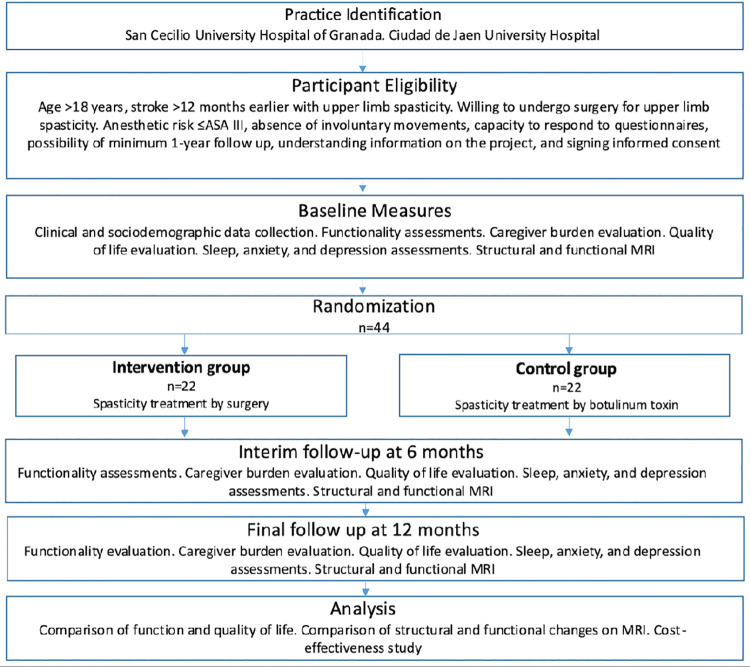 Figure 1
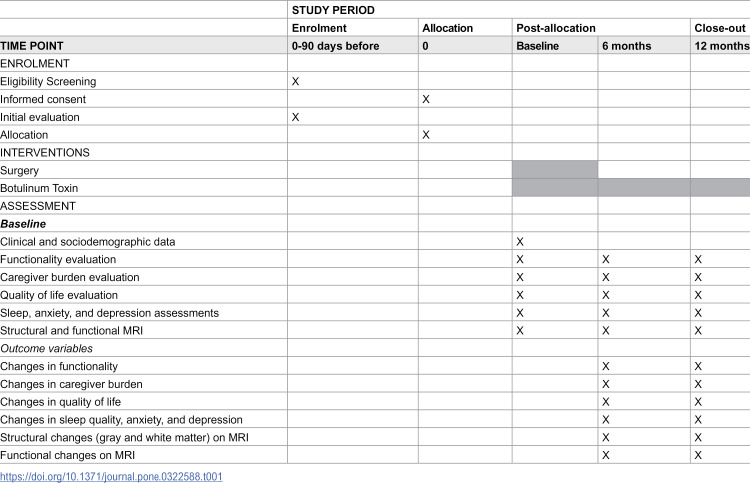 Figure 2
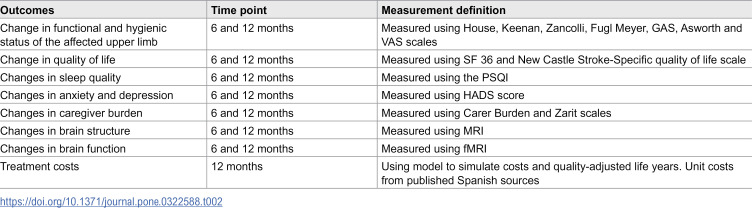 Figure 3
Peer Reviews
No public reviews on file for this paper yet. If you reviewed it on a platform where reviews are public (OpenReview, ICLR, NeurIPS, ICML), you can paste yours below so the community can read it here.
Videos
No videos yet. Explain this paper in a talk, walkthrough, or lecture? Add one.
Taxonomy
TopicsBotulinum Toxin and Related Neurological Disorders · Stroke Rehabilitation and Recovery · Cerebral Palsy and Movement Disorders