Side effects may include: Consequence neglect in generating solutions
Christopher Rodriguez, Daniel M. Oppenheimer, Tobias Otterbring, Tobias Otterbring, Tobias Otterbring

TL;DR
People often overlook negative side effects of their solutions because they focus too much on the main goal.
Contribution
Introduces 'consequence neglect' as a cognitive bias where downstream effects are ignored during problem solving.
Findings
Individuals rate strategies more negatively when prompted to consider both positive and negative consequences.
Negative outcomes are not naturally weighted unless attention is explicitly drawn to them.
Consequence neglect has implications for decision-making in policy and business.
Abstract
Strategies designed to address specific problems often give rise to unintended, negative consequences that, while foreseeable, are overlooked during strategy formulation and evaluation. We propose that this oversight is not due to a lack of knowledge but rather a cognitive bias rooted in focalism—the tendency to focus narrowly on the primary objective, ignoring other relevant factors, such as potential consequences. We introduce the concept of consequence neglect, where problem solvers fail to generate or consider downstream effects of their solutions because these consequences are not central to the proximal goal. Across four studies, we provide evidence supporting this phenomenon. Specifically, we find that individuals rate strategies more negatively after being prompted to generate both positive and negative consequences, suggesting that negative outcomes are not naturally weighted…
Genes, proteins, chemicals, diseases, species, mutations and cell lines named across the full text — each resolved to its canonical identifier and authoritative record.
Click any figure to enlarge with its caption.
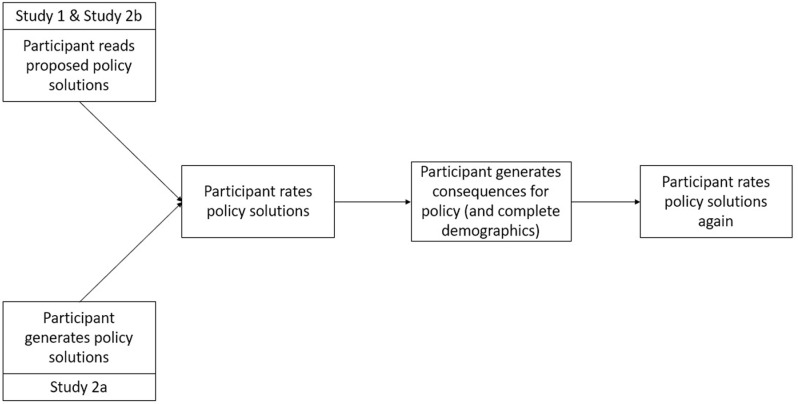 Figure 1
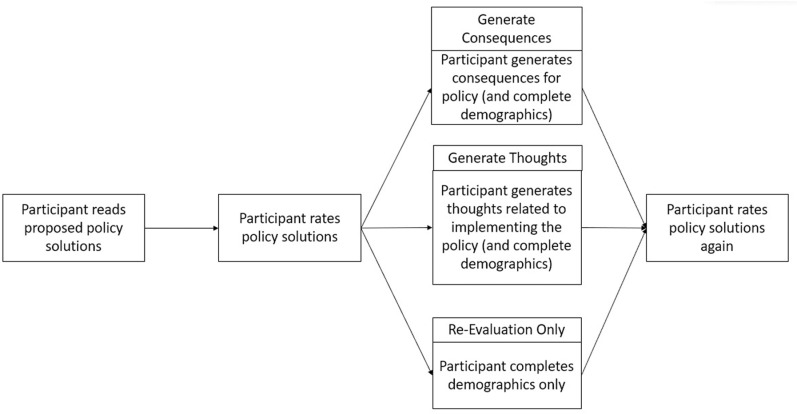 Figure 2
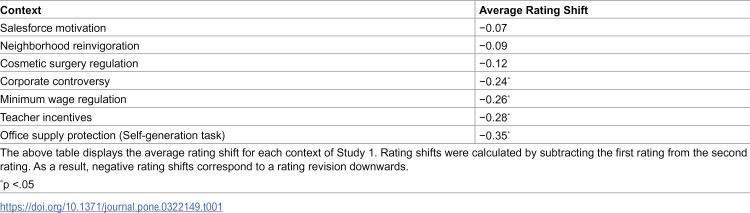 Figure 3
 Figure 4
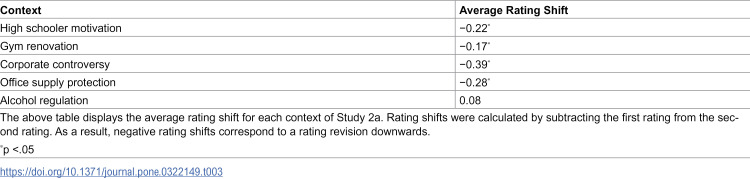 Figure 5
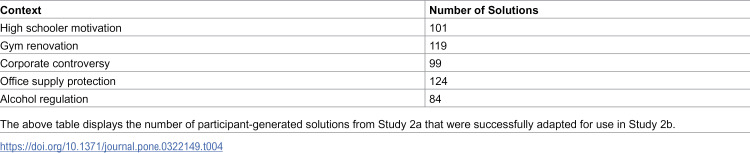 Figure 6
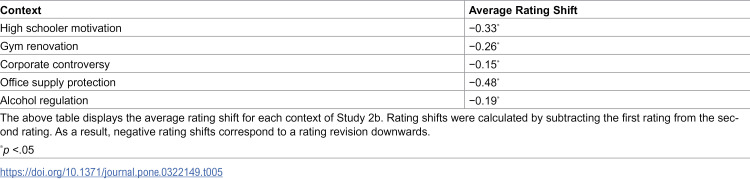 Figure 7
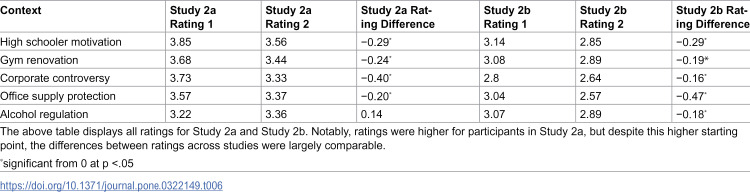 Figure 8
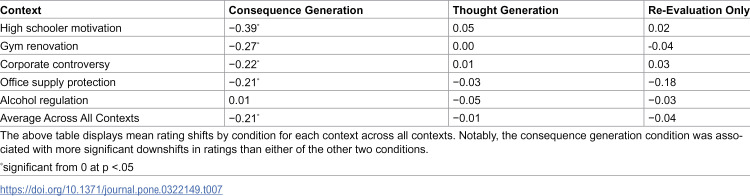 Figure 9
Peer Reviews
No public reviews on file for this paper yet. If you reviewed it on a platform where reviews are public (OpenReview, ICLR, NeurIPS, ICML), you can paste yours below so the community can read it here.
Videos
No videos yet. Explain this paper in a talk, walkthrough, or lecture? Add one.
Taxonomy
TopicsDecision-Making and Behavioral Economics · Experimental Behavioral Economics Studies · Complex Systems and Decision Making