Pseudo‐Ring Methodology to Control the Conformations of Macrocyclic Peptides
Matthew Diamandas, Yang (Daniel) Ou, Ben Zhen Huang, Andrei K. Yudin

TL;DR
This paper introduces a method using pseudo-rings to control the shape and properties of macrocyclic peptides, enabling tunable characteristics like lipophilicity and fluorescence.
Contribution
The novelty lies in using pseudo-rings to dynamically control macrocyclic peptide conformations from a single building block.
Findings
Pseudo-ring-containing macrocycles exhibit distinct 3D structures in open and closed forms.
The conformational changes lead to differences in lipophilicity and tunable fluorescence.
Pseudo-ring grafts offer a versatile tool for designing macrocyclic peptides with unique properties.
Abstract
A pseudo‐ring is a medium‐sized cyclic structure, held together by a strong hydrogen bond, that can act as a mimetic of a covalently linked heterocycle. Molecules that contain pseudo‐rings can switch between “open” and “closed” forms. This paper examines the utility of pseudo‐ring constructs to control conformations and properties of macrocycles. The spectroscopic evidence suggests that the “open” and “closed” pseudo‐ring‐containing macrocycles differ in their three‐dimensional characteristics, which results in markedly different lipophilicities. The dynamic nature of pseudo‐rings has led to the emergence of tunable fluorescence that should be useful in environment‐sensitive applications. Pseudo‐ring grafts represent a powerful conformational control tool in macrocyclic peptides. “Open” and “closed” conformations can be accessed from a single building block which allow for macrocyclic…
Genes, proteins, chemicals, diseases, species, mutations and cell lines named across the full text — each resolved to its canonical identifier and authoritative record.
Click any figure to enlarge with its caption.
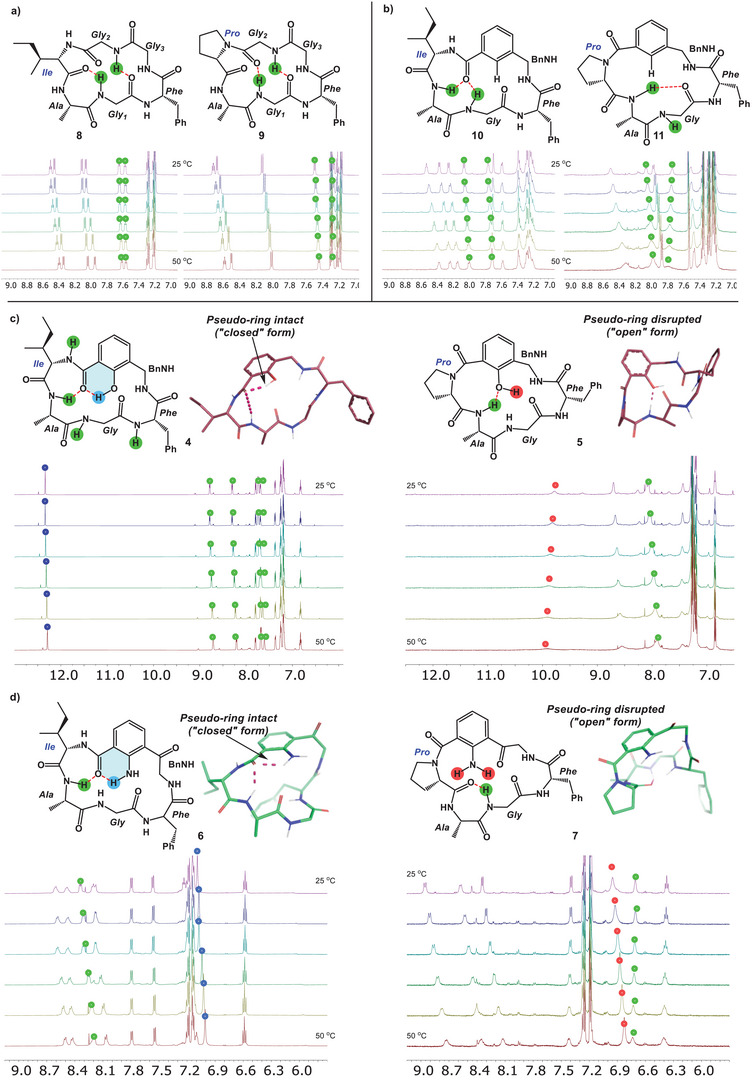 Figure 1
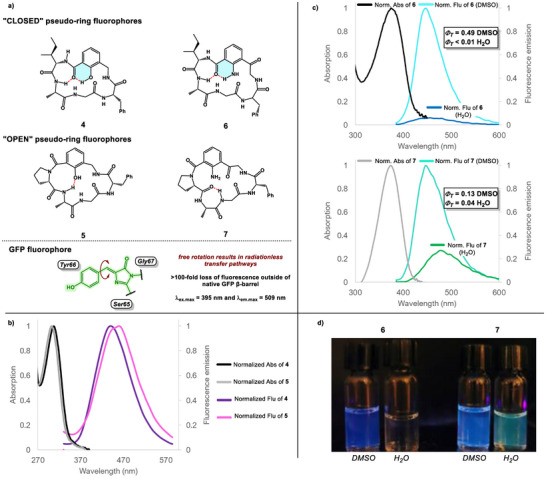 Figure 2
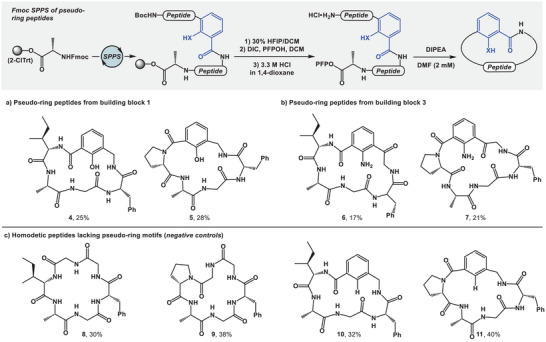 Figure 3
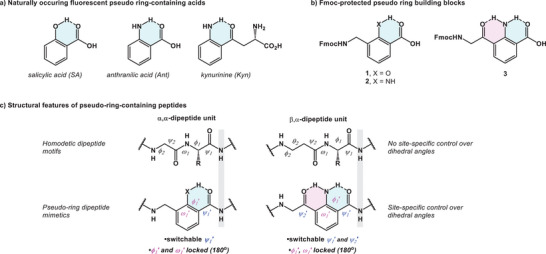 Figure 4
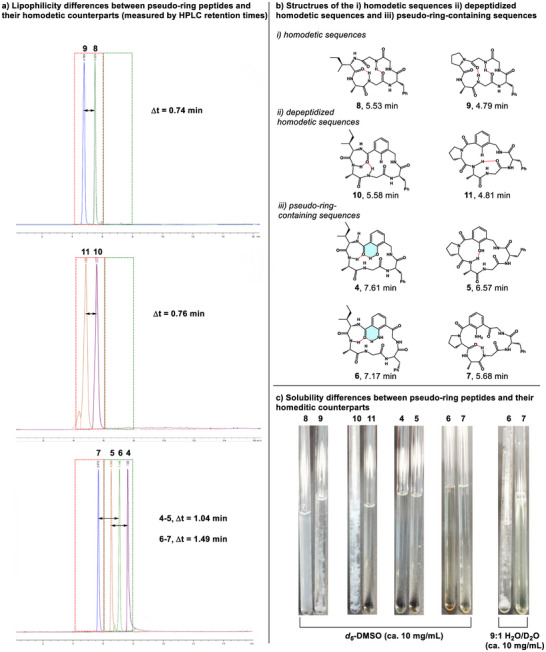 Figure 5
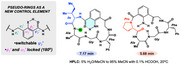 Figure 6
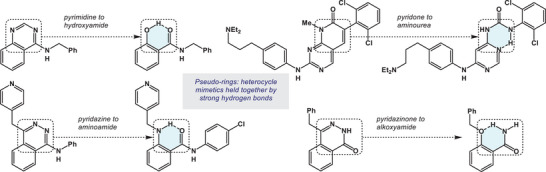 Figure 7
Peer Reviews
No public reviews on file for this paper yet. If you reviewed it on a platform where reviews are public (OpenReview, ICLR, NeurIPS, ICML), you can paste yours below so the community can read it here.
Videos
No videos yet. Explain this paper in a talk, walkthrough, or lecture? Add one.
Taxonomy
TopicsMolecular Sensors and Ion Detection · Photochemistry and Electron Transfer Studies · Photochromic and Fluorescence Chemistry