Sealed endoscopic full-thickness resection with sentinel node navigation for early gastric cancer without endoscopic submucosal dissection indication
Hidekazu Kitakata, Tohru Itoh, Shinichi Kinami, Yoshiyuki Hata, Hiroaki Kunou, Tsuyoshi Mukai, Takeo Shimasaki

TL;DR
A new surgical technique called sealed EFTR was developed for early gastric cancer, offering a safe and minimally invasive option with no recurrence observed in long-term follow-up.
Contribution
The novel sealed EFTR technique prevents tumor cell escape by sealing the serosa with a silicone sheet during surgery.
Findings
Sealed EFTR showed no metastasis or recurrence in 11 patients over a mean follow-up of 6.5 years.
Sentinel node biopsy helped identify suitable candidates for the procedure, ensuring oncological safety.
The technique provides a minimally invasive alternative for early gastric cancer ineligible for endoscopic submucosal dissection.
Abstract
Laparoscopic and endoscopic cooperative surgery (LECS) is a beneficial procedure that enables minimal resection of the gastric wall because the tumor can be located endoscopically. However, it is not indicated for epithelial tumors because of risk of peritoneal dissemination. Therefore, we devised a new LECS technique, known as sealed endoscopic full-thickness resection (sealed EFTR), in which the serosa was sealed with a silicone sheet to prevent escape of gastric contents and tumor cells. The aims of this study were to evaluate the safety and feasibility of a newly developed procedure and to observe its long-term outcomes, including absence of local recurrence and peritoneal dissemination. Approval was obtained from the Ethics Review Committee of the Japan Consortium for Advanced Surgical Endoscopy Study Group. Between December 2011 and July 2021, at Kanazawa Medical University…
Genes, proteins, chemicals, diseases, species, mutations and cell lines named across the full text — each resolved to its canonical identifier and authoritative record.
Click any figure to enlarge with its caption.
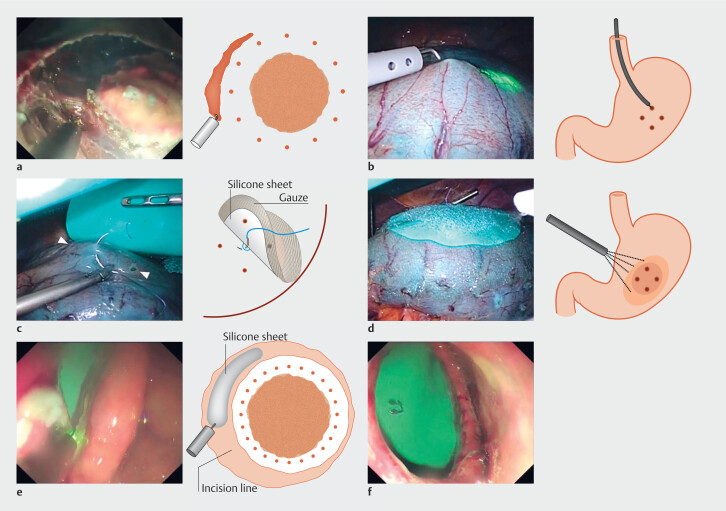 Figure 1
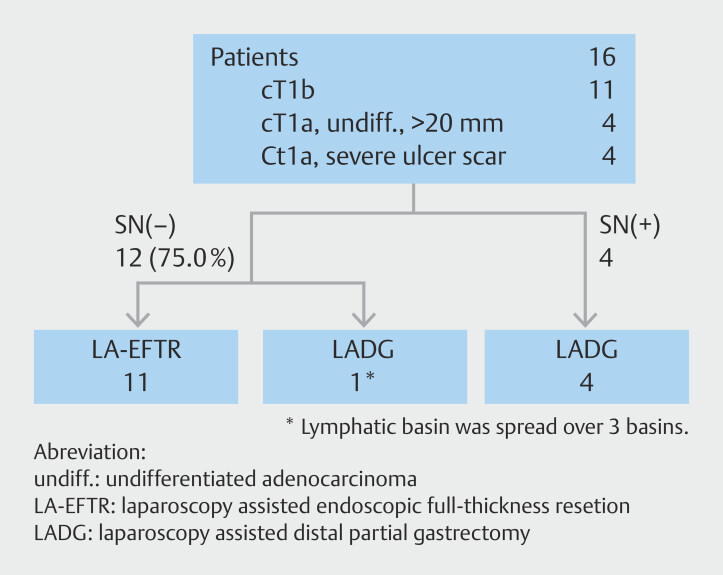 Figure 2
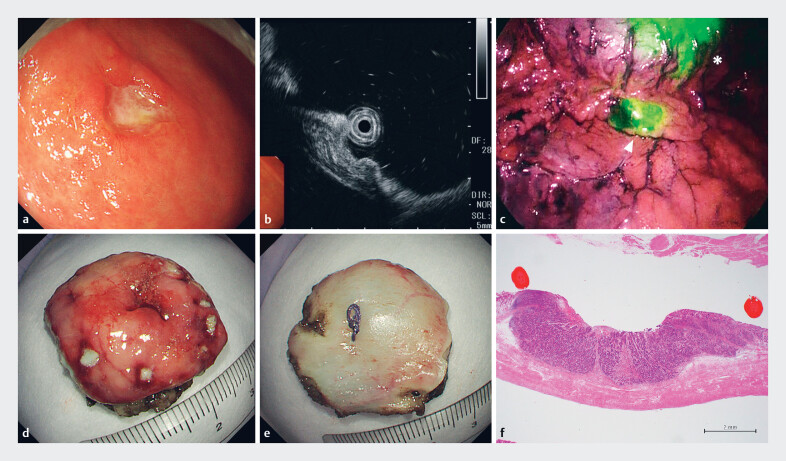 Figure 3
Peer Reviews
No public reviews on file for this paper yet. If you reviewed it on a platform where reviews are public (OpenReview, ICLR, NeurIPS, ICML), you can paste yours below so the community can read it here.
Videos
No videos yet. Explain this paper in a talk, walkthrough, or lecture? Add one.
Taxonomy
TopicsGastric Cancer Management and Outcomes · Metastasis and carcinoma case studies · Gastrointestinal Tumor Research and Treatment