Comparison of Hadlock and INTERGROWTH-21st Growth Charts for Estimating Fetal Weight in the Third Trimester via Ultrasound
Rashi Saini, Sumitra Bachani, Jyotsna Suri, Monika Gupta, Aprajita Gupta, Poornima Sharma, Pradeep Debata

TL;DR
This study compares two fetal weight estimation charts, Hadlock and INTERGROWTH-21st, to determine their accuracy in predicting fetal weight during the third trimester using ultrasound.
Contribution
The study provides empirical evidence comparing the diagnostic accuracy of Hadlock and INTERGROWTH-21st growth charts in estimating fetal weight in the third trimester.
Findings
Both Hadlock and IG 21 charts showed strong positive correlations in estimating fetal weight at both 32-34 weeks and 38-40 weeks gestation.
For every 1 g increase in estimated fetal weight by Hadlock, birth weight increased by 0.86 g, and by 0.82 g for IG 21.
Both charts demonstrated fair agreement with estimated fetal weight in early and late third trimester scans.
Abstract
Introduction Early identification of growth abnormalities is crucial in preventing fetal death and ensuring optimal care for fetuses requiring close monitoring and timely delivery. Sonographic estimation of fetal weight must be quantified in centiles according to gestational age reference charts to assess fetal growth velocity and size. These measurements can categorize the fetus as small, appropriate, or large for gestational age. Recent discussions have highlighted the increasing need for evidence-based guidelines for selecting the most suitable growth charts. Objectives The objective of this study is to compare the diagnostic accuracy of Hadlock versus INTERGROWTH 21st (IG 21) growth charts for estimating fetal weight. Methods This is a prospective cohort study conducted on 277 pregnant women with singleton fetuses at 32-34 weeks of gestation in the Department of Obstetrics and…
Genes, proteins, chemicals, diseases, species, mutations and cell lines named across the full text — each resolved to its canonical identifier and authoritative record.
Click any figure to enlarge with its caption.
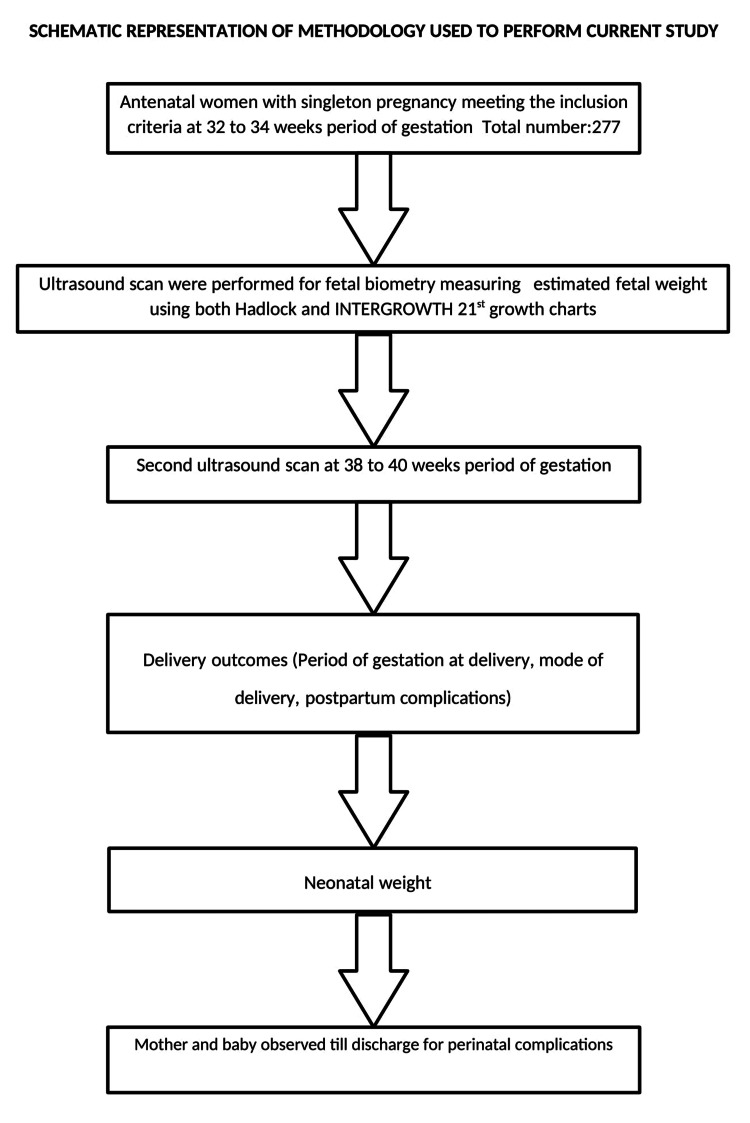 Figure 1
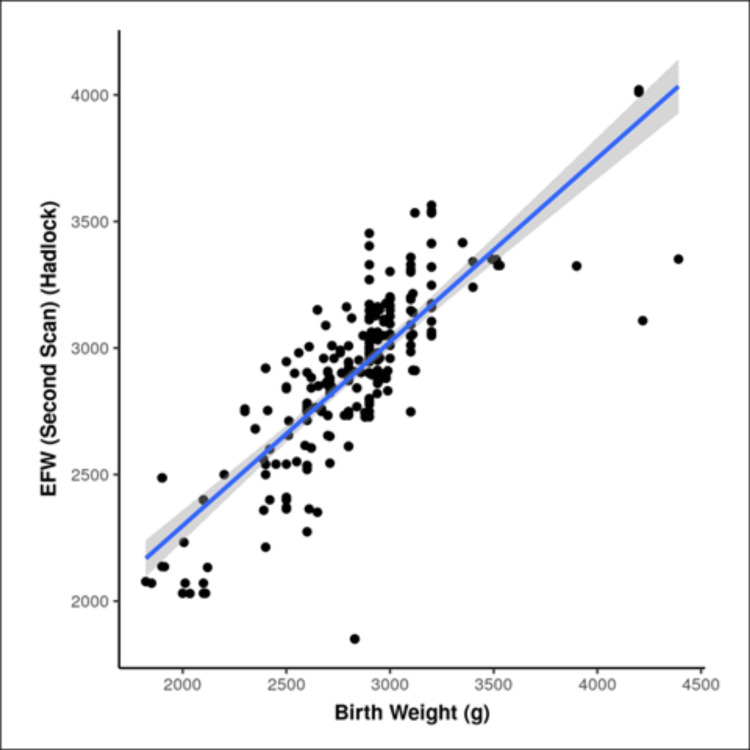 Figure 2
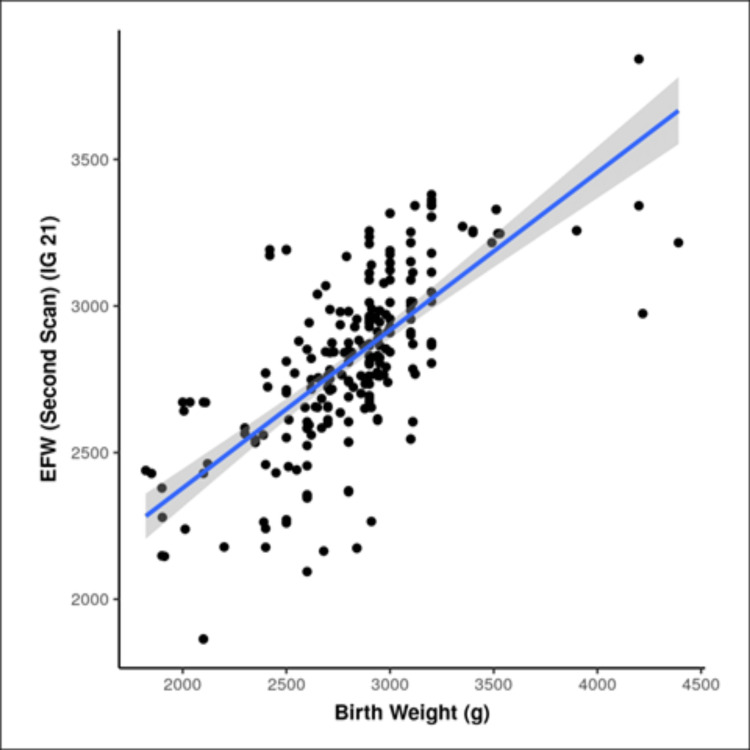 Figure 3
Peer Reviews
No public reviews on file for this paper yet. If you reviewed it on a platform where reviews are public (OpenReview, ICLR, NeurIPS, ICML), you can paste yours below so the community can read it here.
Videos
No videos yet. Explain this paper in a talk, walkthrough, or lecture? Add one.
Taxonomy
TopicsPregnancy and preeclampsia studies · Birth, Development, and Health · Gestational Diabetes Research and Management