Revisiting the effects of helper intentions on gratitude and indebtedness: Replication and extensions Registered Report of Tsang (2006)
Chi Fung Chan, Hiu Ching Lim, Fung Yee Lau, Wing Ip, Chak Fong Shannon Lui, Katy Yuen Yan Tam, Gilad Feldman

TL;DR
This study replicates and extends previous findings that people feel more gratitude when a helper's intentions are perceived as kind, but not more indebtedness.
Contribution
The study successfully replicates Tsang's findings and extends them by linking helper intentions to reciprocity expectations and inclination.
Findings
Helper intentions strongly influence gratitude but not indebtedness.
Helper intentions are linked to perceived reciprocity expectations and reciprocity inclination.
Gratitude is negatively associated with reciprocity expectations, while indebtedness is positively associated.
Abstract
Gratitude and indebtedness are common emotions in response to a favour, yet research suggests that they are experienced differently depending on the situation. Tsang (Tsang JA. 2006 The effects of helper intention on gratitude and indebtedness. Motiv. Emot. 30, 198–204. (doi:10.1007/s11031-006-9031-z)), found that gratitude for a favour depended on perceived helper intention, whereas indebtedness did not. Perceived benevolent helper intentions were associated with higher gratitude from beneficiaries compared to selfish ones, yet had no associations with indebtedness. In a registered report with a United States Prolific student sample (n = 759), we conducted a replication and extensions of studies 2 and 3 from Tsang, 2006. In the original studies, Tsang found support for the impact of the helper’s intention on gratitude (study 2: ηp2 = 0.20 [0.08, 0.32]; study 3: ηp2 = 0.14 [0.03,…
Genes, proteins, chemicals, diseases, species, mutations and cell lines named across the full text — each resolved to its canonical identifier and authoritative record.
Click any figure to enlarge with its caption.
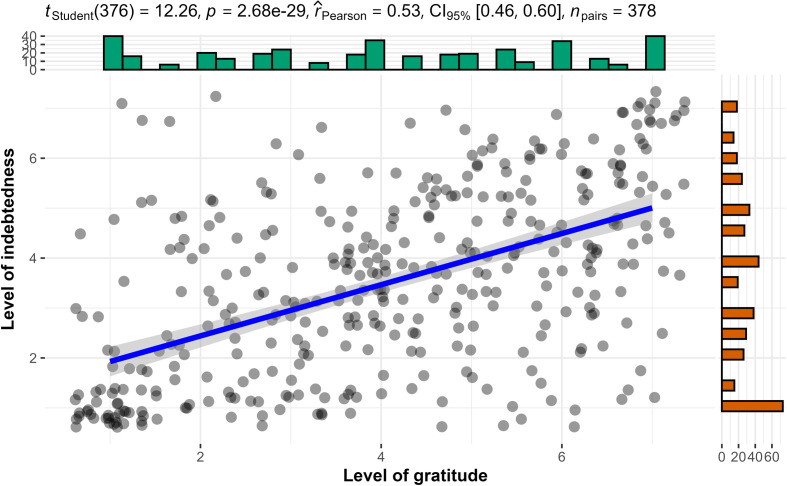 Figure 1
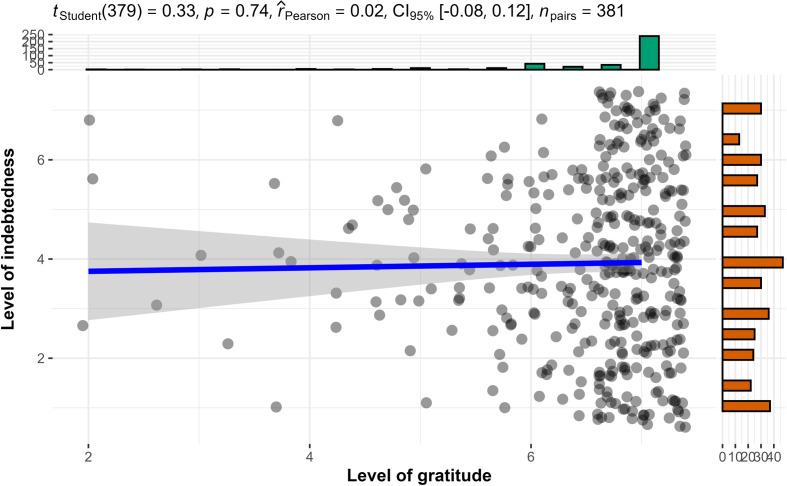 Figure 2
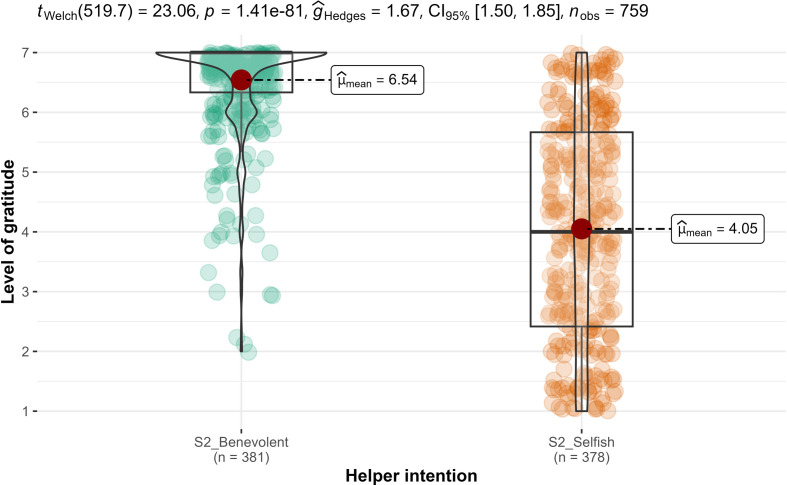 Figure 3
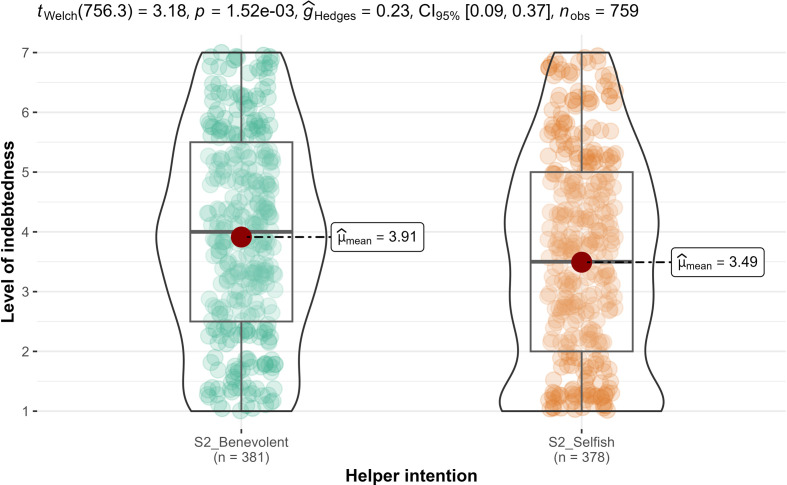 Figure 4
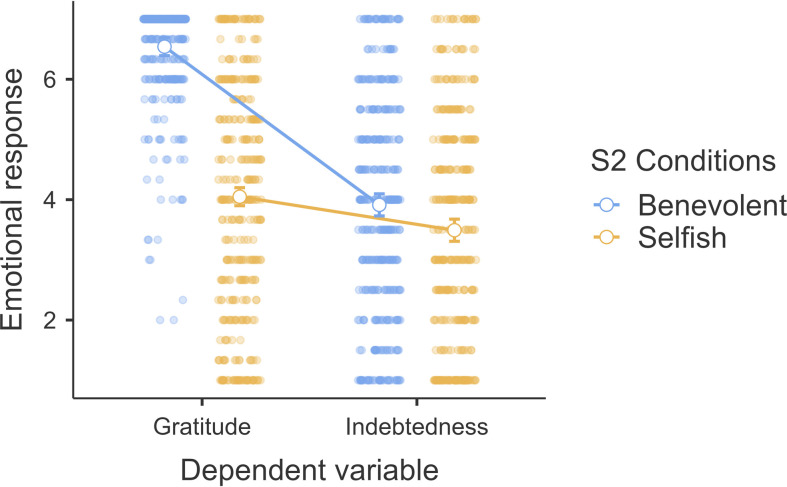 Figure 5
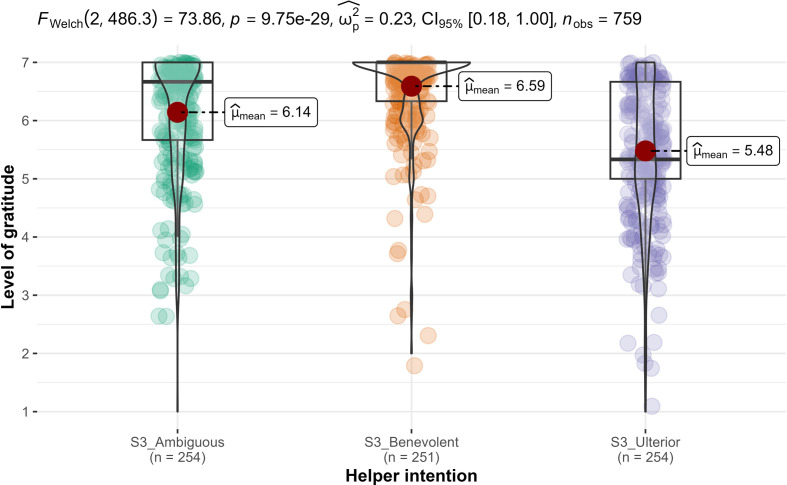 Figure 6
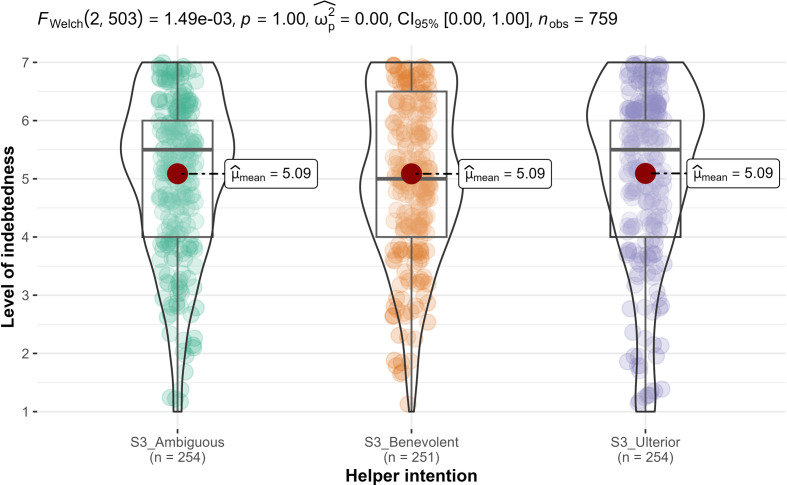 Figure 7
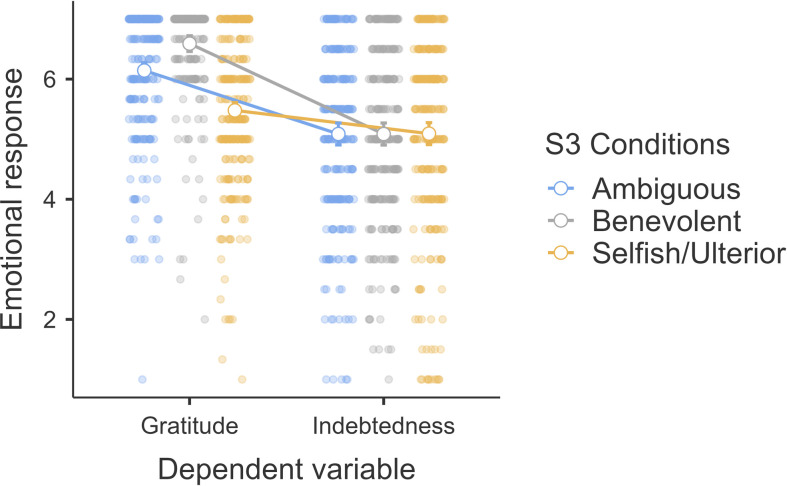 Figure 8
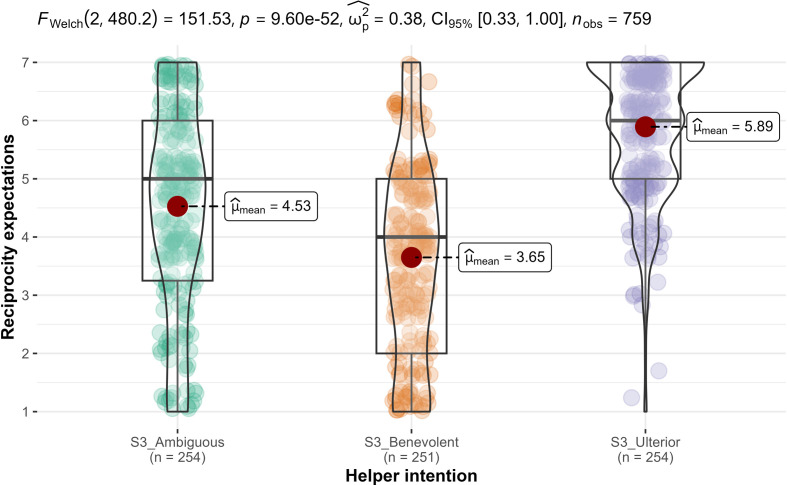 Figure 9
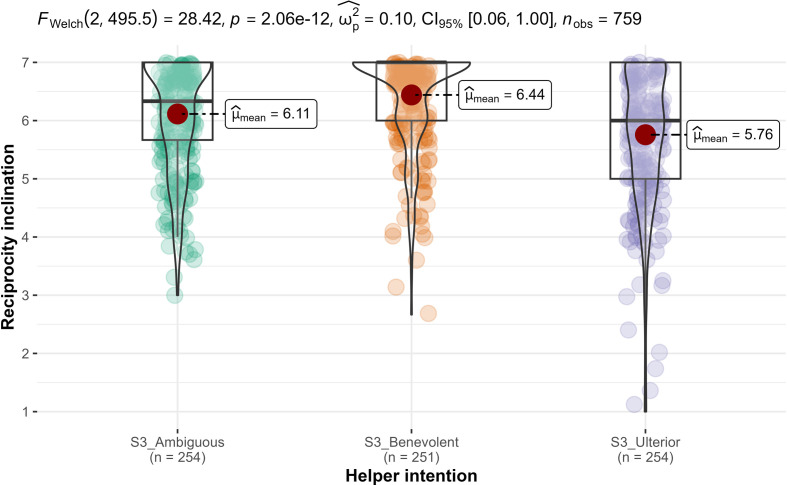 Figure 10
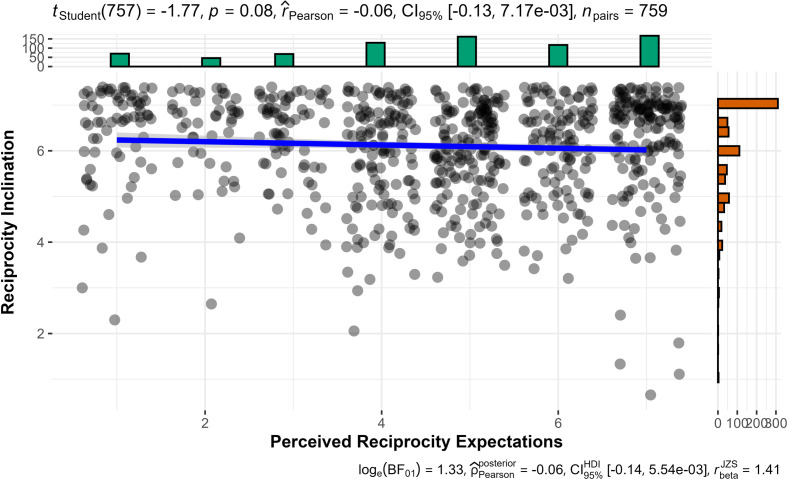 Figure 11
Peer Reviews
No public reviews on file for this paper yet. If you reviewed it on a platform where reviews are public (OpenReview, ICLR, NeurIPS, ICML), you can paste yours below so the community can read it here.
Videos
No videos yet. Explain this paper in a talk, walkthrough, or lecture? Add one.
Taxonomy
TopicsCultural Differences and Values · Psychological Well-being and Life Satisfaction · Job Satisfaction and Organizational Behavior