There and back again: historical biogeography of neotropical magnolias based on high-throughput sequencing
Salvador Guzman-Diaz, Fabián Augusto Aldaba Núñez, Emily Veltjen, Pieter Asselman, José Esteban Jiménez, Jorge Valdés Sánchez, Guillermo Pino Infante, Ricardo Callejas Posada, José Antonio Vázquez García, Isabel Larridon, Suhyeon Park, Sangtae Kim, Esteban Manuel Martínez Salas

TL;DR
This paper uses genetic data to trace the evolutionary history of Neotropical magnolias, showing how they migrated and diversified over millions of years.
Contribution
The study provides a detailed biogeographic history of Neotropical magnolias using high-throughput sequencing data.
Findings
The ancestors of section Talauma colonized the Neotropics 38 million years ago via long-distance dispersal from North America.
Magnolia and Macrophylla sections migrated from Asia to North America and later to the Neotropics around 11 million years ago.
Geological events like the Panama isthmus emergence influenced magnolia migration between continents.
Abstract
The Neotropics are considered one of the most biodiverse areas in the world, housing at least one third of all vascular plant species. One of the genera that has diversified in the Neotropics is Magnolia, with about 174 species of three sections (Macrophylla, Magnolia and Talauma) endemic to the Americas. In this work, we study the biogeographic history of the Neotropical Magnolia species using high-throughput sequencing data. Sequences from 39 species (38 from Magnolia and one from the sister genus Liriodendron) were assembled. The dataset contained sequences from 239 nuclear targets and complete chloroplast genomes. Phylogenomic hypotheses and the ancestral distribution range of Magnolia were reconstructed. The results of the calibrated phylogenetic hypotheses and ancestral range construction suggest that the earliest arrival in the Neotropics were the ancestors of section Talauma…
Genes, proteins, chemicals, diseases, species, mutations and cell lines named across the full text — each resolved to its canonical identifier and authoritative record.
Click any figure to enlarge with its caption.
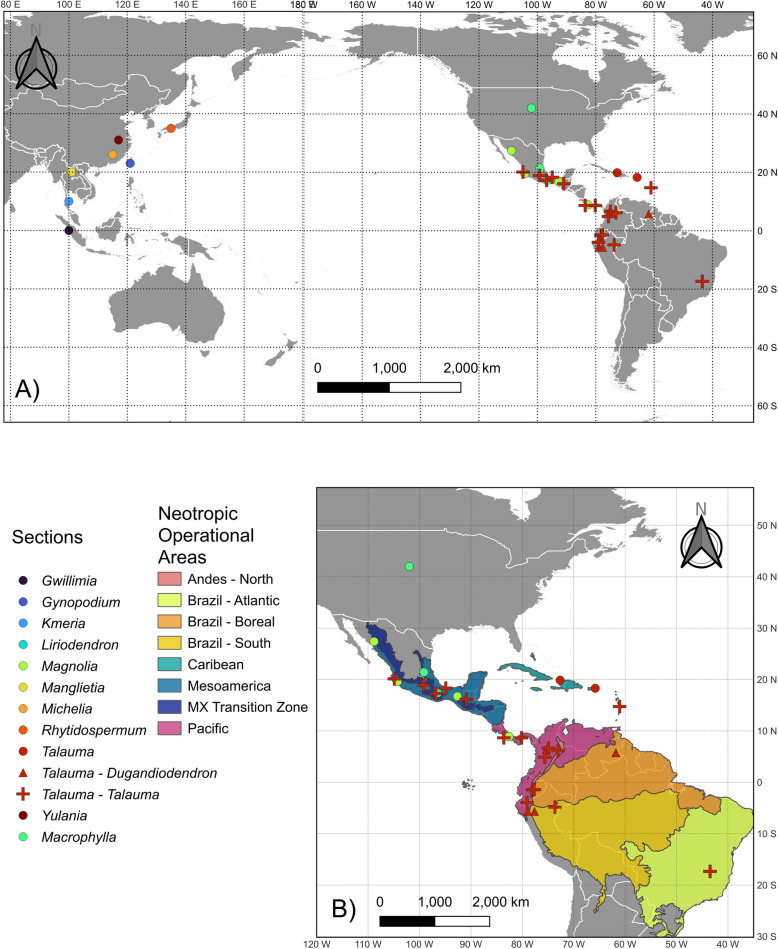 Figure 1
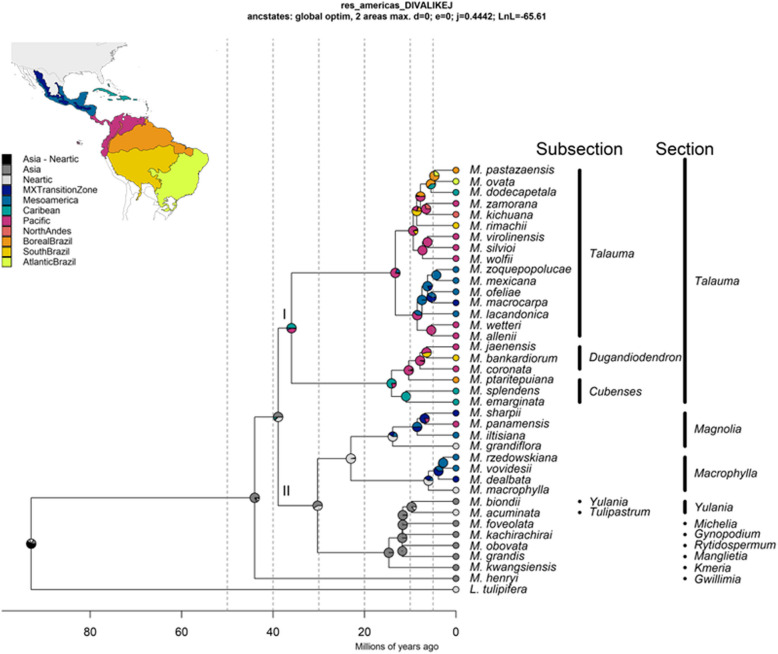 Figure 2
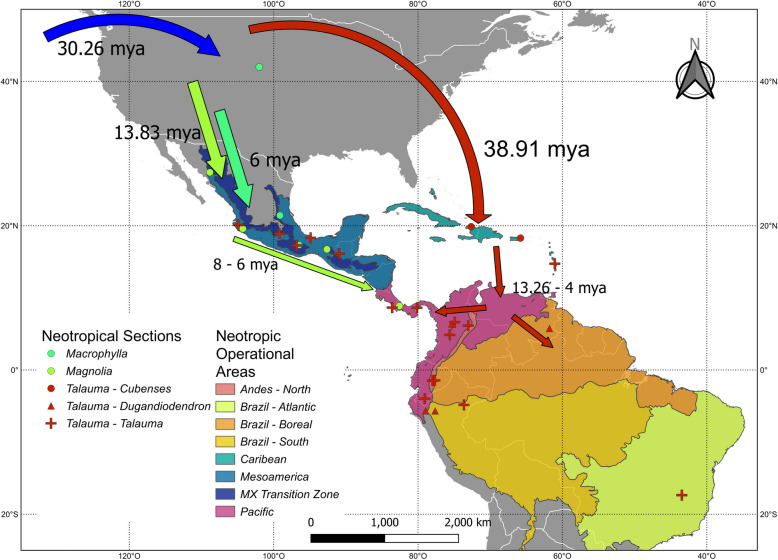 Figure 3
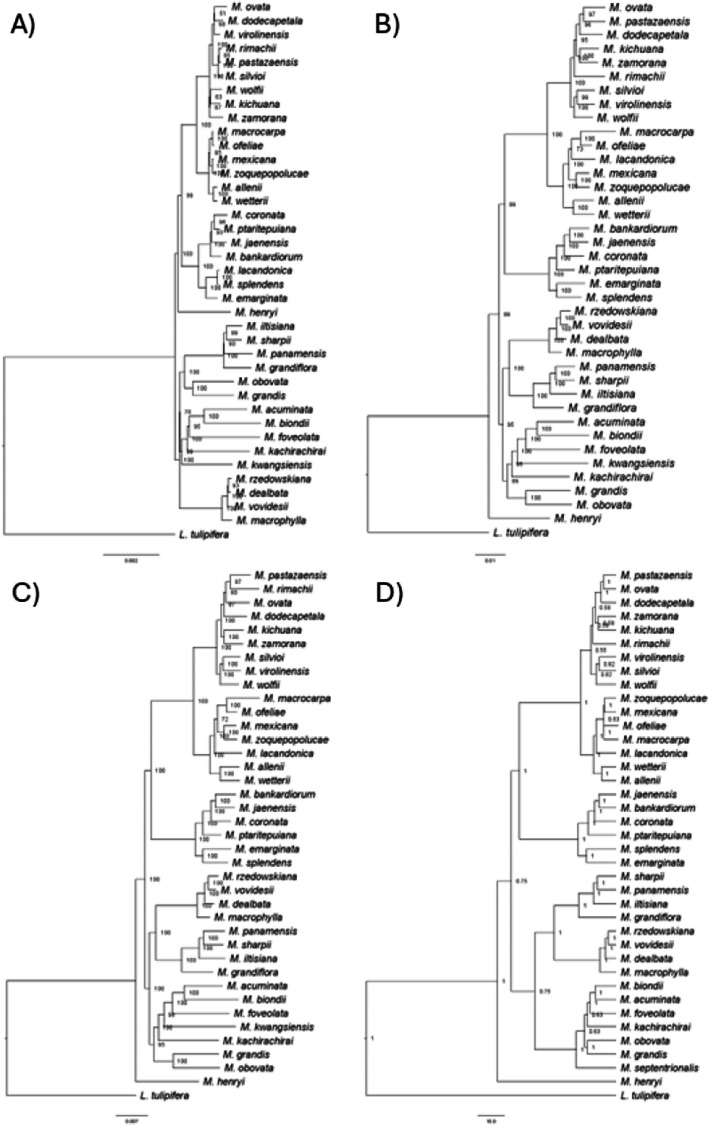 Figure 4
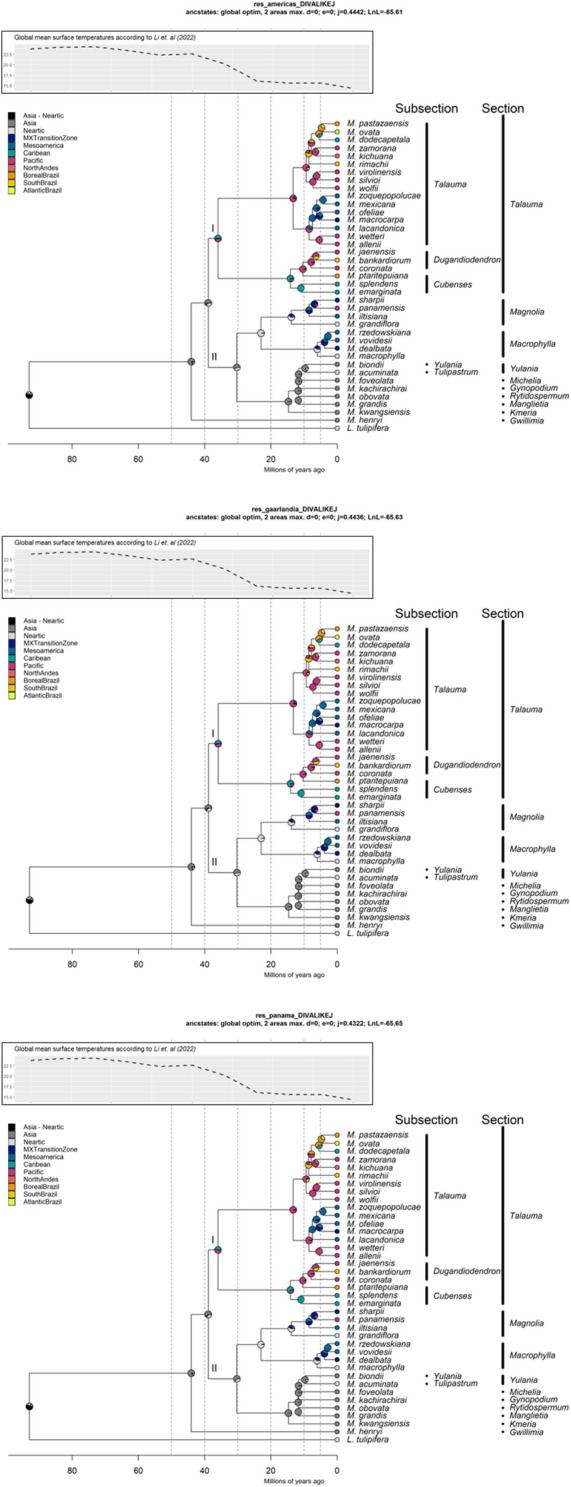 Figure 5
Peer Reviews
No public reviews on file for this paper yet. If you reviewed it on a platform where reviews are public (OpenReview, ICLR, NeurIPS, ICML), you can paste yours below so the community can read it here.
Videos
No videos yet. Explain this paper in a talk, walkthrough, or lecture? Add one.
Taxonomy
TopicsPlant Diversity and Evolution · Scarabaeidae Beetle Taxonomy and Biogeography · Traditional and Medicinal Uses of Annonaceae