HEPOM: Using Graph Neural Networks for the Accelerated Predictions of Hydrolysis Free Energies in Different pH Conditions
Rishabh D. Guha, Santiago Vargas, Evan Walter Clark Spotte-Smith, Alexander Rizzolo Epstein, Maxwell Venetos, Ryan Kingsbury, Mingjian Wen, Samuel M. Blau, Kristin A. Persson

TL;DR
This paper introduces HEPOM, a computational tool using graph neural networks to predict hydrolysis free energies under different pH conditions, aiming to accelerate chemical recycling and clean energy applications.
Contribution
HEPOM combines reaction templates and ab initio data with a GNN model to predict pH-specific hydrolysis free energies and products.
Findings
A diverse dataset of hydrolysis free energies was created using reaction templates and ab initio calculations.
The GNN model accurately predicts ΔG values for hydrolysis reactions across different pH conditions.
The framework automates reaction center identification and product generation for high-throughput screening.
Abstract
Hydrolysis is a fundamental family of chemical reactions where water facilitates the cleavage of bonds. The process is ubiquitous in biological and chemical systems, owing to water’s remarkable versatility as a solvent. However, accurately predicting the feasibility of hydrolysis through computational techniques is a difficult task, as subtle changes in reactant structure like heteroatom substitutions or neighboring functional groups can influence the reaction outcome. Furthermore, hydrolysis is sensitive to the pH of the aqueous medium, and the same reaction can have different reaction properties at different pH conditions. In this work, we have combined reaction templates and high-throughput ab initio calculations to construct a diverse data set of hydrolysis free energies. The developed framework automatically identifies reaction centers, generates hydrolysis products, and utilizes a…
Genes, proteins, chemicals, diseases, species, mutations and cell lines named across the full text — each resolved to its canonical identifier and authoritative record.
Click any figure to enlarge with its caption.
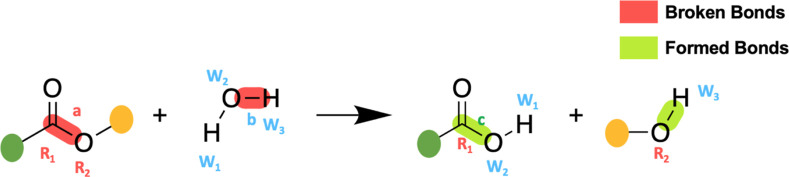 Figure 1
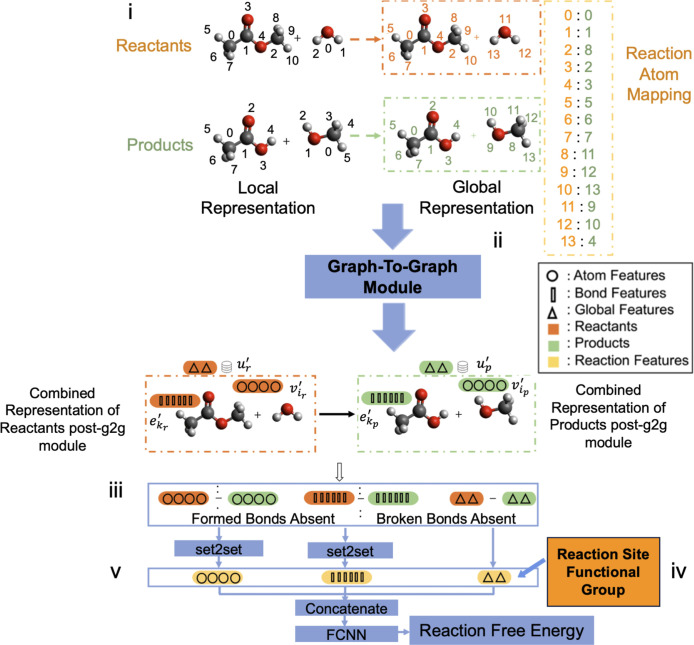 Figure 2
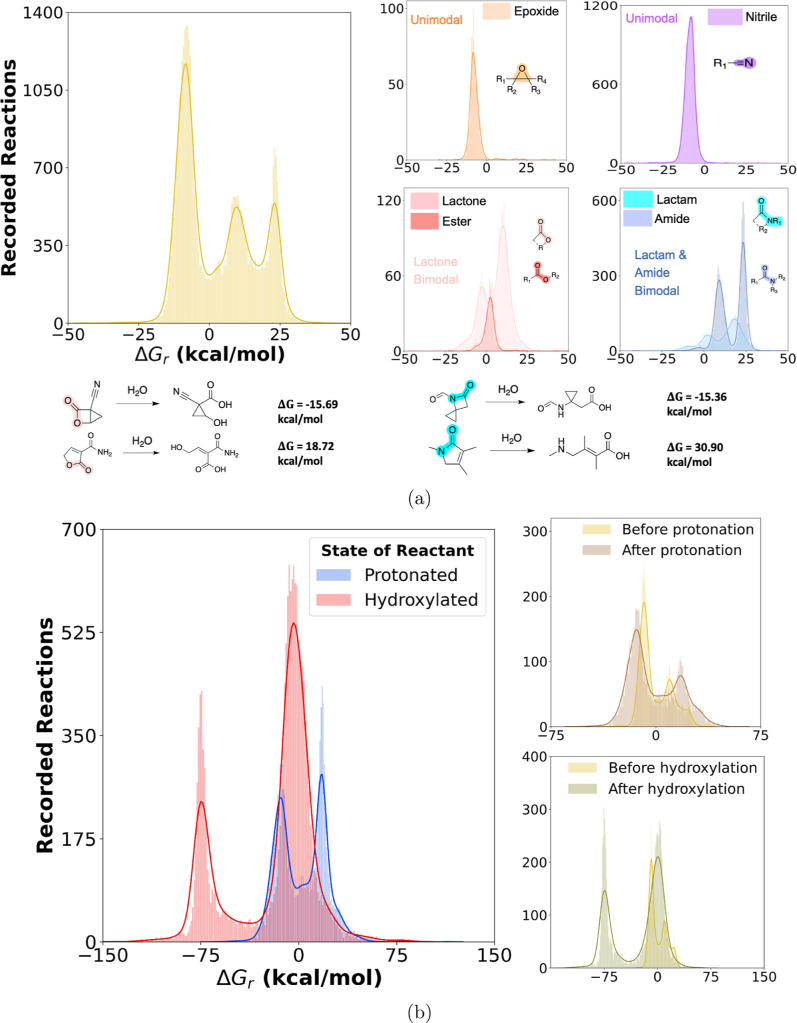 Figure 3
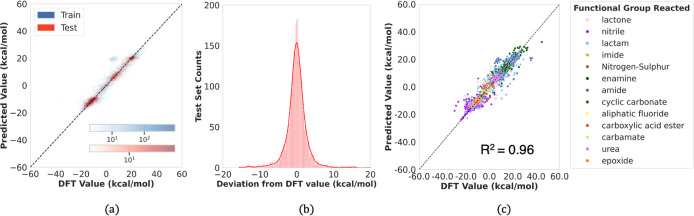 Figure 4
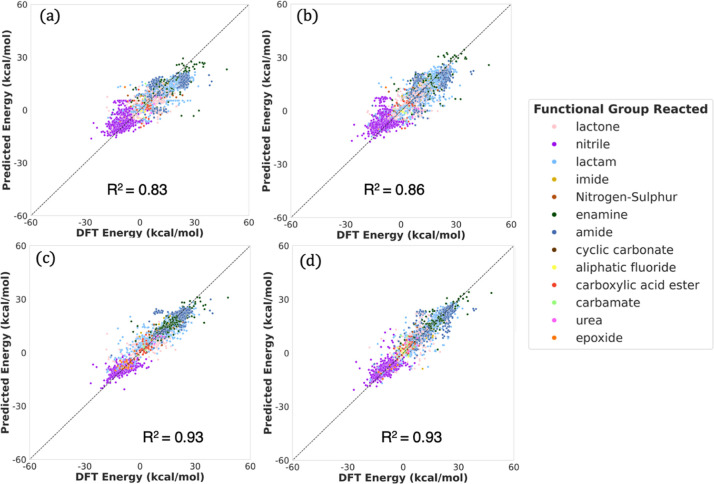 Figure 5
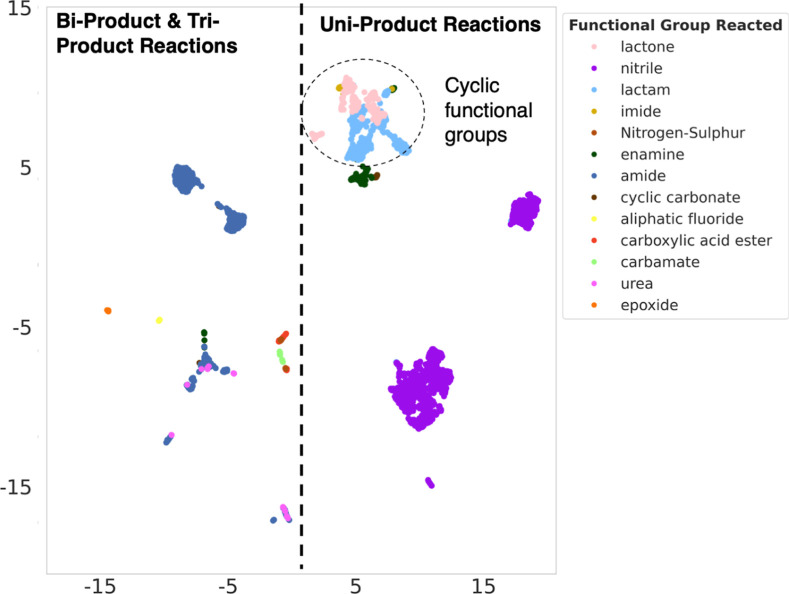 Figure 6
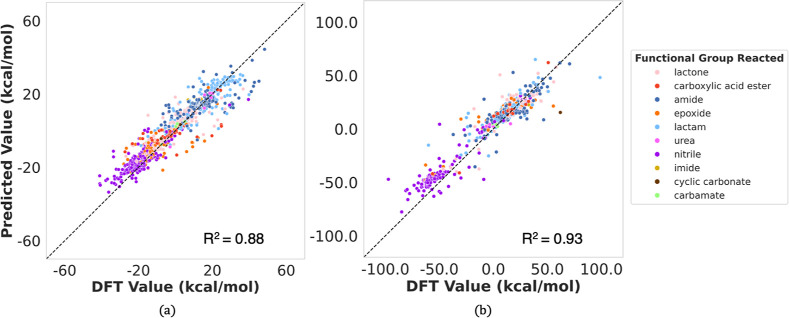 Figure 7
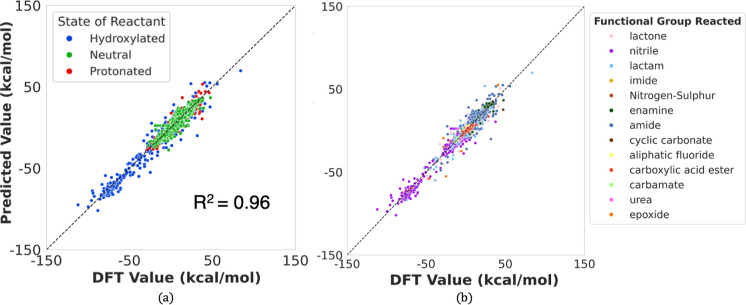 Figure 8
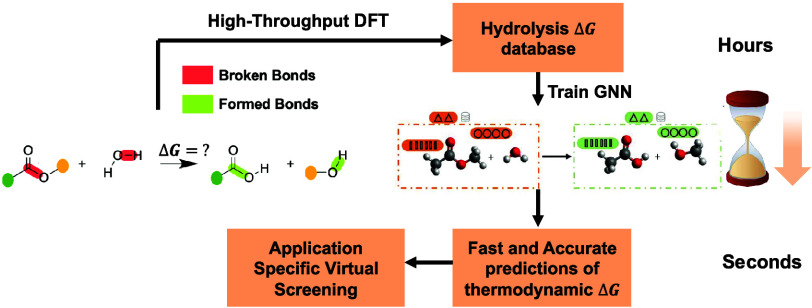 Figure 9
Peer Reviews
No public reviews on file for this paper yet. If you reviewed it on a platform where reviews are public (OpenReview, ICLR, NeurIPS, ICML), you can paste yours below so the community can read it here.
Videos
No videos yet. Explain this paper in a talk, walkthrough, or lecture? Add one.
Taxonomy
TopicsMachine Learning in Materials Science · Computational Drug Discovery Methods · Fuel Cells and Related Materials