New Approaches of Generalised Fuzzy Soft sets on fuzzy Codes and Its Properties on Decision-Makings
Masresha Wassie Woldie, Jejaw Demamu Mebrat, Mihret Alamneh Taye, Rana Muhammad Zulqarnain, Masresha Wassie Woldie, Faruk Karaaslan, Masresha Wassie Woldie, Tahir Mahmood, Masresha Wassie Woldie

TL;DR
This paper introduces a new mathematical model called generalised fuzzy soft code sets for better decision-making and medical diagnosis by combining fuzzy soft sets with coding theory.
Contribution
The novel contribution is the introduction of generalised fuzzy soft code sets and their application in decision-making and medical diagnosis.
Findings
Generalised fuzzy soft code sets are an effective extension of fuzzy soft sets for handling uncertain information.
The paper provides a matrix representation of generalised fuzzy soft codes.
A demonstration example shows the practical application of the proposed model.
Abstract
Several scholars defined the concepts of fuzzy soft set theory and their application on decision-making problem. Based on this concept, researchers defined the generalised fuzzy soft set and its applications. However, to the best of the author’s knowledge, the generalised fuzzy soft set has not been dealing with in the generalised fuzzy soft code set. In this paper, we introduce the notion of generalised fuzzy soft code set and its application. The theory of fuzzy soft sets and its application, generalised fuzzy soft sets and fuzzy codes in different years were studied with various researchers. To derive a generalised fuzzy soft code set, we apply the concepts of generalised fuzzy soft set and a new view of fuzzy codes and its application. A new aspect of this paper is to introduce the definition of generalised fuzzy soft code sets and its application on medical diagnosis and…
Genes, proteins, chemicals, diseases, species, mutations and cell lines named across the full text — each resolved to its canonical identifier and authoritative record.
Click any figure to enlarge with its caption.
 Figure 1
 Figure 2
 Figure 3
 Figure 4
 Figure 5
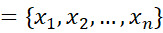 Figure 6
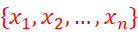 Figure 7
 Figure 8
 Figure 9
 Figure 10
 Figure 11
 Figure 12
 Figure 13
 Figure 14
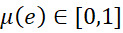 Figure 15
 Figure 16
 Figure 17
 Figure 18
 Figure 19
 Figure 20
 Figure 21
 Figure 22
 Figure 23
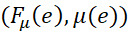 Figure 24
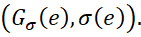 Figure 25
 Figure 26
 Figure 27
|
|
|
|
|
|
|
|---|---|---|---|---|---|
|
| 0.4 | (0.9) | 0.6 | 0.4 | 0.5 |
|
| 0.4 | 0.5 | (0.6) | 0.4 | 0.5 |
|
| 0.4 | 0.4 | (0.6) | 0.4 | 0.3 |
|
| 0.4 | 0.4 | (0.5) | 0.1 | 0.5 |
|
| 0.5 | (0.6) | 0.4 | 0.5 | 0.6 |
|
| 0.8 | 0.5 | 0.4 | (1) | 0.6 |
|
| 0.8 | 0.4 | 0.4 | (1) | 0.3 |
|
| (0.8) | 0.4 | 0.4 | 0.1 | 0.6 |
|
| 0.5 | 0.4 | (0.8) | 0.5 | 0.3 |
|
| 0.6 | 0.4 | 0.6 | (0.9) | 0.3 |
|
| 0.6 | 0.4 | 0.8 | (0.9) | 0.3 |
|
| (0.6) | 0.4 | 0.5 | 0.1 | 0.3 |
|
| (0.5) | 0.3 | 0.4 | 0.4 | 0.6 |
|
| 0.6 | 0.3 | 0.4 | (1) | 0.8 |
|
| 0.6 | 0.3 | 0.4 | (1) | 0.3 |
|
| (0.6) | 0.3 | 0.4 | 0.1 | 0.7 |
|
|
| Highest numerical grade |
|
|---|---|---|---|
|
|
| ----- | ----- |
|
|
| 0.6 | 0.5 |
|
|
| 0.6 | 0.3 |
|
|
| 0.5 | 0.5 |
|
|
| 0.6 | 0.6 |
|
|
| ----- | ----- |
|
|
| 1 | 0.3 |
|
|
| 0.8 | 0.6 |
|
|
| 0.8 | 0.3 |
|
|
| 0.9 | 0.3 |
|
|
| ----- | ---- |
|
|
| 0.6 | 0.3 |
|
|
| 0.5 | 0.6 |
|
|
| 1 | 0.8 |
|
|
| 1 | 0.3 |
|
|
| ----- | ---- |
- —No funding body
Peer Reviews
No public reviews on file for this paper yet. If you reviewed it on a platform where reviews are public (OpenReview, ICLR, NeurIPS, ICML), you can paste yours below so the community can read it here.
Videos
No videos yet. Explain this paper in a talk, walkthrough, or lecture? Add one.
Taxonomy
TopicsFuzzy and Soft Set Theory · Multi-Criteria Decision Making · Advanced Algebra and Logic
1. Introduction
Zadeh (1965) established the notion of a “fuzzy set” as a way to represent a class of objects with different membership grades. A membership function, also known as a characteristic function, describes such a set, with each item’s membership degree ranging from 0 to 1. Molodtsov (1999) presented the theory of soft sets as a novel mathematical technique for handling uncertainties that are outside the scope of current mathematical techniques. In order to address complicated issues including ambiguity and uncertainty, Molodtsov created a universal mathematical tool that may be applied to both conventional and some modern mathematical methods. Fuzzy sets are conceptualized in a way that makes their methods intuitively clear. Maji, Biswas, and Roy (2003) developed the theory of soft sets. Gogoi, Kr. Dutta, and Chutia (2014) introduced an application of fuzzy soft set theory in day to day problems; Roy and Maji (2007) presented the application of fuzzy soft set theory to decision-making problems. Amudhambigai and Neeraja (2019) discussed a new view of fuzzy codes and its application. Ozkan and Mehmet (2002) introduced different approaches of fuzzy codes and their properties. Malik, Mordeson, and Nair (1992) defined the concept of a fuzzy generating set and describe the fuzzy subgroup which it generates and introduced the notion of a minimal fuzzy generating set. Ali et al. (2018) designed and develop a new class of linear algebraic codes defined as soft linear algebraic codes using soft sets. They also discussed some algebraic properties of soft codes. Garg and Arora (2018) describe the concept of generalized IFSS. Kong, Wang, and Wu (2011) studied the implementation of grey theory-based fuzzy soft sets in decision-making situations. Lin et al. (2018) a set of code words from the cyclic code are decoded using a binary parity-check matrix in a soft-joint manner. Gereme, Demamu, and Alaba (2023), Hamming distance of fuzzy codes and other features of binary fuzzy codes. ( Lin et al. 2018) a novel coding technique for the Galois-Fourier transform domain that is intended for collective encoding and collective iterative soft-decision decoding of cyclic codes of prime lengths. Kamble (2017) examined the codes that emerged from soft sets and fuzzy sets, and using fuzzy linear space, explained the properties of fuzzy linear codes. Kim (2023) developed a fuzzy linear code description based on linear algebraic codes. Tsafack et al. (2018) established the concepts of fuzzy cyclic and linear codes over a Galois ring. Majumdar and Samanta (2010) established generalized fuzzy soft sets and investigated a few of their characteristics. It has been demonstrated that generalized fuzzy soft sets can be used to diagnose medical conditions and decision-making problem. Adde, Toro, and Jego (2012) examined linear block code of maximum likelihood soft-decision decoding. Dauda, Mamat, and Waziri (2015) an application of fuzzy soft sets based on a thorough theoretical analysis of the fundamental operations of soft sets and a definition of soft sets. Kané (2021) suggested a different method for figuring out the fuzzy optimal solution to a semi-fully fuzzy linear programming issue. Ali et al. (2023) discussed the generalized intuitionistic decision-theoretic rough set, a combination of intuitionistic fuzzy sets and decision-theoretic rough sets.
However, as far as the author’s awared, no studied pertaining to the fundamentals of generalised fuzzy soft code have been released. Thus, motivated by the formationed works, the current study seeks to introduce this idea. To derive a generalised fuzzy soft code and its properties, we integrate the concepts of a generalised fuzzy soft set ( Majumdar and Samanta 2010) and a different approaches of coding theory ( Ozkan & Mehmet 2002). A new aspect of this paper is to introduce and develop the definition and application of generalised fuzzy soft code by combining the concepts of fuzzy soft set and fuzzy codes. The definition and features of relations on generalised fuzzy soft codes are proposed.
The organization of this study as follows: Section 2 included fundamental notions and properties of preliminary concepts, Section 3, Generalised fuzzy soft code, and some of their characteristics, whereas, Section 4 takes into consider relation on generalised fuzzy soft codes and its application.
2 Methods
In this section, we review a few fundamental concepts that we utilize to get our outcomes. Definition 1. Ozkan & Mehmet (2002) The notion is a q-ary code which is a collection of symbol sequences in which each symbol is chosen from a set of q different components. The set is sometimes referred to as the alphabet and is defined as the set
Definition 2.( Amudhambigai & Neeraja 2019) is the collection of all ordered tuples Where each p _ i _ in . The elements of are referred to as words or vectors.
Definition 3. Ozkan & Mehmet (2002) Let us assume that has as a code word. The relative weight of a code word denoted as , is the sum of if are defined as the positions of 1 s in ** a **. For instance, if is a code word of in . is the relative weight of which is a code word of in . This can be articulated as the sum of the first n positive integers. The largest relative weight of code in is referred to as this matter. Where is the length of a code word, where is a mapping defined as for ** C ** ∈ F 2 ^n^ and for any .
Definition 4.( Ozkan & Mehmet 2002) Let is the code word of with length n. Let be a code.For each let be a fuzzy code word related to the code words , in . Then the fuzzy code intersection and union of any two fuzzy codes and , respectively, are given as follows:
Definition 5.( Amudhambigai and Neeraja 2019) For any fuzzy code , the complement is is calculated by subtracting from 1 the relative weight of each member of .That is,
Definition 6.( Kong, Wang, and Wu 2011) Consider the idea of a set of parameters represented by and be the notion of a starting universe of items. be represents the power set of and . A pair is a soft set over if and only if is a mapping given by
In other words, the soft set is a parameterized family of subjects from the set U.Consider the set of elements of the set , or the set of approximate components of the soft set, where can be arbitrary, some of which can have nonempty intersection, and some of which can be empty. This applies to every F ( e) from this family for e in . where the attributes, traits, or properties of objects are usually the arguments. We might consider Zadeh’s fuzzy set as a subset of the soft set. Given a fuzzy set , its membership function is , that is, μ _ A _ is a mapping from into that is
Definition 7.( Majumdar & Samanta, 2010) The set of all fuzzy subsets within a universal set is denoted by .Assume and that is a parameter set. Then, a pair is a fuzzy soft set over , where is a mapping denoted by
Definition 8.( Ali et al. 2018) Assume that a vector space of size n over the field is represented by . is as of t algebraic linear code over . For every , the symbol in x indicates a linear algebraic code of . The number of linearly independent elements of is denoted by which is the dimension of . Each in this instance represents a linear algebraic code. The soft dimension of is and the number of soft code words of is given by:
Where .Keep in mind that represents the soft dimension . Definition 9.( Majumdar & Samanta 2010). The universal set of elements is , and the universal set of parameters is We shall refer to the pair as a soft universe. Let be a fuzzy subset of , that is, and let .where the set of all fuzzy subsets of is represented by . Assume that represents the mapping. Let a function such that have the following definition: , where .A generalised fuzzy soft set (in short GFSS) over the soft universe is then denoted by . Here, for every parameter , showed both the degree of belongingness that represents and the degree of belongingness of the elements of in
Definition 10.( Majumdar & Samanta 2010) Let and be two generalised fuzzy soft sets over Now is said to be a generalised fuzzy soft subset of if
- (i)
- (ii) , for all , in this case we write is a fuzzy subset of .
Definition 11.( Majumdar and Samanta 2010) Consider a generalised fuzzy soft set over , denoted by . Then, represents the complement of , which is defined as
for all .
Definition 12.( Majumdar & Samanta 2010) represents the union of two generalised fuzzy soft sets and . This results in a generalised fuzzy soft set , which is defined as such that where and ° denotes a t-norm *. *
Definition 13.( Majumdar & Samanta 2010) represents the intersection of two generalised fuzzy soft sets, and . This leads to a generalised fuzzy soft set , which is defined as such that , where is a t-co norm and
Definition 14.( Majumdar & Samanta 2010) indicates a generalised null fuzzy soft set, which is referred to as a generalised fuzzy soft set, such that where , and , for all .
Definition 15.( Majumdar & Samanta 2010) A generalised absolute fuzzy soft set, represented by is refered to as a generalised fuzzy soft set, where is defined by and , for all .
3. Results
3.1 Generalised Fuzzy Soft Code (GFSC)
In this subsection, we introduce generalised fuzzy soft codes and its properties. Definition 16.Let for which is the universal element, consider the set of parameters be and is an element of a code vector. The fuzzy soft code universe is a pair Let where all fuzzy code subsets of are collected as . And consider a mapping and such that
is a fuzzy subset of and
defined as and . Then, is called a generalised fuzzy soft code (GFSC) over the soft universe is a representation of the possibility of membership, and the degree of belongingness of is indicated for each parameter by
Example 1.Consider and let
be a fuzzy code of the eight computers under consideration.Let be the set of qualities of the given computers, where the symbols denote a super computer, a micro computer, a workstation computer,and a personal computer.Let = [0, 1] be a fuzzy code subset defined as follows:
And we define a function , be defined as follows:
A Generalised fuzzy soft code over is then .This can be represented in matrix form as follows:
where the last column represents the values of the row vectors represent and the column vector represents for some . This will be referred to as the membership matrix of .The GFSC is then can be defined as and .
Definition 17.Given two GFSCs over let and . Specifically, is a subset of that is considered a generalised fuzzy soft code if
- i
- ii
Here, we compose
Example 2.The GFSC over is the one presented in example 3.12. Let be an additional GFSC defined as follows over
Here and are the respective mapping given by
and
Then, a generalised fuzzy soft code subset of is .Matrix representation of is given by
Definition 18.(Intersection of GFSC). represents the GFSC intersection of two GFSCs of and over , and is defined as
Definition 19.(Union of GFSC) represents the GFSC union of two GFSCs of and over a soft universe , and is defined as
Definition 20.(Complement of GFSC). The following notation represents the complement of the GFSC of or Subtracting the GFSC of each member of from 1 yield . That is,
Theorem 1.If and represent any GFSC over a shared soft universe , then the following result is hold:
- (i)
- (ii)
- (iii)
- (i)
- (ii)
Proof: The proof follows directly from the definition.
Theorem 2.The following properties are hold, if and are two generalised fuzzy soft codes over the common universe
- (i)
- (ii)
Proof
- (i)
where
Assume that,
Thus, from our discussion we get the result,
The proof of (ii) is similar to the above.
Definition 21.A generalised null fuzzy soft code, represented by is considered to be a generalised null fuzzy soft code if and where and
Definition 22.A GFSC is said to be a generalised absolute fuzzy soft code, denoted by if where is defined by and
Theorem 3.Given any GFSC over , let’s say . The generalised null fuzzy soft code and generalised absolute fuzzy soft code over denoted as and , respectively. Then, thefollowing result is hold:
- (i)
- (ii)
- (iii)
- (iv)
- (v)
- (vi)
Proof(i) Let be any GFSC over and let be the generalised null fuzzy soft code over . Then
(ii-v) Similar to the proof of (i)
Definition 23.Given a universal set consider two generalised fuzzy soft codes over and . Then, the addition operation modulo between and is represented by and the multiplication operation modulo between and is represented by . The interpretationof these notations are as follows:( where
, where and
4. Relation on generalised fuzzy soft code and its application
Theorem 4.Consider the generalised fuzzy soft codes and over the common universe . That, the following characteristics are held:
- (i)
- (ii)
From the definition, the argument is obvious. Definition 24.Over the parameterized universe . and , let and be two GFSC. A fuzzy soft code relation between and is a function that looks like the following:
characterized as
Definition 25.Let as any collection of GFSC over and , where is the index set. The mapping is then a ary generalised fuzzy soft code relation on , defined by The following illustrates how this generalized fuzzy soft code relation is used in a decision-making problem. Assume there are four computers in the universal set and there are four parameters which characterize their performance regarding a certain task. Assume a company wishes to purchase one of these computers based on certain criteria. Let there are two observations and by two experts A and B respectivelyLet the membership matrices that correspond to them be as follows:
Let be the generalised fuzzy soft code relation between and , defined as follows:
In order to identify the optimal computer, we first identify the greatest numerical grade indicated by the parenthesis in each column, with the exception of the final row, which represents the computer’s grade of belongingness in relation to each set of parameters. Now, the total of the products of these numerical grades with the associated values of is used to calculate each of these computers’ scores. That is the desired computer, the one with the greatest score. We do not take into account the computers’ numerical grades in relation to the pair as both the parameters are same.
Hence, score
score
score
score
The company will then choose the computer that scored the highest, and they will purchase that computer
5. Conclusion
In this study, we have presented a Generalised fuzzy soft set and a New view of fuzzy codes and its application to introduce the new concept of Generalised fuzzy soft code and its characteristics. In fact, in this study, we introduced binary fuzzy soft code and its properties, and an application of Generalised fuzzy soft code has been presented. This study will serve as an introduction for future researchers who will work in this area. Furthermore, we can develop the study of Generalised interval-valued fuzzy soft codes; generalised intuitionistic fuzzy soft codes; Generalised interval-valued intuitionistic fuzzy soft codes and other related topics, are possible in future works.
Consent to participate and ethics approval
This research paper is an original work that has not been published or submitted elsewhere at the same time.
The reference list from the paper itself. Each links out to its DOI / PubMed record.
- 1Adde P Toro DG Jego C : Design of an Efficient Maximum Likelihood Soft Decoder for Systematic Short Block Codes. IEEE Trans. Signal Process. 2012;60(7):3914–3919. 10.1109/TSP.2012.2193575 · doi ↗
- 2Ali M : New Soft Set Based Class of Linear Algebraic Codes. Symmetry. 2018;10(10). 10.3390/sym 10100510 · doi ↗
- 3Ali W : An Improved Intuitionistic Fuzzy Decision-Theoretic Rough Set Model and Its Application. Axioms. 2023;12(11):1003. 10.3390/axioms 12111003 · doi ↗
- 4Amudhambigai B Neeraja A : A New View on Fuzzy Codes and Its Application. Jordan J. Math. Stat. 2019;12(4):455–471.
- 5Dauda MK Mamat M Waziri MY : An Application of Soft Set in Decision Making. Jurnal Teknologi. 2015;77(13):119–122. 10.11113/jt.v 77.6367 · doi ↗
- 6Garg H Arora R : Generalized and Group-Based Generalized Intuitionistic Fuzzy Soft Sets with Applications in Decision-Making. Appl. Intell. 2018;48(2):343–356. 10.1007/s 10489-017-0981-5 · doi ↗
- 7Gereme MM Demamu J Alaba BA : Binary Fuzzy Codes and Some Properties of Hamming Distance of Fuzzy Codes. Fuzzy Inf. Eng. 2023;15(1):26–35. 10.26599/FIE.2023.9270003 · doi ↗
- 8Gogoi K Dutta AK Chutia C : Application of Fuzzy Soft Set Theory in Day to Day Problems. Int. J. Comput. Appl. 2014;85(7):27–31. 10.5120/14854-3221 · doi ↗