Identification and characterisation of clinically distinct subgroups of adults hospitalised with influenza in the USA: a repeated cross-sectional study
Catherine H. Bozio, Svetlana Masalovich, Alissa O'Halloran, Pam Daily Kirley, Cora Hoover, Nisha B. Alden, Elizabeth Austin, James Meek, Kimberly Yousey-Hindes, Kyle P. Openo, Lucy S. Witt, Maya L. Monroe, Anna Falkowski, Lauren Leegwater, Ruth Lynfield, Melissa McMahon

TL;DR
This study identifies five distinct groups of adults hospitalized with influenza in the U.S., based on age, health conditions, and disease severity, which could improve understanding of treatment and vaccine effectiveness.
Contribution
The study introduces a novel method to classify influenza patients into clinically distinct subgroups using latent class analysis.
Findings
Five subgroups were identified with varying age, comorbidities, and clinical outcomes.
Subgroups D and E had the highest rates of severe disease indicators like ICU admission and in-hospital death.
Stratifying patients by these subgroups may improve analyses of vaccine and antiviral treatment impacts.
Abstract
Patients hospitalised with influenza have heterogeneous clinical presentations and disease severity, which may complicate epidemiologic study design or interpretation. We applied latent class analysis to identify clinically distinct subgroups of adults hospitalised with influenza. We analysed cross-sectional study data on adults (≥18 years) hospitalised with laboratory-confirmed influenza from the population-based U.S. Influenza Hospitalization Surveillance Network (FluSurv-NET) including 13 states during 2017–2018 and 2018–2019 influenza seasons (October 1 through April 30). Adults were included if they were residents of the FluSurv-NET catchment area, hospitalised with laboratory-confirmed influenza during these two seasons, and had both the main case report form and the supplemental disease severity case report form completed. We constructed a latent class model to identify…
Genes, proteins, chemicals, diseases, species, mutations and cell lines named across the full text — each resolved to its canonical identifier and authoritative record.
Click any figure to enlarge with its caption.
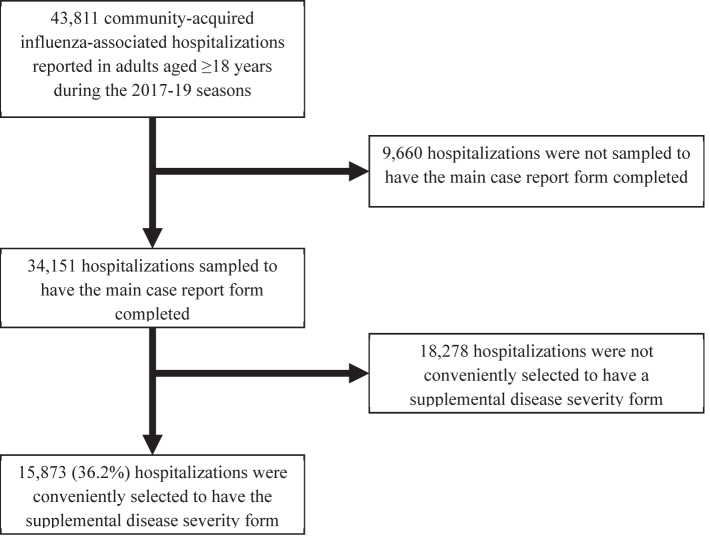 Figure 1
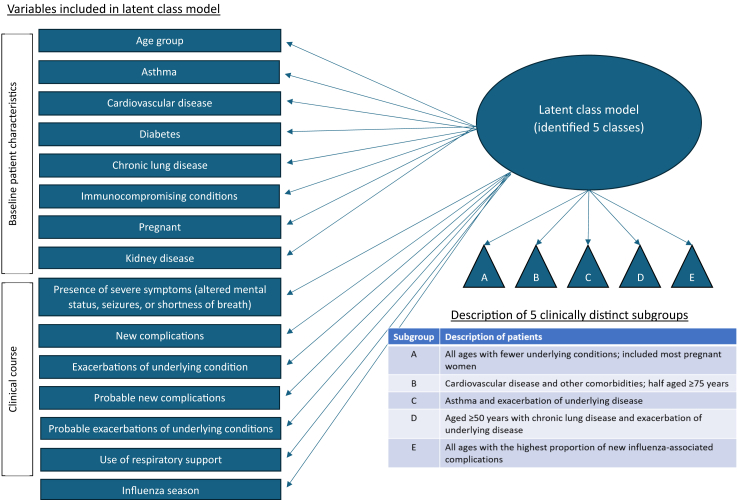 Figure 2
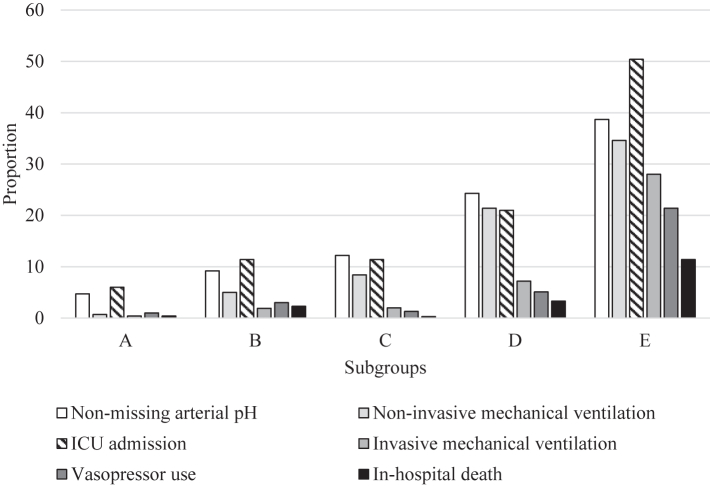 Figure 3
Peer Reviews
No public reviews on file for this paper yet. If you reviewed it on a platform where reviews are public (OpenReview, ICLR, NeurIPS, ICML), you can paste yours below so the community can read it here.
Videos
No videos yet. Explain this paper in a talk, walkthrough, or lecture? Add one.
Taxonomy
TopicsInfluenza Virus Research Studies · Respiratory viral infections research · Smoking Behavior and Cessation