Molecular Genetics Solves the Conundrum of Two Brothers Affected With Proteinuria Coming With a Very Different Flavor: A Case Report
Ludwig Haydock, Guillaume Dorval, Laurence Heidet, Bertrand Knebelmann

TL;DR
Two brothers with proteinuria had different genetic causes, showing how genetic testing helps in diagnosing and treating kidney diseases.
Contribution
Identifies two distinct genetic causes of proteinuria in siblings, emphasizing personalized diagnosis and treatment.
Findings
One brother had a WT1 variant linked to kidney insufficiency.
The other brother had biallelic CUBN variants with preserved kidney function.
CUBN variants may lead to misdiagnosis of glomerular diseases but have a good prognosis.
Abstract
Genetic testing is increasingly used to diagnose kidney diseases, proving cost-effective when performed on selected patients. We present the case of 2 brothers with proteinuria from a young age; one developed kidney insufficiency while the other maintained normal kidney function into late life. This case report investigates whether they inherited the same disease. The proband exhibited focal segmental glomerulosclerosis, with kidney function declining over time. Genetic analysis revealed heterozygous variants in MYH9 and WT1. The MYH9 variant was deemed nonpathogenic, whereas the WT1 variant, associated with autosomal dominant nonsyndromic focal segmental glomerulosclerosis, likely contributed to the proband’s kidney insufficiency. However, this variant was absent in his brother, who also had proteinuria but preserved kidney function. Further analysis identified biallelic variants in…
Genes, proteins, chemicals, diseases, species, mutations and cell lines named across the full text — each resolved to its canonical identifier and authoritative record.
Click any figure to enlarge with its caption.
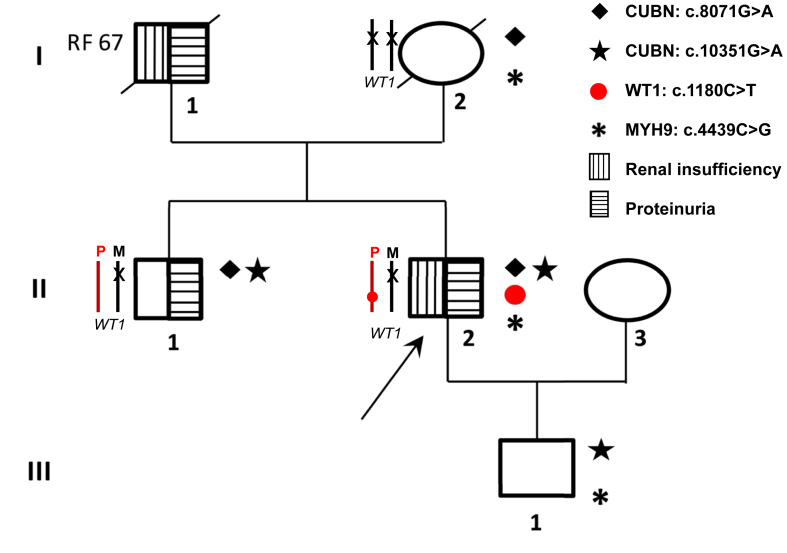 Figure 1
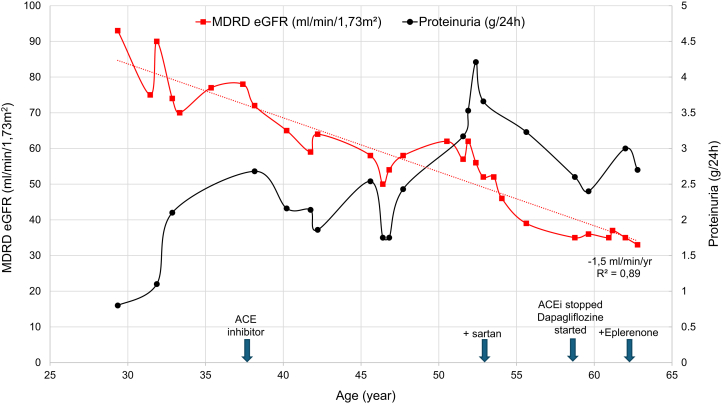 Figure 2
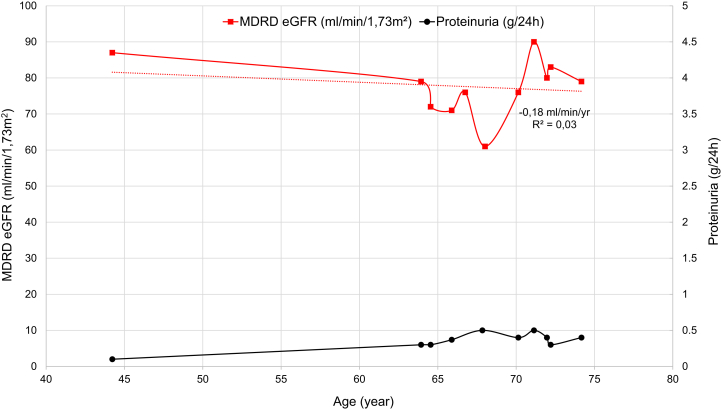 Figure 3
Peer Reviews
No public reviews on file for this paper yet. If you reviewed it on a platform where reviews are public (OpenReview, ICLR, NeurIPS, ICML), you can paste yours below so the community can read it here.
Videos
No videos yet. Explain this paper in a talk, walkthrough, or lecture? Add one.
Taxonomy
TopicsEndoplasmic Reticulum Stress and Disease · Genetic Associations and Epidemiology · PI3K/AKT/mTOR signaling in cancer