A Cluster Randomized Controlled Trial Comparing the Efficacy of Pre‐School Language Interventions—Building Early Sentences Therapy and an Adapted Derbyshire Language Scheme
Cristina McKean, Christine Jack, Sean Pert, Carolyn Letts, Helen Stringer, Mark Masidlover, Anastasia Trebacz, Robert Rush, Emily Armstrong, Kate Conn, Jenny Sandham, Elaine Ashton, Naomi Rose

TL;DR
A study compared two short preschool language interventions and found one, based on usage-based theory, led to better long-term language gains in young children with low language skills.
Contribution
BEST, a low-dosage language intervention based on usage-based theory, shows greater and more sustained improvements in expressive language compared to a traditional scheme.
Findings
Both BEST and A-DLS improved language comprehension and participation, but BEST showed larger gains in expressive language.
Children receiving BEST made more progress in language production and sentence structures after the intervention.
BEST's effects were more sustained over time, supporting its potential for accelerating language learning.
Abstract
Children's language abilities set the stage for their education, psychosocial development and life chances across the life course. To compare the efficacy of two preschool language interventions delivered with low dosages in early years settings (EYS): Building Early Sentences Therapy (BEST) and an Adapted Derbyshire Language Scheme (A‐DLS). The former is informed by usage‐based linguistic theory, the latter by typical language developmental patterns. We conducted a pre‐registered cluster randomized controlled trial in 20 EYS randomized to receive BEST or A‐DLS. Children aged 3;05–4;05, who were monolingual, with comprehension and/or production scores ≤ 16th centile (New Reynell Developmental Language Scales—NRDLS) and no sensorineural hearing impairment, severe visual impairment or learning disability were eligible. A total of 102 children received the intervention. Speech and…
Genes, proteins, chemicals, diseases, species, mutations and cell lines named across the full text — each resolved to its canonical identifier and authoritative record.
Click any figure to enlarge with its caption.
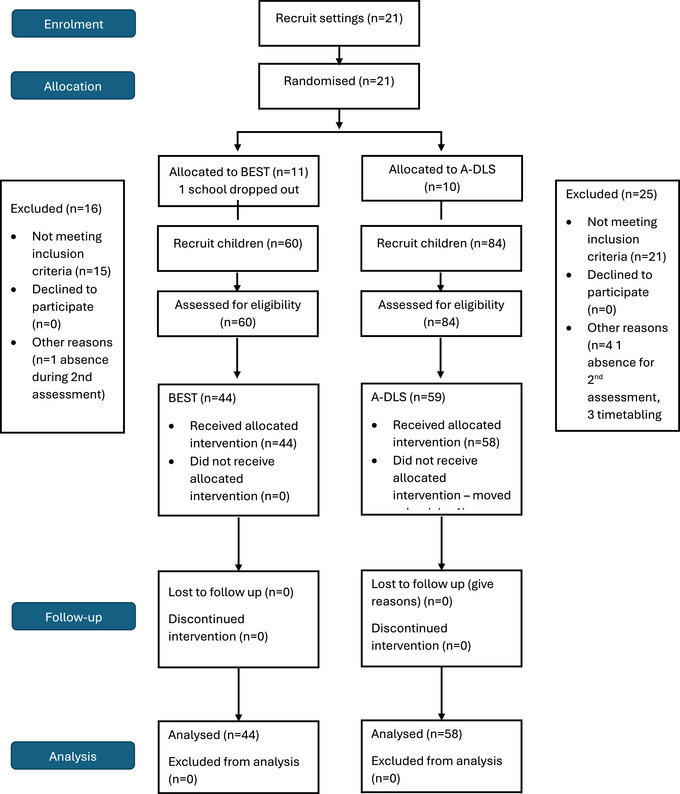 Figure 1
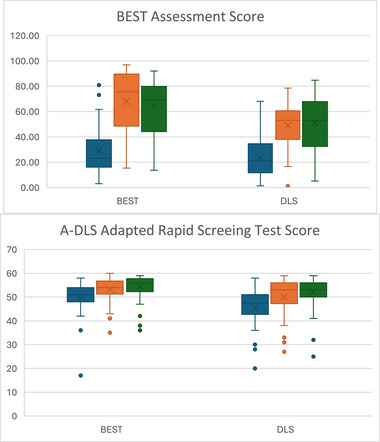 Figure 2
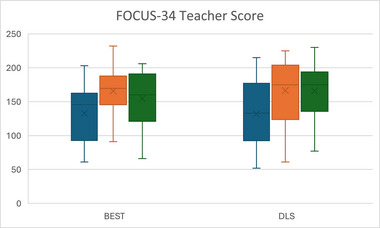 Figure 3
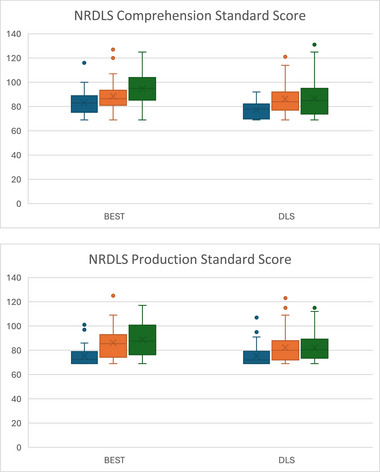 Figure 4
Peer Reviews
No public reviews on file for this paper yet. If you reviewed it on a platform where reviews are public (OpenReview, ICLR, NeurIPS, ICML), you can paste yours below so the community can read it here.
Videos
No videos yet. Explain this paper in a talk, walkthrough, or lecture? Add one.
Taxonomy
TopicsLanguage Development and Disorders · Reading and Literacy Development · Infant Development and Preterm Care